Prime Minister Narendra Modi once again floated the idea of simultaneous elections at the Niti Ayog Governing Council meeting on Sunday, and called for a vigorous debate on the issue. This is in keeping with the PM’s personal commitment to the idea and a concerted effort by the Bharatiya Janata Party (BJP) to create public opinion and generate a consensus around the issue. The Law Commission of India has also sought the opinions of parties and stakeholders on the idea. The response, though, has been rather limited till now.
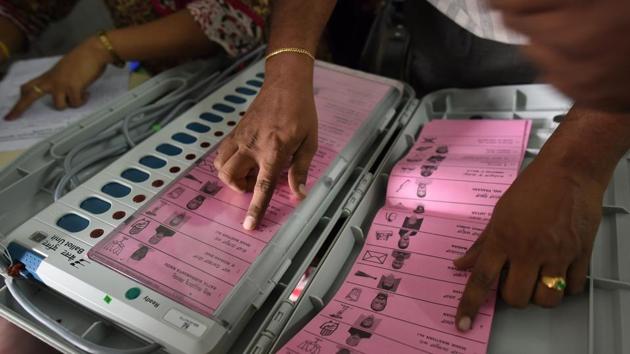
The PM has a strong case when he pushes for simultaneous polls. There is no doubt that regular elections — not a year goes by in India without a major state election — have an impact on governance. Major decisions are often taken or not taken because of poll compulsions. Leaders who should be immersed in the task of governance are actually busy campaigning. Both the government, and each party, incur tremendous expenditure. There could well be a rationalisation of expenses, predictability and stability in policymaking, and more focus on governance if this occurs. At the same time, there are concerns. For one, there is a major issue of feasibility. It will require a set of constitutional amendments. Besides, synchronising and kicking off the cycle will be difficult. There are concerns about what it means for the right of elected Chief Ministers to dissolve the assembly or what happens when a government loses its majority on the floor in the middle of its term. Does that state wait for all other states and national elections to happen to elect its own new government? Two, there is an issue of desirability. Frequent elections may get disruptive for governance, but they help introduce checks and balances within the system and ensure the electorate has its democratic say on the performance of a government.
This is the backdrop of discussions on simultaneous polls. It is, perhaps, too late to even introduce it for 2019 because both the national and state election cycles are already in motion. Any decision must follow three broad principles. It must be based on the widest possible political consensus, since this is to do with the basic architecture of Indian electoral democracy. Two, it must keep in mind that there is a need for a less expensive, more concentrated, election cycle which does not interrupt governance. And three, this must not come at the cost of democratic accountability.
{{/usCountry}}This is the backdrop of discussions on simultaneous polls. It is, perhaps, too late to even introduce it for 2019 because both the national and state election cycles are already in motion. Any decision must follow three broad principles. It must be based on the widest possible political consensus, since this is to do with the basic architecture of Indian electoral democracy. Two, it must keep in mind that there is a need for a less expensive, more concentrated, election cycle which does not interrupt governance. And three, this must not come at the cost of democratic accountability.
{{/usCountry}}