The Ukraine crisis figured prominently at the annual India-Japan Summit, as was widely expected, though Prime Minister Narendra Modi and his Japanese counterpart Fumio Kishida sent out clear signals that the two key players of the Indo-Pacific region will continue to focus on challenges closer home. The summit, held after a hiatus of three years, was underpinned by several measures aimed at deepening bilateral economic cooperation, including Japan’s announcement on investing five trillion yen or $42 billion in India over
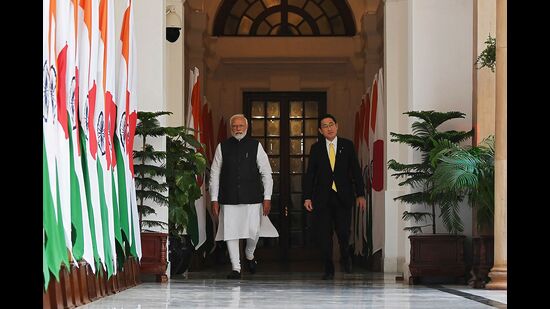
The Ukraine crisis figured prominently at the annual India-Japan Summit, as was widely expected, though Prime Minister Narendra Modi and his Japanese counterpart Fumio Kishida sent out clear signals that the two key players of the Indo-Pacific region will continue to focus on challenges closer home. The summit, held after a hiatus of three years, was underpinned by several measures aimed at deepening bilateral economic cooperation, including Japan’s announcement on investing five trillion yen or $42 billion in India over five years and the unveiling of a new clean energy partnership to focus on electric vehicles and charging infrastructure in India. There were seven loans worth about 320 billion yen for connectivity, water, health care and biodiversity projects in several Indian states and an industrial partnership roadmap meant to encourage Japanese firms to invest in India by resolving the problems that they currently face. It is significant that there was also a sustainable development initiative specifically for India’s northeastern states – Japan is the only country that has focused on progress in this strategic region, pumping in millions of dollars in aid in recent years.
The two countries addressed each other’s strategic concerns in the joint statement issued after the summit. There was a strong call for irreversible action by Pakistan against terror networks operating from its soil and a demand to root out terrorist safe havens and disrupt terror financing channels. In a nod to Japan’s concerns, the joint statement sought the early conclusion of a code of conduct in South China Sea in line with the United Nations Convention on the Law of the Sea and referred to collaboration in maritime security to meet challenges against the rules-based maritime order in the East and South China Seas. The two sides further signalled their intent to cooperate on regional issues such as Myanmar and Afghanistan while condemning North Korea’s “destabilising” missile launches.
While Mr Modi refrained from directly mentioning the Ukraine conflict, Mr Kishida bluntly said Russia’s aggression had shaken the roots of the international order, and that unilateral attempts to alter the status quo were unacceptable in any part of the world. Mr Kishida reportedly pushed the Indian side to do more to convince the Russian side to end the aggression, which is one of the few issues on which the members of Quad have not been able to present a united front. While the immediate focus will remain on the Ukraine crisis, the India-Japan Summit has set the stage for finding solutions to more pressing challenges in the region.
One Subscription.
Get 360° coverage—from daily headlines
to 100 year archives.
Archives
HT App & Website