Haryana’s decision last week to implement Scheduled Caste (SC) sub-quotas marks an important turn for Indian politics. On Friday, newly-anointed chief minister Nayab Singh Saini announced that his cabinet decided to implement the recommendations of the Haryana Scheduled Caste Commission’s proposal to internally divide the SC quota — 20% of government jobs in the state are set aside for Dalits — into two groups: Deprived Scheduled Castes (DSCs) comprising 36 groups such as Balmikis, Dhanaks, Mazhabi Sikhs and Khatiks, and
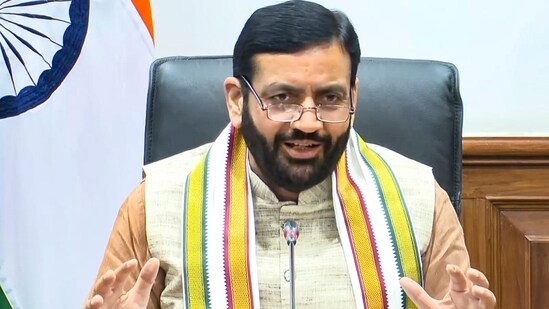
Haryana’s decision last week to implement Scheduled Caste (SC) sub-quotas marks an important turn for Indian politics. On Friday, newly-anointed chief minister Nayab Singh Saini announced that his cabinet decided to implement the recommendations of the Haryana Scheduled Caste Commission’s proposal to internally divide the SC quota — 20% of government jobs in the state are set aside for Dalits — into two groups: Deprived Scheduled Castes (DSCs) comprising 36 groups such as Balmikis, Dhanaks, Mazhabi Sikhs and Khatiks, and Other Scheduled Castes (OSCs) comprising castes such as Chamar, Jatia Chamar, Rehgar, Raigar, Ramdasi, Ravidasi and Jatav. Each segment will get half of the 20% quota, the panel decided.
This is significant for several reasons. One, Haryana is the first state to implement sub-quotas within the SC umbrella since the Supreme Court allowed it in August. The sub-quotas, expected to address inequalities within the broader group, are a polarising issue, with a section of the Dalit community, mainly the better empowered among them opposing it.
Two, it is of a piece with the Bharatiya Janata Party (BJP)’s tactic of exploiting the differences within umbrella community categories that have historically sought affirmative action and have mostly formed the core of non-BJP political formations, and win over sections of this large vote. Dalit sub-quotas are an untested political instrument so far; but with Dalits becoming an influential political category, this is bound to change the mobilisation pattern within that section. Parties such as the Bahujan Samaj Party tend to be dominated by the numerically dominant Dalit group — this is true for the Viduthalai Chiruthaigal Katchi in Tamil Nadu, Republican Party of India factions in Maharashtra, and the Congress in Punjab.
And three, Saini’s decision — along with a similar move by poll-bound Maharashtra, which set up a panel to look into sub-quotas hours before the polls were announced — indicated that internally dividing the SC quota will be part of the BJP’s strategy going ahead, and it's counter to the Opposition’s caste census pitch. In Haryana, for example, the sub-classification pitch helped the BJP pick up a substantial chunk of the SC vote during the recently concluded assembly polls on its way to a historic third consecutive term. The party won eight of the 17 reserved seats, up from five in 2019. After having successfully cleaved the Other Backward Classes (OBC) category into dominant and non-dominant sections, the BJP is now focussed on the SC vote. Expect more churn in Dalit politics.
One Subscription.
Get 360° coverage—from daily headlines
to 100 year archives.
Archives
HT App & Website