It was a report that was going to reopen old wounds and test a nation that is trying to move past decades of unrest and divide. But if the conflict was long-drawn, the healing is not going to happen overnight. More than two years after the UN Human Rights Council (UNHRC) requested the Office of the High Commissioner for Human Rights (OHCHR) to investigate the ‘alleged serious violations and abuses of human rights and related crimes’ in Sri Lanka, the report was released on Wednesday.
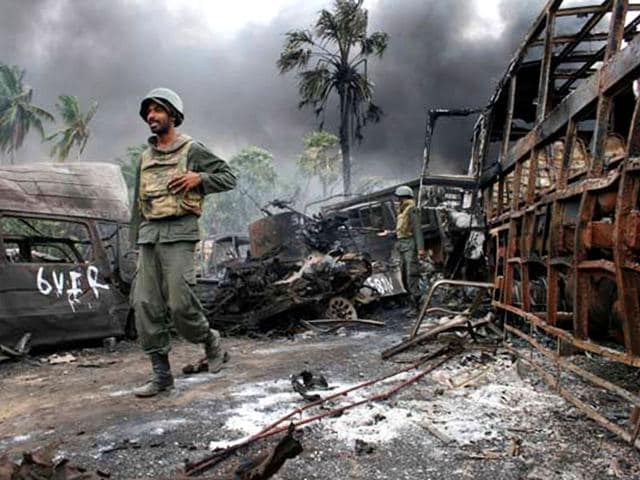
The 261-page report, which looks into the period between February 2002 and November 2011, and particularly the last phase of the armed conflict, is critical of both the government and the Liberation Tigers of Tamil Eelam (LTTE). Though the armed conflict ended in May 2009 (with the killing of LTTE leader Vellupillai Prabhakaran), the plight of the civilians in Internally Displaced People camps — euphemistically named ‘welfare villages’ — continued.
The report states that more than 250,000 civilians were ‘deprived of liberty’ in these villages and once released were at risk of further abuses like ‘surveillance, detention, torture and ill-treatment and sexual violence’ by the military. The report of the OHCHR investigation on Sri Lanka (OISL) is critical of the erstwhile Mahinda Rajapaksa government. However, the current Maithripala Sirisena government has shown ‘encouraging signs of cooperation and engagement with OHCHR’.
The test for Colombo, however, will be in putting into place the 39 recommendations made in the OISL report, some of which are that the government set up a high-level group to oversee the implementation of the report, set up a hybrid court comprising its own judiciary along with international investigators, lawyers and judges, apply stringent vetting processes to police and military officials involved in human rights violations, and, invite the OHCHR to establish a full-fledged country presence to monitor the human rights situation.
{{/usCountry}}The test for Colombo, however, will be in putting into place the 39 recommendations made in the OISL report, some of which are that the government set up a high-level group to oversee the implementation of the report, set up a hybrid court comprising its own judiciary along with international investigators, lawyers and judges, apply stringent vetting processes to police and military officials involved in human rights violations, and, invite the OHCHR to establish a full-fledged country presence to monitor the human rights situation.
{{/usCountry}}A lot more needs to be done to win the confidence of the Tamil minorities in the country. A bitter war, followed by a repressive Rajapaksa government, has alienated the Tamil minority in Sri Lanka — the reconciliation now depends on Sirisena’s government. The appointment of Tamil National Alliance leader R Sampanthan as the Leader of Opposition in the Sri Lankan parliament is a sign that Mr Sirisena is willing to give the Lankan Tamils more presence in governance.
Lankan Tamil welfare has not only political ramifications in India, but it is also imperative for strengthening India-Sri Lanka ties. New Delhi is improving ties with Colombo under the Sirisena government and should wait and watch as things progress, hopefully in the right direction.