
 E-Paper



Ukraine: Putin turns up heat
The Russian president’s decision to recognise the independence of breakaway regions of Donetsk and Luhansk adds to India’s problems

 Prefer HTon Google


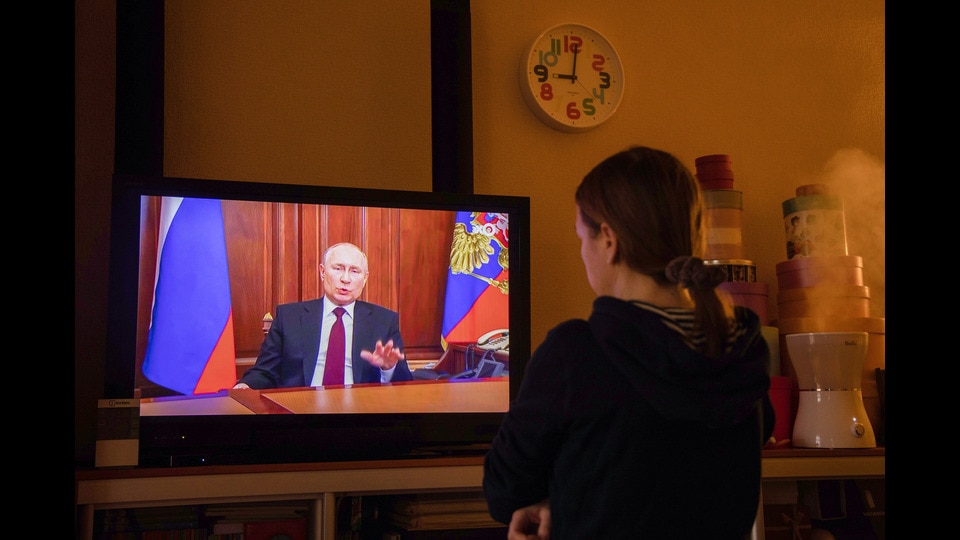
Russian President Vladimir Putin’s decision to recognise the independence of separatist-held Donetsk and Luhansk in Ukraine and to send troops for a “peacekeeping” mission to these regions has exacerbated the uncertainty and tensions prevailing in eastern Europe. Mr Putin’s long-winded televised address questioned Ukraine’s historical right to exist and he went so far as to say it was “madness” that other former Soviet republics were allowed to leave the erstwhile USSR. The Moscow-backed leaders of the “people’s republics” of Donetsk and Luhansk claim territories currently controlled by the Ukrainian government, and the deployment of Russian troops to these regions has given rise to fears about their possible forcible occupation. Fighting between Ukraine and the pro-Russian separatists was stopped by the Minsk Agreements in 2015, but the validity of those pacts is now under question following Mr Putin’s actions. If anything, Moscow’s moves have set the stage for an intensification of great power competition, with the United States (US) saying that the actions are just a pretext for war, and the threat of hostilities is probably greater than it has been in the past few weeks. Mr Putin is unlikely to be deterred by the limited sanctions imposed by the US or the threat of more punitive measures.
India’s options in responding to the situation in Ukraine are becoming increasingly limited. The Indian envoy to the United Nations again refrained from speaking against Russia’s moves at the Security Council, and called on all parties to show restraint while enhancing diplomatic efforts to find a solution that secures the legitimate interests of all countries. Some Western commentators were quick to note that India is the only member of Quad that hasn’t criticised Russia or made a reference to Ukraine’s sovereignty. In fact, both China and India adopted similar positions at the Security Council, avoiding any direct mention of Mr Putin’s decisions. Any criticism of Russia could push that country closer to China — something India is keen to avoid amid the military standoff in Ladakh — or even have long-term implications for the close security ties between New Delhi and Moscow. Continuing on this path could lead to pressure on India from the West to pick a side. No matter which path India chooses, it may not be able to avoid making some tough choices.


