There are grave injustices that women continue to face in 21st century’s version of a patriarchal society — gender-based violence (on the internet too); lack of effective representation in political parties and in legislative bodies (despite a push for 33% reservation); falling labour force participation (though a majority work in informal sectors); and State and socio-religious control over choice of partner. Yet, the only real way to address these problems is to not see them as women’s issues alone. Women’s rights are human rights; to ask for the former is to ask for the latter. This means categories of the vulnerable and the marginalised need to be reformulated.
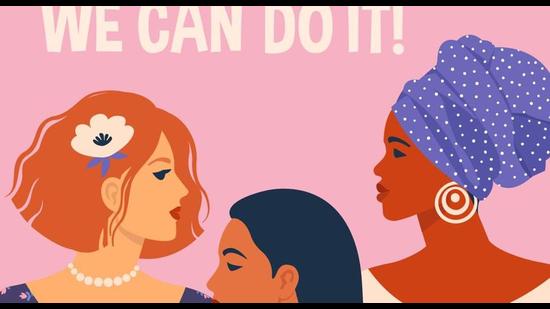
In a society divided by caste and religion — with divisions stoked further by political parties — a woman’s cause is inextricably linked to how Dalit men and women experience systemic caste-based discrimination from upper caste men and women, alike; or, to the State’s insistence that a family unit cannot comprise same-sex couples; or, to the suspicion that consensual adult inter-religious partnerships now attract. These issues are interlinked at a very basic level. The Indian Constitution guarantees every individual the right to life, liberty, equality and dignity. Yet, socially, the fundamental unit is not an individual, but either an undivided family, or heterosexual coupledom, or a religious community, or a caste grouping. This is the fundamental contradiction at the heart of any struggle for human rights — fighting for an individual’s rights must necessarily take into account their various social affiliations. Thus, it is not enough to think of women’s issues as only issues that affect women. Nor can one draw a line in the sand to demarcate where women’s issues end, and the issues of others begin.
The only way forward is to strengthen the rights of the individual, based on what the Constitution imagines. Injustices will continue, but empowering an individual, irrespective of their gender, sexual identity, caste or religion, to seek and achieve a full life of dignity, is the utopia that feminists have globally striven for. International Women’s Day is as good a time as any to remember a central feminist tenet — the personal is the political. Perhaps, it’s time to expand this to the personal is the political for everyone.
{{/usCountry}}The only way forward is to strengthen the rights of the individual, based on what the Constitution imagines. Injustices will continue, but empowering an individual, irrespective of their gender, sexual identity, caste or religion, to seek and achieve a full life of dignity, is the utopia that feminists have globally striven for. International Women’s Day is as good a time as any to remember a central feminist tenet — the personal is the political. Perhaps, it’s time to expand this to the personal is the political for everyone.
{{/usCountry}}