
 E-Paper



Can ‘Donroe' be a geopolitical doctrine? | Number Theory
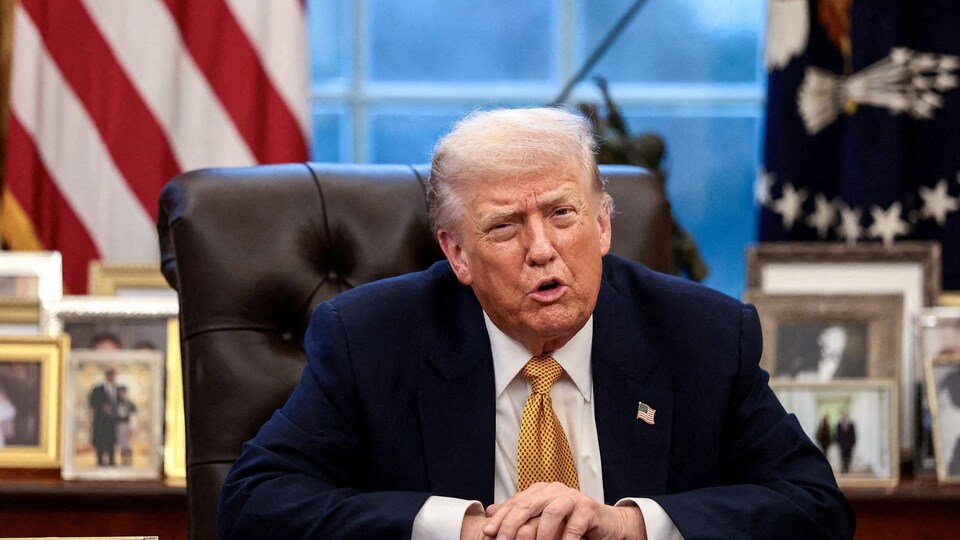
Trump’s supporters have popularised it as the “Donroe” doctrine which tries to marry Trump’s name with the 1823 Munroe Doctrine
Updated on: Jan 19, 2026, 09:14:07 IST

 Prefer HTon Google
Share via


Copy link

What the world saw as a callous act in the US abducting Venezuela’s President Nicholas Maduro, Donald Trump’s administration has tried to sell as the proof of a doctrine which will resurrect the US’s dominance in the Western Hemisphere. Trump’s supporters have popularised it as the “Donroe” doctrine which tries to marry Trump’s name with the 1823 Munroe Doctrine, which proclaimed US’s pre-eminence in the western hemisphere against what was then a stronger and dominant Europe. How credible are such claims? Here is what numbers tell us.
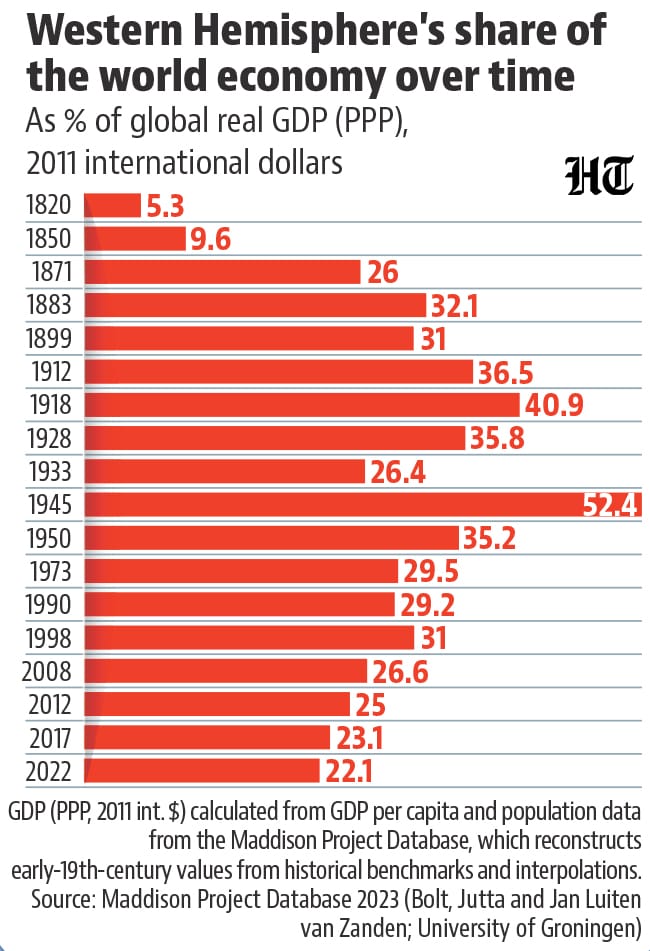
 The long rise and slow fade of the Western HemisphereThe first is the hard fact that western hemisphere itself has lost its economic importance. From the early 19th century through much of the 20th, it sat close to the centre of the world economy. The United States and its neighbours steadily increased their share of global output as industrialisation, migration and capital flows reshaped the Americas. That rise peaked in the decades after the Second World War, when the US emerged as the dominant industrial and financial power. Estimates of real GDP in purchasing power terms show the hemisphere’s share climbing through the late 1800s and early 1900s before topping out in the mid to late 20th century. Since then, the trend has been downward. This has less to do with economic decline in the Americas than with the rapid expansion of the rest of the world, especially of East and South Asia.
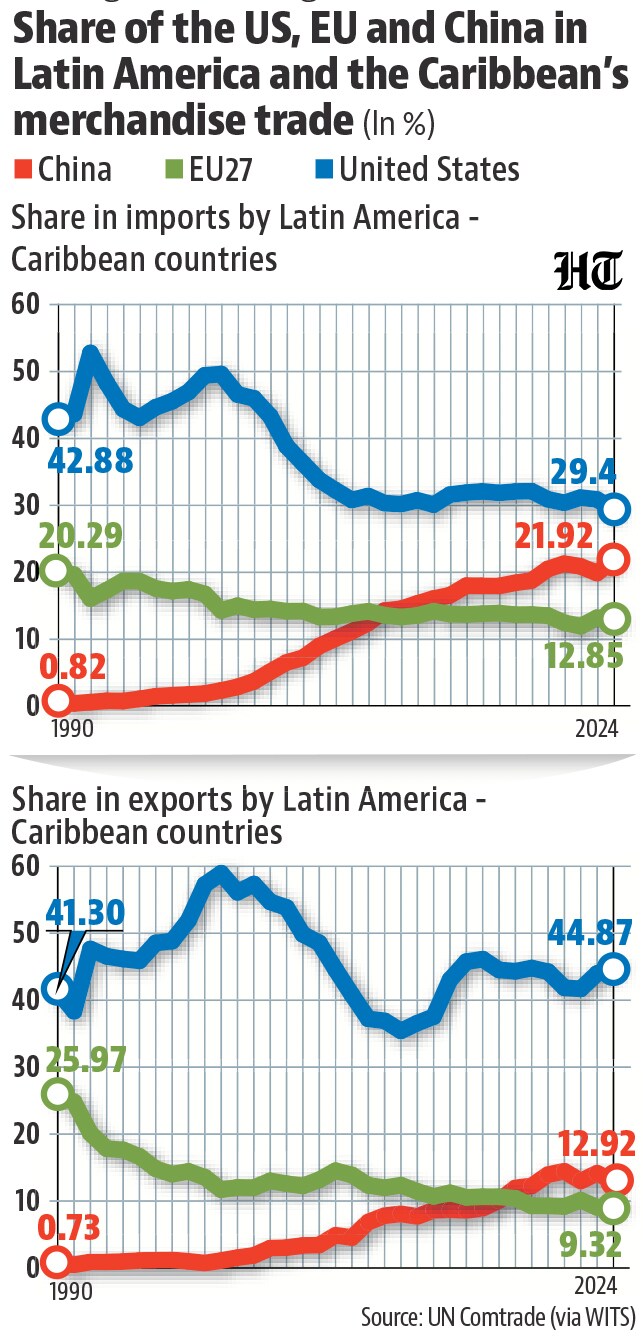
- China, not Europe is the US’s competitor in its backyard of Latin AmericaLatin America and the Caribbean continue to do most of their trade with the United States. However, the composition of that relationship has changed markedly in recent decades with the US's share of the region’s merchandise trade slowly declining while China’s share has grown from a marginal role to a much larger presence. China’s rise reflects its appetite for Latin American commodities, especially soy, copper and oil, and the expansion of Chinese manufactured goods into regional markets.
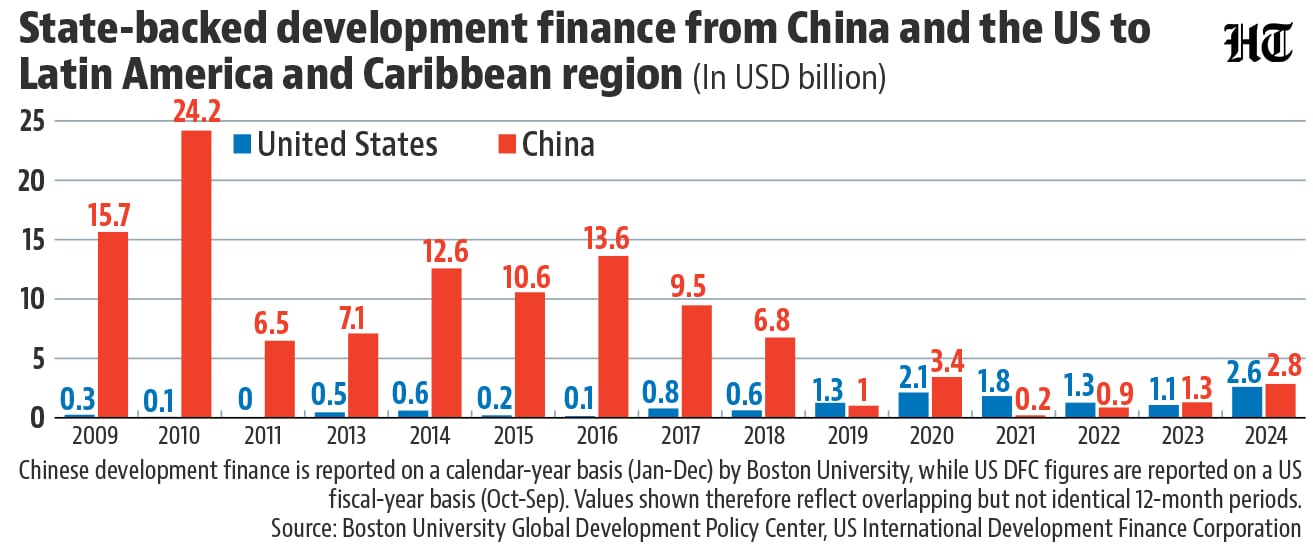
- Who finances the region now?Finance often matters more than trade in shaping influence because it shapes who builds, owns and ultimately controls key assets. Here, the balance between Washington and Beijing looks more complicated. In the decade after the global financial crisis, China’s banks became major lenders to Latin American governments, funding everything from oil-backed loans in Venezuela to dams, railways and power plants across the region. That wave has since ebbed. Chinese development finance to Latin America has declined since its 2010 peak, as Chinese banks have become more cautious, especially after years of heavy exposure to Venezuela and other high risk borrowers. Beijing is now more focused on smaller, more targeted projects in sectors such as energy transition and digital infrastructure. At the same time, official statistics likely understate China’s real footprint. A large share of Chinese foreign direct investment, for example, is routed through financial hubs such as Luxembourg and Netherlands, which means it shows up in balance of payments data as coming from third countries rather than from China itself. Many Chinese firms have also entered the region by buying assets from foreign owners rather than building new ones, further blurring the trail. The US, by contrast, still dominates measured foreign direct investment. US firms accounted for 38% of FDI inflows in the region in 2024, compared with just 2% for China and Hong Kong, although this is considered to be an under-count, according to the UN Economic Commission for Latin America and the Caribbean. Washington has also expanded the role of the US International Development Finance Corporation to support projects seen as strategically important.
- The world no longer fits the assumptions of the Monroe Doctrine, even as Washington tries to revive its logic. China’s expanding trade and finance footprint has given Latin American governments more room to hedge, which is why the idea of a tougher “Donroe” posture has resurfaced in US debate, sharpened by recent US action in Venezuela. But it also underlines the limits of this approach, since forceful interventions are costly to sustain politically and economically, and they do little to reverse the deeper shifts in global demand, capital and supply chains that are pulling the region in multiple directions. That US oil majors are not really excited about Trump’s Venezuela intervention gives a hint into the limitations of Trump and his supporters trying to pass “Donroe” as a geopolitical doctrine.


Unlock a world of Benefits with HT! From insightful newsletters to real-time news alerts and a personalized news feed – it's all here, just a click away! -Login Now!


