
 E-Paper



Future tense: The China-Pakistan relationship | Number Theory
.
Updated on: Jun 5, 2025, 09:06:06 IST

 Prefer HTon Google
Share via


Copy link

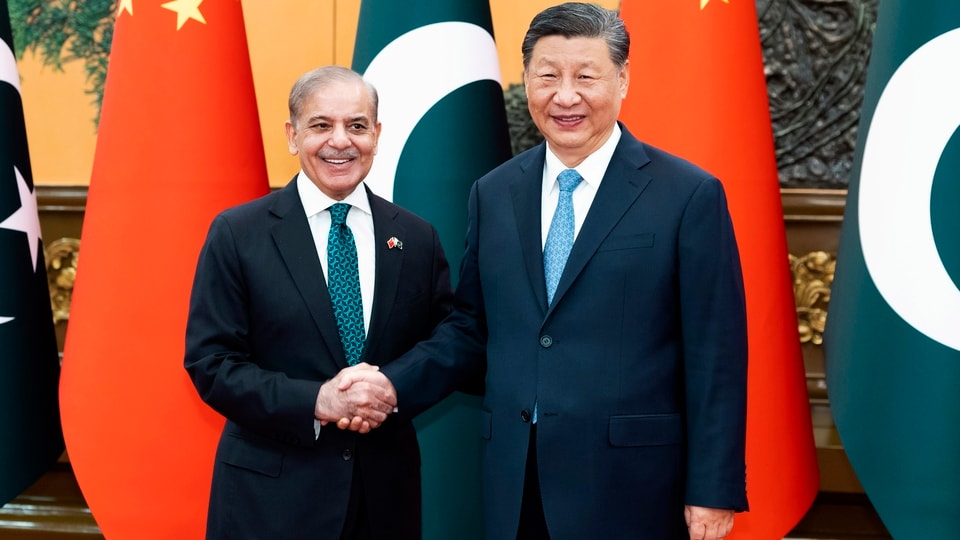
China has traditionally been a strategic ally of Pakistan. The latter’s utility as an adversary to India, the only country that comes close to competing with China in Asia, has always been a major driver of the China-Pakistan strategic alliance. What exactly is the future of this relationship apart from trying to corner India in the subcontinent? Here are three charts which explain why its future is unlikely to be good.
Future tense: The China-Pakistan relationship
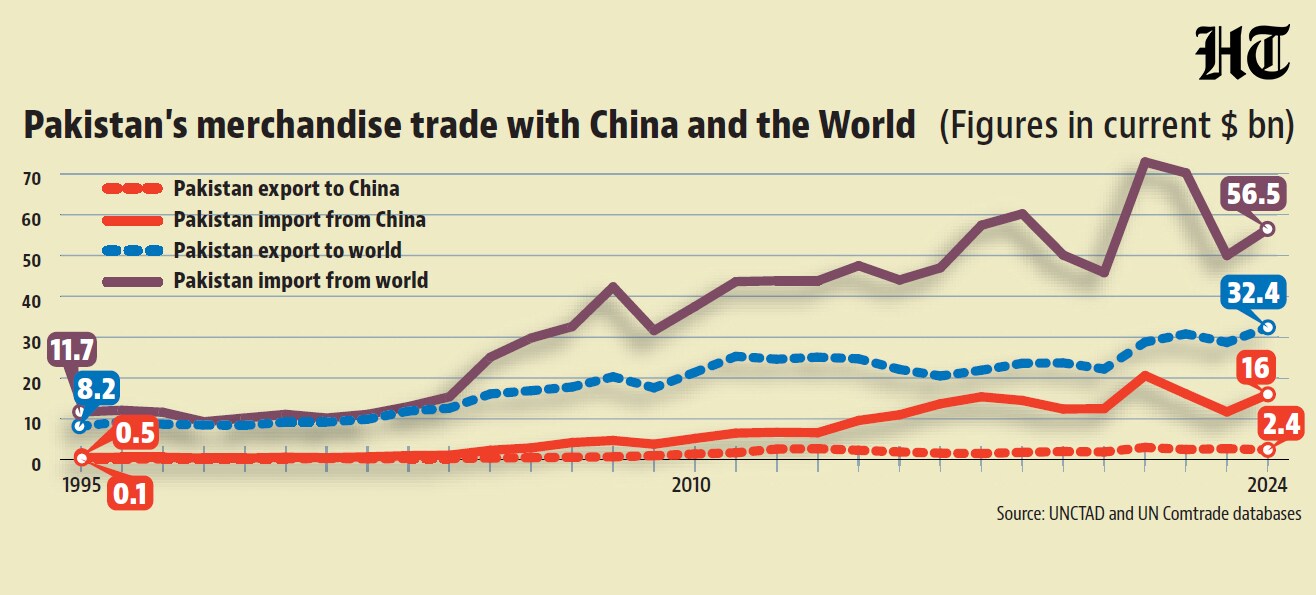
 Pakistan’s trade with China has increased consistently but Is a small part of latter’s trade interestsMerchandise trade data shows this clearly. In 1995, the earliest period for which data is available in the UNCTAD database, Pakistan’s imports and exports from the world was $11.7 billion and $8.2 billion. China’s share in Pakistan’s total merchandise imports and exports was 4.4% and 1.5%. By 2024, Pakistan’s total imports and exports had increased to $56.5 billion and $32.4 billion, and China’s share in these numbers had increased to 28.3% and 7.4%. Clearly, China continues to export significantly more to Pakistan than it imports from it. However, China’s exports to Pakistan in 2023, the latest year for which cross-country data is available in the UN database, were just 0.5% of its overall merchandise exports to the world. It exported nearly seven times more to India.
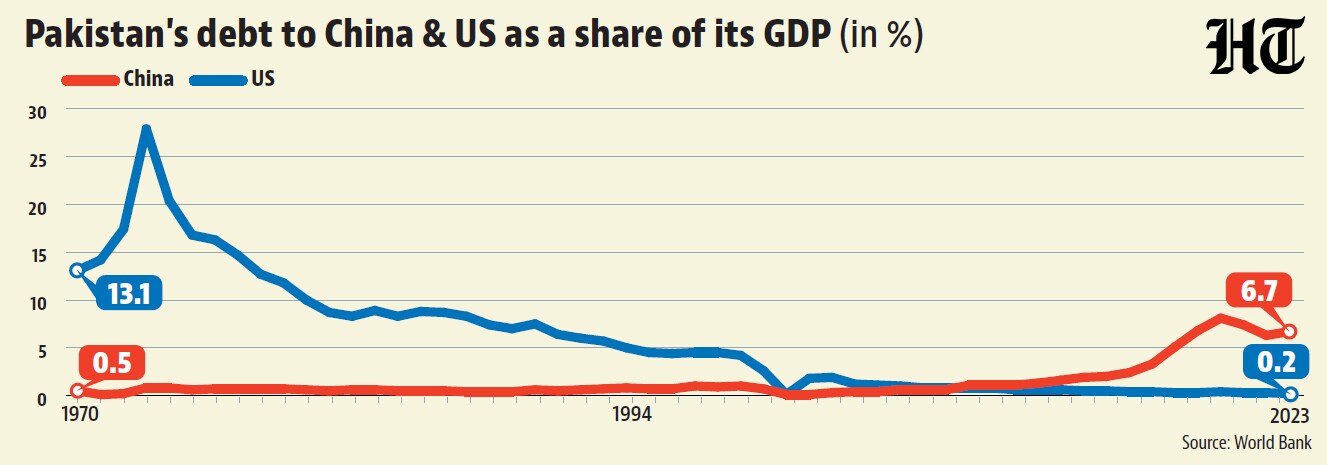
- More remarkable in the China-Pakistan economic relationship is the rise of Pakistan’s debt to ChinaIn its early days, Pakistan was far more dependent on American credit than Chinese. Data from the World Bank shows that US debt stocks were almost 30% of Pakistan’s GDP by 1972. This number started falling steadily since then and fell to less than 5% by 1995 and became negligible by 2001. Since the late 2000s, Chinese credit has seen a steady rise in Pakistan’s economy and it reached 8.1% of its GDP by 2020. Many reports say that Pakistan is now the largest international debtor to China. Given Pakistan’s precarious economic situation – the country has been living from one bailout to another – its ability to pay back this Chinese debt remains in doubt at best. Keynes’s famous quote “If you owe your bank manager a thousand pounds, you are at his mercy. If you owe him a million pounds, he is at your mercy,” is always useful to think of poorly performing economies sitting on large debts with other countries.
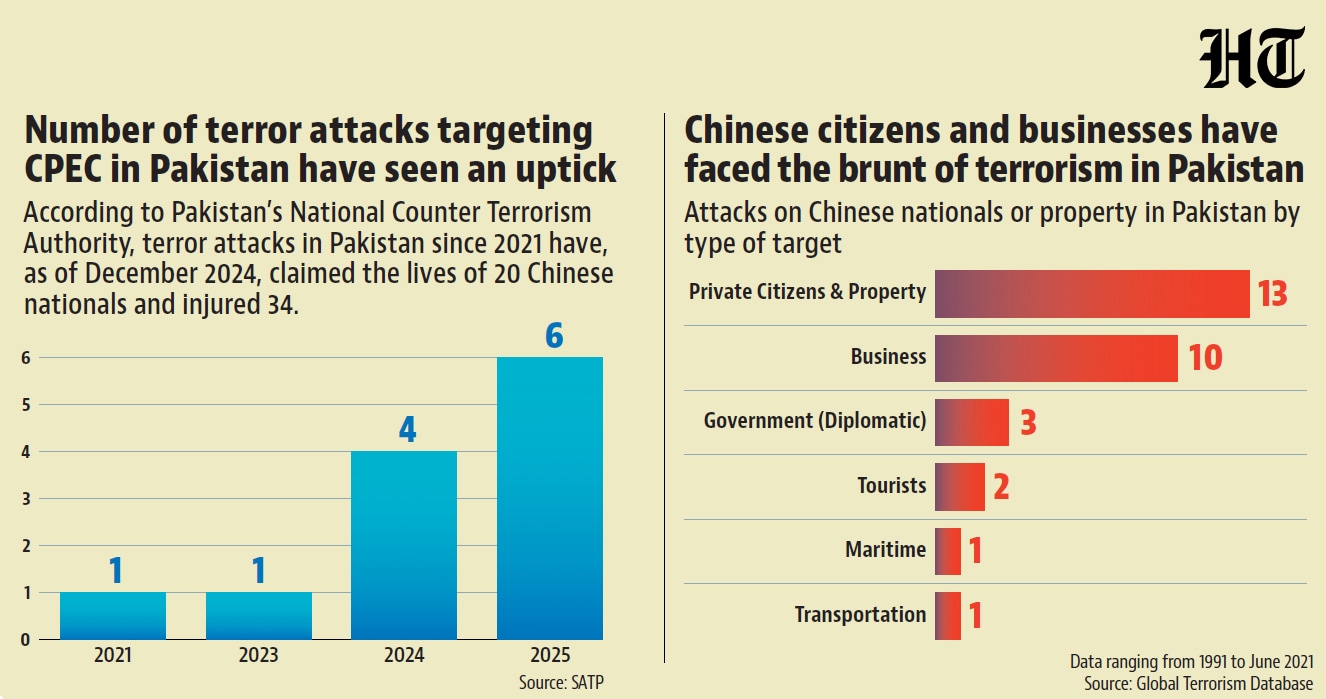
- But China’s real objectives in investing in Pakistan are far from just economicPakistan is not a major export market for China. It is sitting on Chinese credit which will be very difficult to pay back. What explains China’s loans to Pakistan then? It is not just economics. A lot of the Chinese investment in Pakistan is targeted towards expanding China’s strategic presence in Asia to buttress its ambition of becoming a global superpower. The China Pakistan Economic Corridor (CPEC) project, one of the most critical pieces of the One Belt One Road initiative, is driven exactly by that. China has invested almost $68 billion in Pakistan between 2005 and 2024. However, CPEC has been facing problems which also extend beyond the realm of the economy. Data from South Asia Terrorism Portal and official figures from Pakistan show that Chinese people and infrastructure in Pakistan are also bearing the brunt of terrorist violence. China’s officials have been increasingly voicing their frustration over such attacks. While part of the reason for terror attacks on Chinese nationals and projects could be the general state of lawlessness and widespread terrorist networks in Pakistan, part of it could be a direct result of Chinese investments making Pakistanis second class citizens in their own country. For example, a Guardian story published earlier this year said that China’s deep sea port project in Gadwar had alienated local Pakistanis by restricting their access to fishing in the sea and creating Chinese-only high security zones in the area. As Pakistan’s economy and polity sink into deeper chaos, China’s hopes of using the country as a strategic base in the strategically important junction of South Asia and West Asia will increasingly be tested as such investment alienates Pakistani citizens and makes their country a quasi-colony of sorts for China’s strategic ambitions.


Unlock a world of Benefits with HT! From insightful newsletters to real-time news alerts and a personalized news feed – it's all here, just a click away! -Login Now!


