
 E-Paper



Number Theory: Can the GPU-neocloud party go on forever?
.
Updated on: Jan 29, 2025, 08:28:51 IST

 Prefer HTon Google
Share via


Copy link

A new wave of tech companies, “neoclouds”, has been grabbing headlines in recent months for securing billions in debt financing from Wall Street’s biggest financial institutions. These firms, which offer cloud computing services for AI development, have acquired vast quantities of Nvidia’s sought-after graphics processing units (GPUs) — one of the most valuable assets in the AI ecosystem. The charts examine the quick rise of neoclouds, their disruption of traditional players, amid the rise of Chinese startup DeepSeek's AI offering.
Can the GPU-neocloud party go on forever?
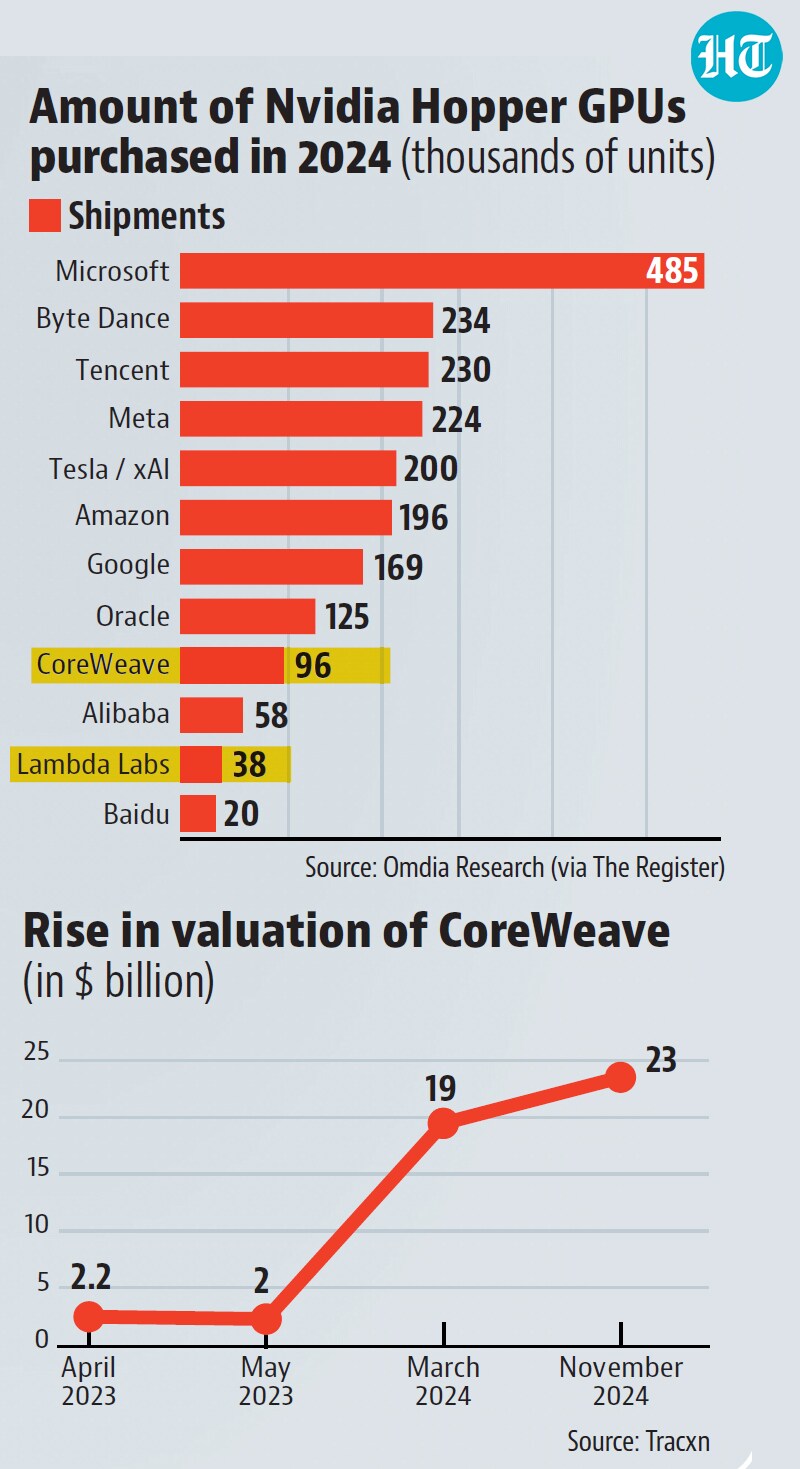
 The rapid rise of neocloudsNeocloud firms such as CoreWeave and Lambda Labs have secured tens of thousands of Nvidia GPUs, essential for building generative AI models, and are now using them as loan collateral to raise funds to purchase even more chips. The confidence behind Wall Street investors, who have loaned over $11 billion to these firms, stems partly from Nvidia’s substantial chip allocations. CoreWeave, which has been among the top ten purchasers of Nvidia GPUs during the last two years, alone raised $7.5 billion in debt financing from investment giants Blackstone and Magnetar in May 2024, the single largest private debt financing of all time. Coreweave’s valuation has increased by 1050% from $2 billion in 2023 to $23 billion by the end of November 2024. The rush of financiers highlights Silicon Valley’s booming GPU market. Other neocloud firms, too, have seen a surge in their valuation over the last year, raising billions through debt and equity financing.
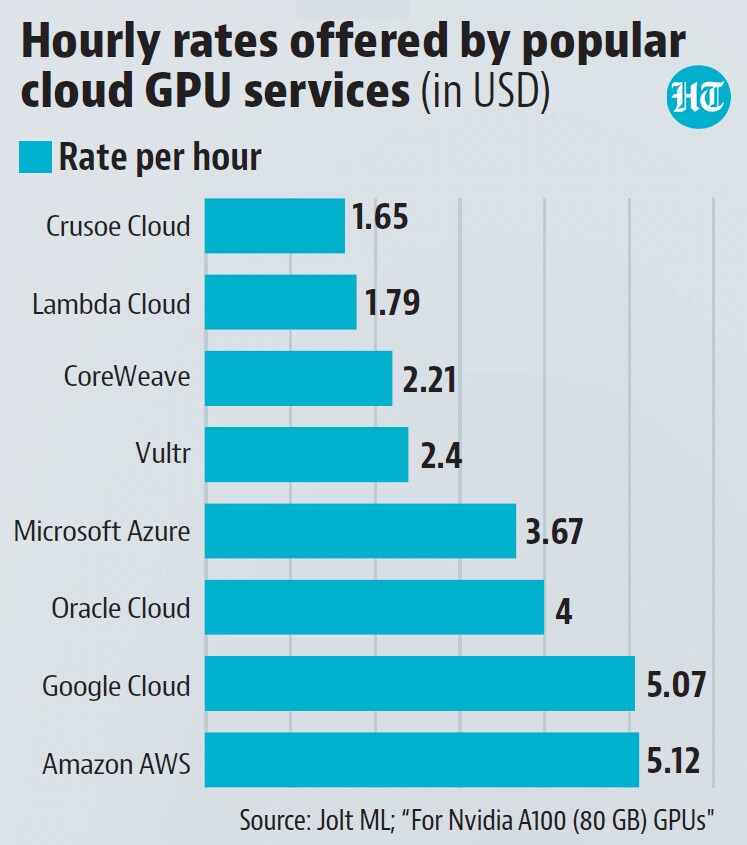
- How are neoclouds undercutting traditional players?The rise of neocloud firms has also been driven by significantly lower prices compared to older giants. Lambda Labs and CoreWeave offer Nvidia A100 GPUs at $1.79 and $2.21 per hour respectively, far cheaper than Google Cloud or Amazon AWS, which charge more than $5 per hour. Neoclouds are able to do this as they avoid bundled services targeted at bigger corporates, instead focusing on keeping their stripped-down service affordable for even smaller startups. As these chips are ever in demand, neoclouds such as CoreWeave, which is backed by Nvidia, and Vultr, which is backed by AMD, also have the edge when it comes to securing GPU supplies.
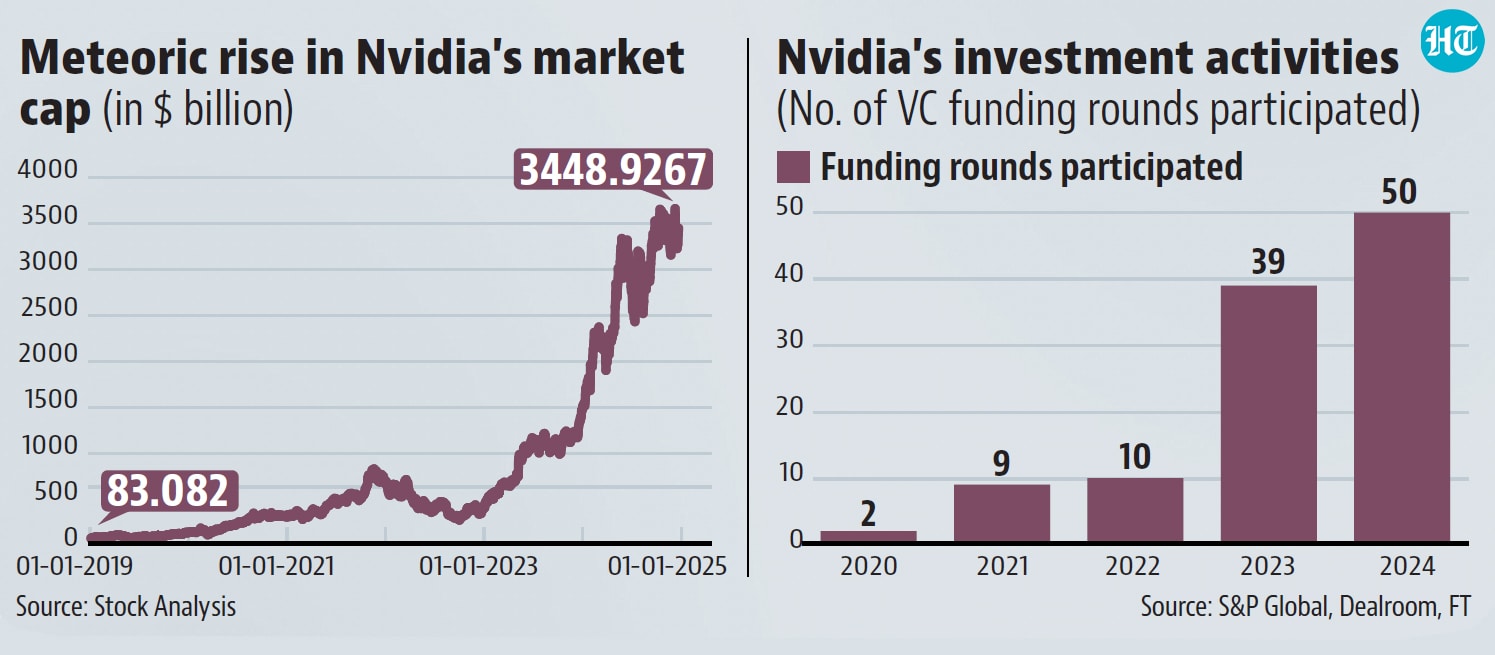
- Nvidia's hold over the AI chips marketUntil 2020, Nvidia was primarily known for gaming GPUs, while the chip market was dominated by Intel and AMD with their focus on CPUs. The Covid-19 pandemic shifted this dynamic as GPUs outperformed CPUs in handling complex computations, driving their adoption in data centres. The surge in cloud services and generative AI, led by OpenAI, further accelerated demand for them. Nvidia now commands an estimated 94% of data centre GPU revenues, with its market value skyrocketing from $144 billion in 2019 to $3.45 trillion — a staggering 2,295% increase. Since 2020, Nvidia has also tightened its grip on the AI industry by investing heavily in its own customer base. According to the Financial Times, it invested $1 billion in 2024 across 50 startup funding rounds and corporate deals, up from $872 million across 39 rounds in 2023. Data from Tracxn reveals that Nvidia has invested in 104 companies, including neoclouds such as CoreWeave, Nebius, and Crusoe, and acquired 23 companies, With most of these deals occurring post-2020, these strategic investments have helped Nvidia to maintain its dominance, which had remained unchallenged until now.
- But cyclical funding of neoclouds is a problemNeocloud companies are currently using their existing GPUs as collateral to secure huge loans for purchasing additional GPUs. As a result, these firms are now highly leveraged. But this model is unsustainable. The value of collateralised GPUs are at risk of declining with the advent of more advanced models or a potential slowdown in AI investment. Additionally, these companies are heavily reliant on Nvidia despite the company’s claim that no customer receives priority access to its chips. With GPU prices falling sharply, future AI chips are unlikely to remain scarce. And unless there is a major disruptive event such as a Chinese invasion of Taiwan — where majority of the chips are manufactured — this trend is expected to continue, raising questions about the long-term value of GPUs as collateral for loans.


Unlock a world of Benefits with HT! From insightful newsletters to real-time news alerts and a personalized news feed – it's all here, just a click away! -Login Now!


