E-Paper



Number Theory: Economic pain, political reset, what’s next for Sri Lanka?
What makes the latest election results really shocking is the fact that they have seen a complete rejection of the old political powers in Sri Lanka.
Published on: Sep 26, 2024, 08:50:28 IST

 Prefer HTon Google
Share via


Copy link

Sri Lanka has elected a leftist Anura Kumar Dissanayake as its new president. Dissanayake’s victory is nothing short of complete rejection of the mainstream political spectrum in the island nation, which plunged into a massive economic crisis two years ago. The election results make sense when seen in the backdrop of the economic pain Sri Lankan people have suffered in the last two years. But Sri Lanka’s economic troubles are far from over and will test the new government’s abilities. Here are four charts which explain this in detail.
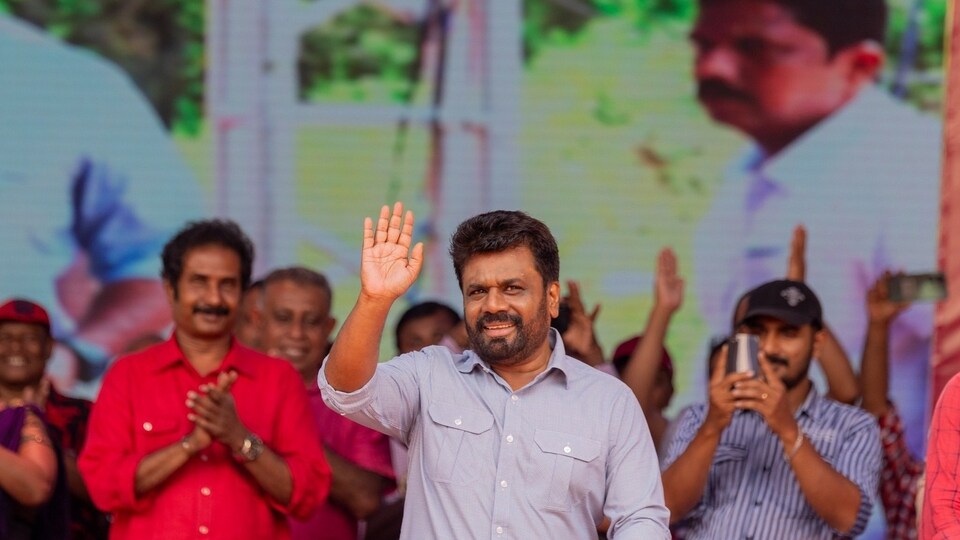
Economic pain, political reset, what’s next for Sri Lanka?
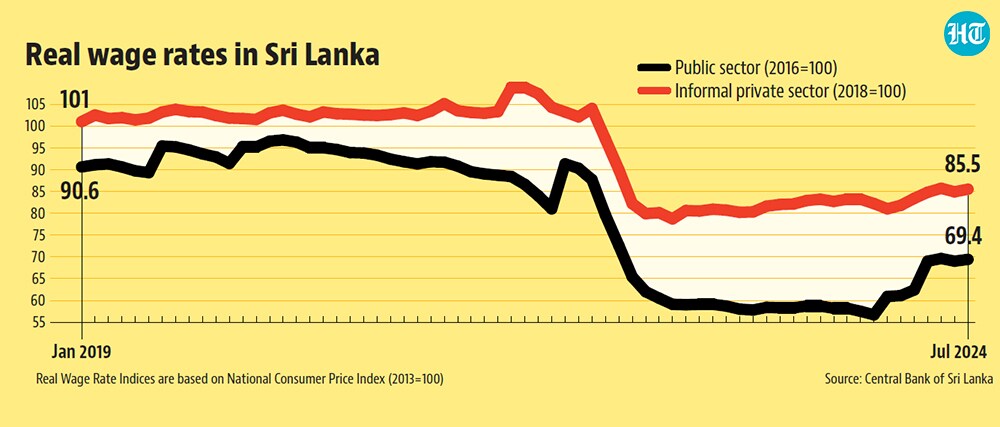
 Living standards have fallen sharply since 2022If there is one statistic which captures the larger economic pain of Sri Lanka’s economic crisis, it is the real wage index released by the Central Bank of Sri Lanka. The index of real wages for public sector (base year 2016) and informal private sector (base year 2018) was 69.4 and 85.5 in July , the latest month for which this data is available. These numbers were 92.9 and 102.4 respectively in November 2019, which is when the last presidential elections were held. This means that real wages have fallen by more than 25% and 16% in the public and informal private sector in the last five years. The bulk of this fall has happened from 2022 onwards, which is when the economic crisis erupted. An August 2023 survey by Sri Lanka’s Department of Census and Statistics found that 91% of households have seen expenses rise since 2022, but only 5.6% reported higher incomes.
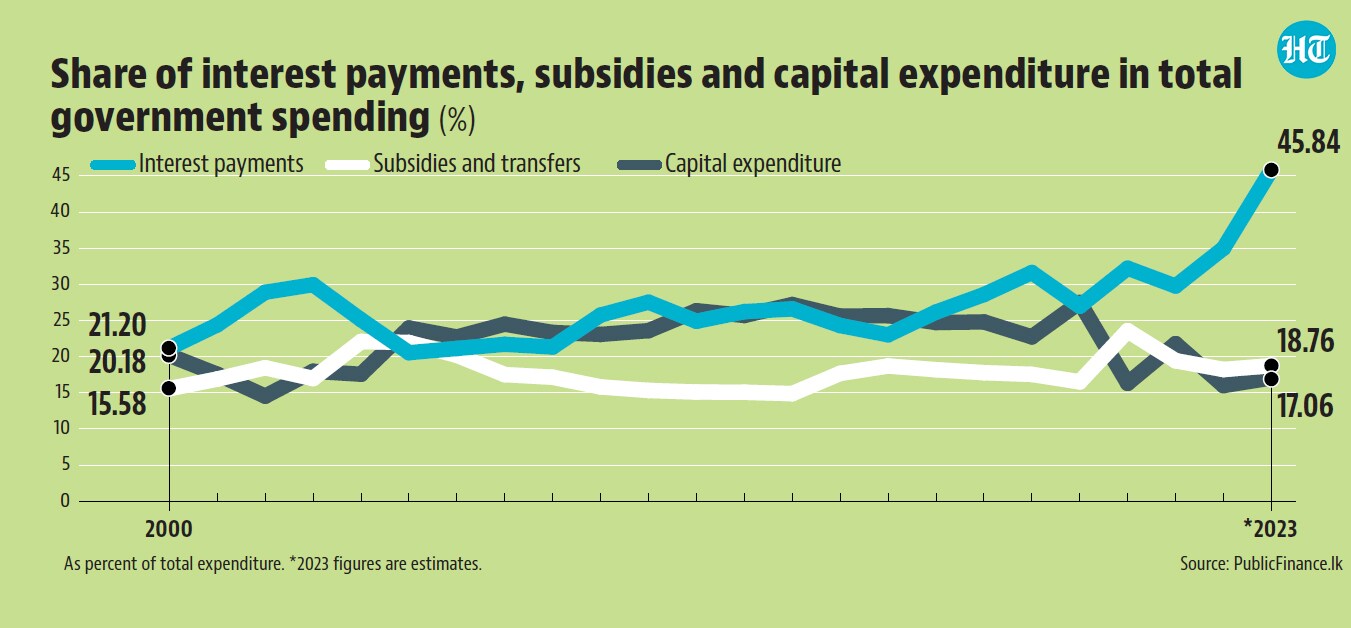
- The government has had to devote a lot more fiscal resources towards servicing debtWhile the economic crisis and massive inflation wreaked havoc on the economic condition of most Sri Lankans – the country has seen a 15 percentage point increase in poverty between 2019 and 2023 — the government has done little to provide relief from this pain. The biggest reason for this is the necessity of having to devote more fiscal resources towards debt servicing. Share of interest payments in Sri Lanka’s total expenditure increased from 30% in 2021 to around 46% in 2023, according to data from PublicFinance.lk. Meanwhile, the share of subsidies has remained unchanged, and capital spending has seen a large fall, which can generate headwinds for future growth.
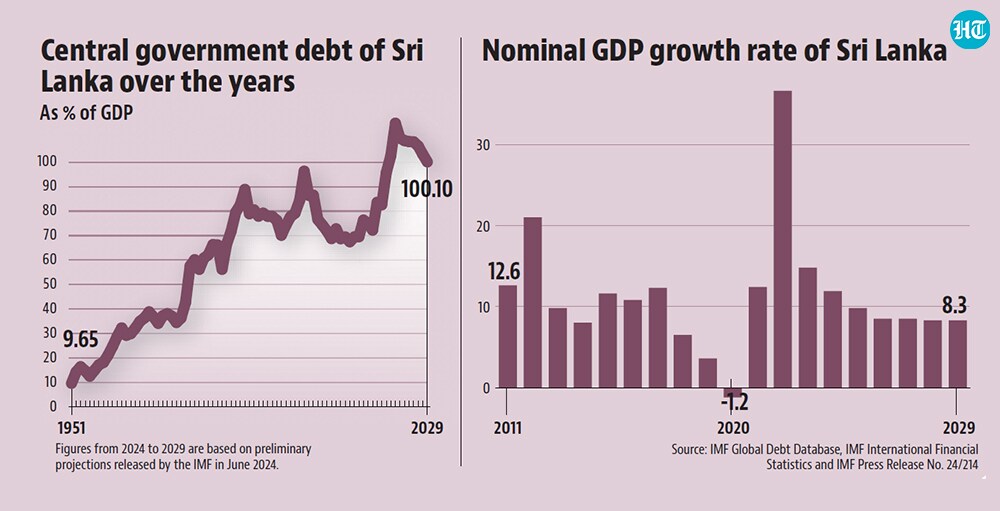
- And the debt burden will only reduce graduallyThis is where Sri Lanka’s biggest problems lies. Its latest Article IV consultation with IMF projects that while Sri Lanka’s national debt is on a falling trajectory, it will continue to remain pretty high in the next few years. Public debt — comprising central government debt, publicly guaranteed debt, and the central bank’s external liabilities — as a share of GDP climbed to 126.3% in 2022, is expected to have fallen to 114.2% this year and will reach 103.1% by 2029. The fact that Sri Lanka’s nominal GDP growth is likely to remain lower than its historical levels will only complicate the servicing of this debt.
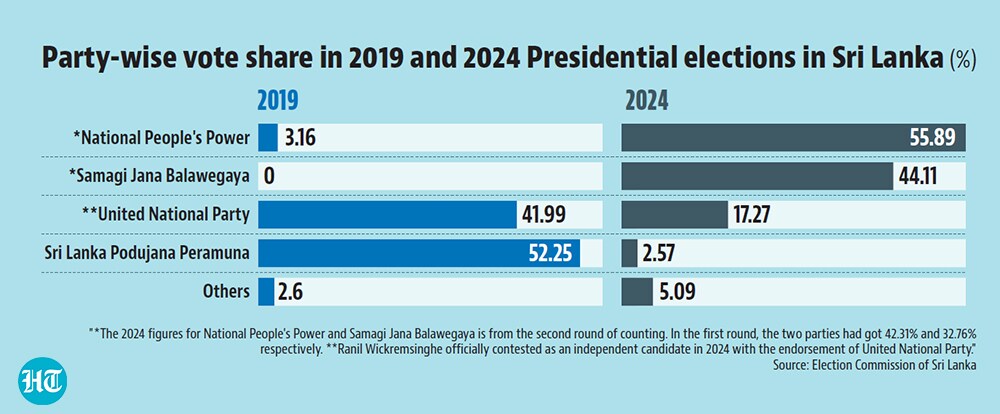
- The election results have rejected the parties that were seen as being involved in the bailout negotiationsWhat makes the latest election results really shocking is the fact that they have seen a complete rejection of the old political powers in Sri Lanka. The ongoing economic crisis is attributed to years of poor management, with the immediate trigger being the drastic tax cuts by former President Gotabaya Rajapaksa in 2020, slashing government revenue by a quarter. These cuts reduced VAT from 15% to 8%, abolished the PAYE tax, and cut the number of registered taxpayers by 33.5%. The crisis worsened due to reduced tourism after the 2019 Easter bombings, the pandemic, and a sudden ban on agrochemical fertilizers. This escalated into a balance of payments crisis, leading to mass protests and Rajapaksa’s resignation, and his family’s fall from grace. After Ranil Wickremsinghe was selected (there was no popular election) to be the President in 2022, the country sought a $ 2.9 billion bailout from IMF and underwent debt restructuring. The austerity measures have not been popular among the public and leave the country trapped with some of the highest external debt payments in the world for years to come. The newly-elected President, whose party’s vote share surged from 3% to 55% at the cost of almost all mainstream political parties in the country, has promised to renegotiate the IMF deal to make things easier for the Sri Lankan people. How he implements this promise remains to be seen.