E-Paper



Number Theory: Five datasets show 1.5°C breach in 2024
All these datasets except one show that 2024 was warmer than the pre-industrial baseline by more than 1.5°C.

 Prefer HTon Google


Six organisations that monitor global climate made a concerted effort to release their analysis of the average global temperature in 2024 together on January 10. Their datasets are usually updated with the numbers from the previous month in a staggered manner. The reason for the coordinated effort in 2024? All these datasets except one show that 2024 was warmer than the pre-industrial baseline by more than 1.5°C, the first time this has happened in more than one dataset. Here is a breakdown of 2024 global temperatures in four charts.

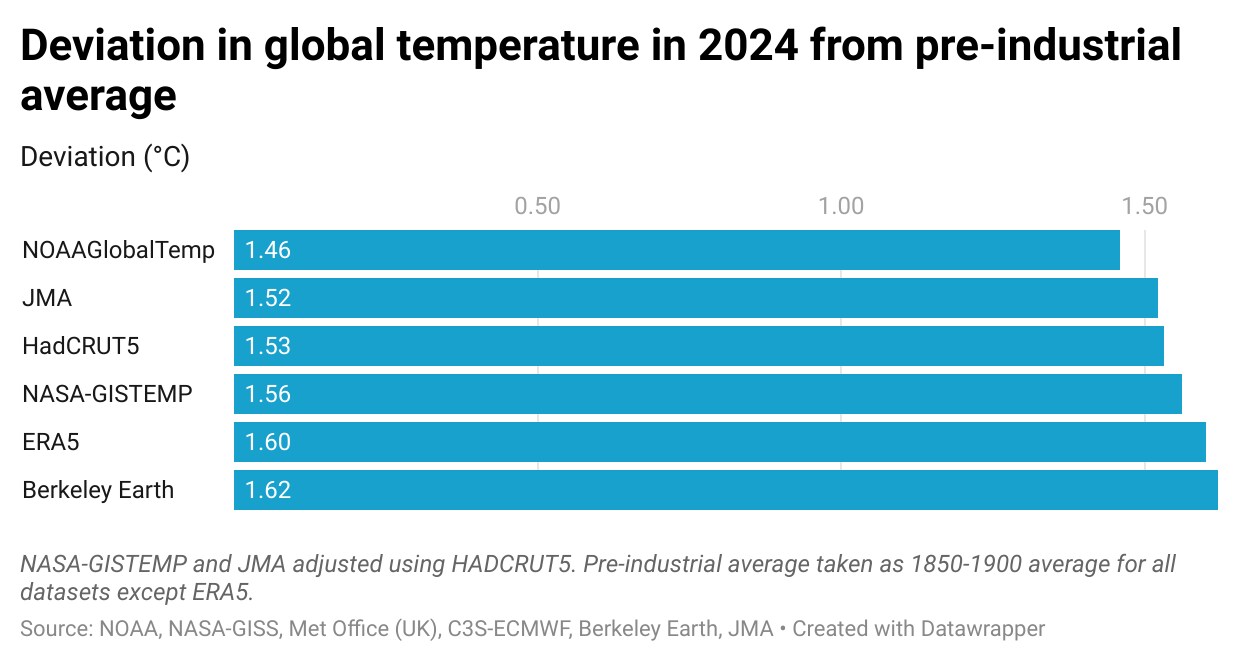
 Warmest year in all six datasets: 1.5°C breach in five, 1.6°C breach in twoThe six organisations that coordinated the release of their data for 2024 are the UK Met Office, the European Commission’s European Centre for Medium-Range Weather Forecasts (ECMWF), the US government’s National Aeronautics and Space Administration (Nasa) and National Oceanic and Atmospheric Administration (NOAA), the US-based non-profit Berkeley Earth, and the World Meteorological Organization (WMO). While the former five publish their own datasets, WMO analyses the five and a dataset produced by the Japan Meteorological Agency (JMA). Even before 2024 was over, it was nearly certain that the year would be the warmest year in all six and cross the 1.5°C threshold -- the Paris Agreement set the goal of limiting long-term warming below this level – in at least three. The data released Friday shows that five of the six datasets crossed the 1.5°C threshold in 2024, and the year was the warmest ever in all. In two datasets that show a higher level of warming than the rest – Berkeley Earth and ECMWF – the warming was 1.62°C and 1.60°C respectively. The NOAA dataset, in which the 1.5°C threshold was not breached, generally shows the lowest level of warming among the six. The difference in the estimates of different organisations is largely because of the difference in their estimates of the pre-industrial baseline.
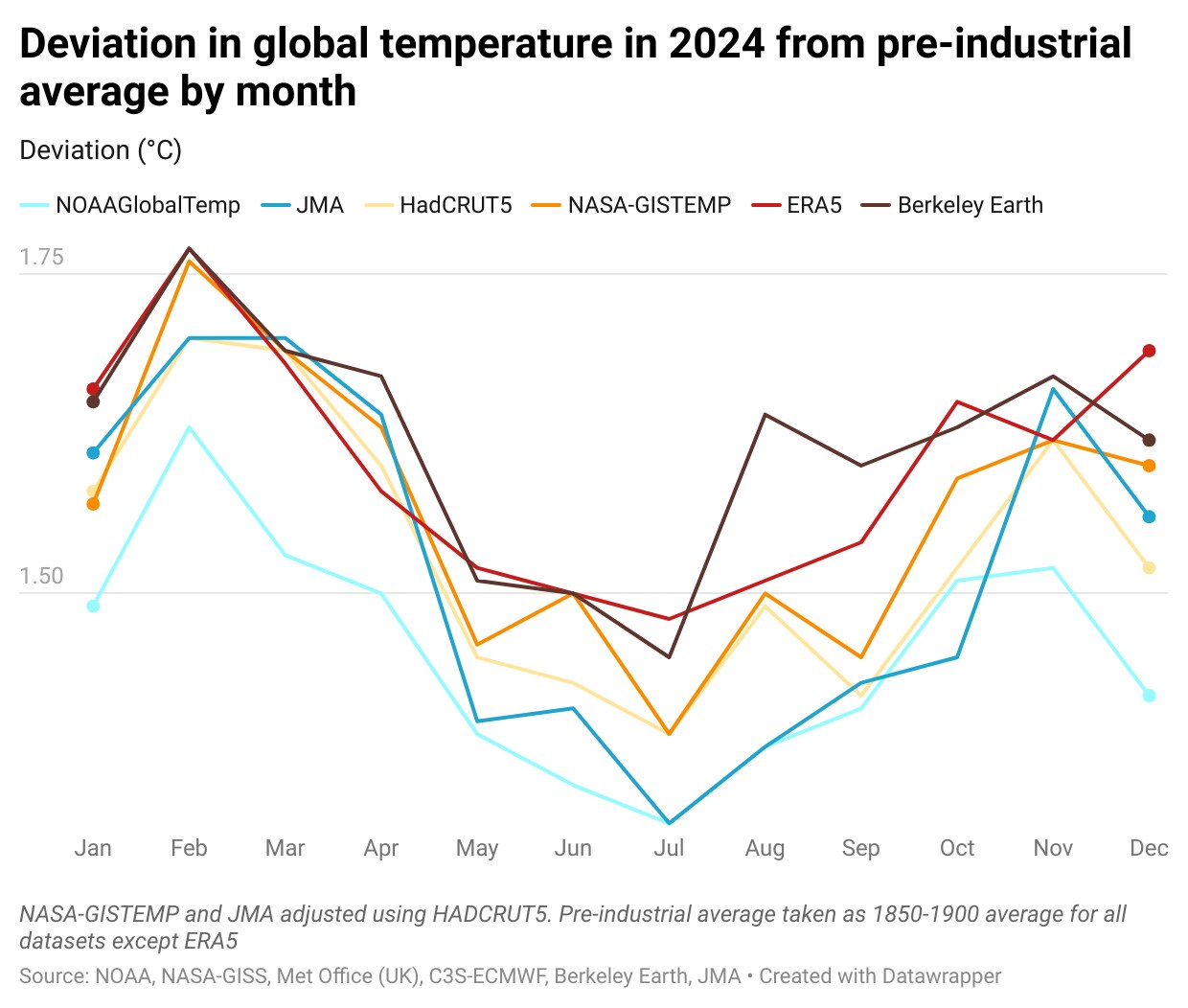
- The 1.5°C breach continued in individual months even after El Nino was overA periodic warming of the equatorial Pacific Ocean – called El Nino – had a role to play in the breach of the 1.5°C threshold in 2024. This is because the phenomenon usually gives an upward bump to global temperatures. However, El Nino cannot explain all the warming in 2024. Individual months continued to show a warming of more than 1.5°C even at the end of the year, when El Nino was over by May. This happened even in the data produced by Nasa and the UK Met Office, whose warming estimates are not the highest among the six. To be sure, 2024 temperatures did drop below 2023 temperatures for most of the second half of the year; although both 2023 and 2024 temperatures are far above pre-industrial levels.
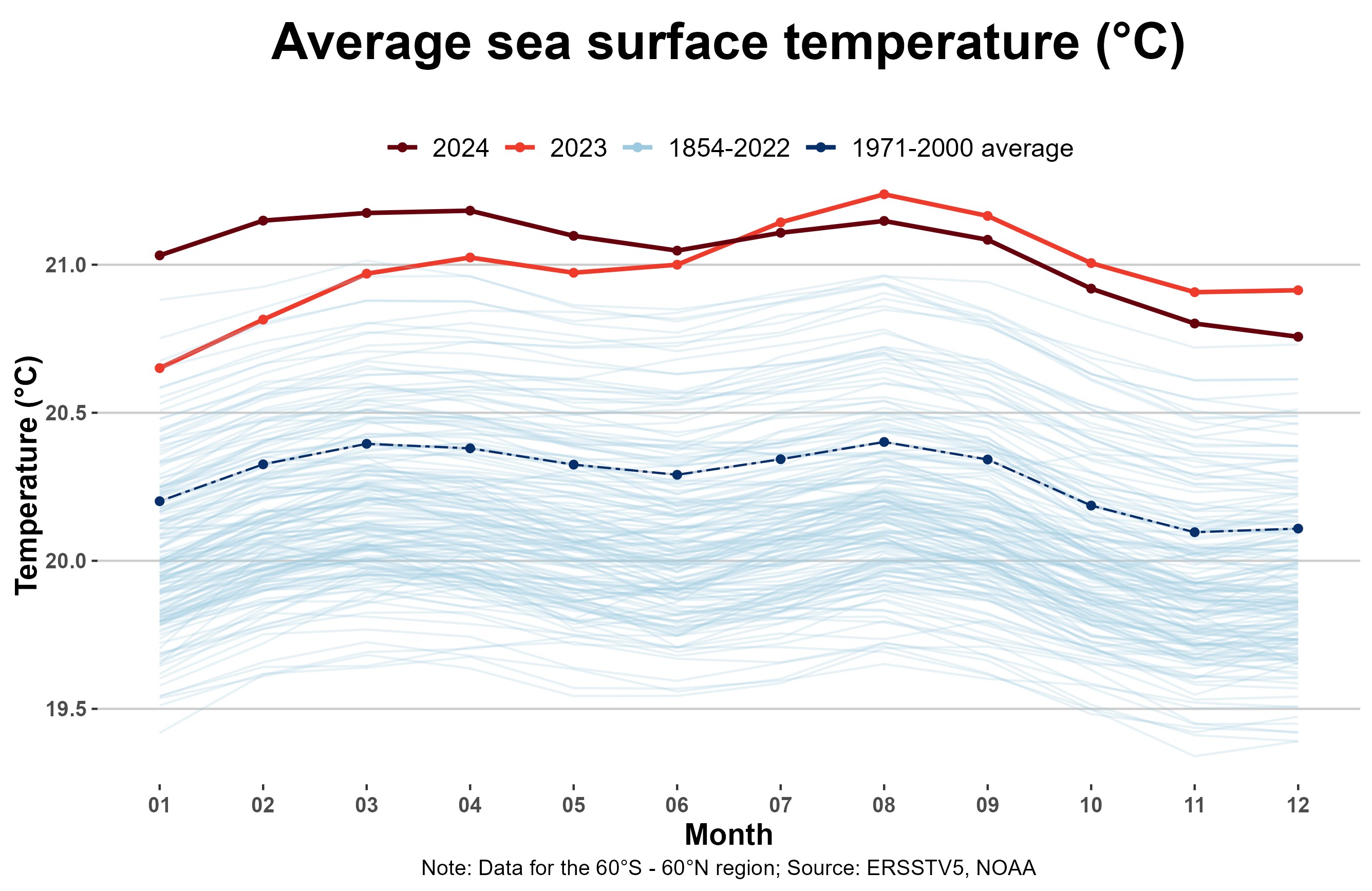
- Sea temperatures were also the warmest ever in 2024The temperature discussed above is that of the air two metres above the earth’s surface. Another indicator of a warming climate sea surface temperatures (SST). The average SST in 2024 also reached record-high levels. As HT had reported earlier, this was largely due to the North Atlantic Ocean. However, it was the Indian Ocean where 2024 temperatures remained above 2023 levels even in the second half of the year, which was not the case with other oceans.
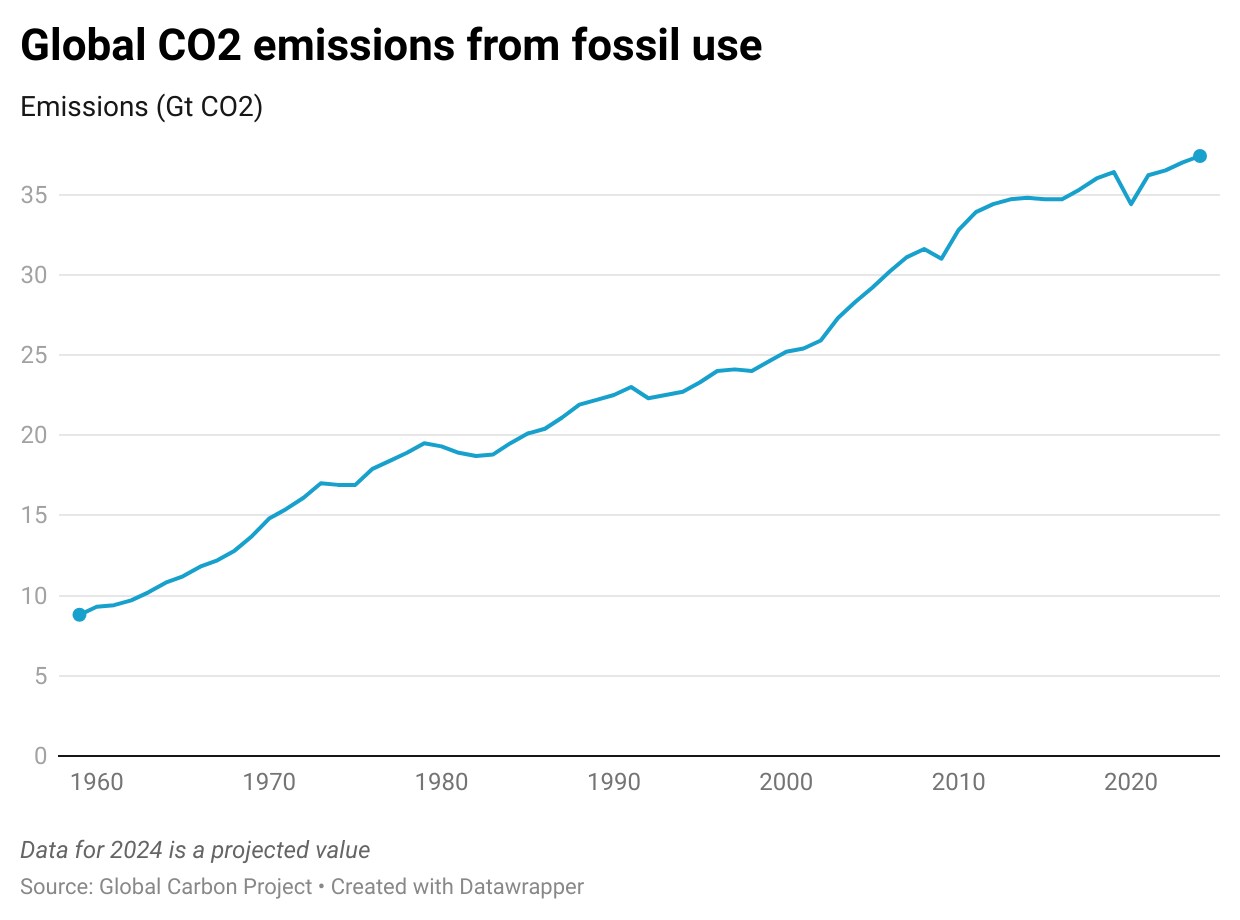
- With no reduction in emissions yet, even a long-term breach in 1.5°C might be inevitableThe datasets that breached the 1.5°C threshold in 2024 had already come close to that level in 2023. This should have sounded a warning that prompted a sharp reduction in greenhouse gas emissions. Instead, emissions increased somewhat in 2024. Therefore, several scientists are pessimistic about the world’s ability to limit long-term warming under 1.5°C. “Recent rates of warming and grossly inadequate mitigation efforts make it clear that the 1.5 °C (2.7°F) warming threshold established by the Paris Agreement will be surpassed, and the long-term average global warming will likely cross this threshold in the next five to 10 years,” Berkeley Earth said in a press release.
are usually updated with the numbers from the previous month in a staggered manner. The reason for the coordinated effort in 2024? All these datasets except one show that 2024 was warmer than the pre-industrial baseline by more than 1.5°C, the first time this has happened in more than one dataset. Here is a breakdown of 2024 global temperatures in four charts.