E-Paper



Number Theory: How long does it take for Nobel worthy research to win the prize?
This analysis focuses solely on the time lag between the publication of ground-breaking research and the awarding of the Nobel Prize

 Prefer HTon Google


John J. Hopfield is a co-recipient of the Nobel Prize for Physics in 2024 for his work on the foundational discoveries and inventions that enable machine learning with artificial neural networks. Interestingly, his seminal work on the subject was published 42 years ago in 1982. When Esther Duflo was awarded the Nobel Prize in Economics, along with Abhijit Banerjee and Michael Kremer in 2019, she was only 47-year-old. Economists have had to wait for an average of 32 years after having done their seminal work to be awarded the Nobel Prize.
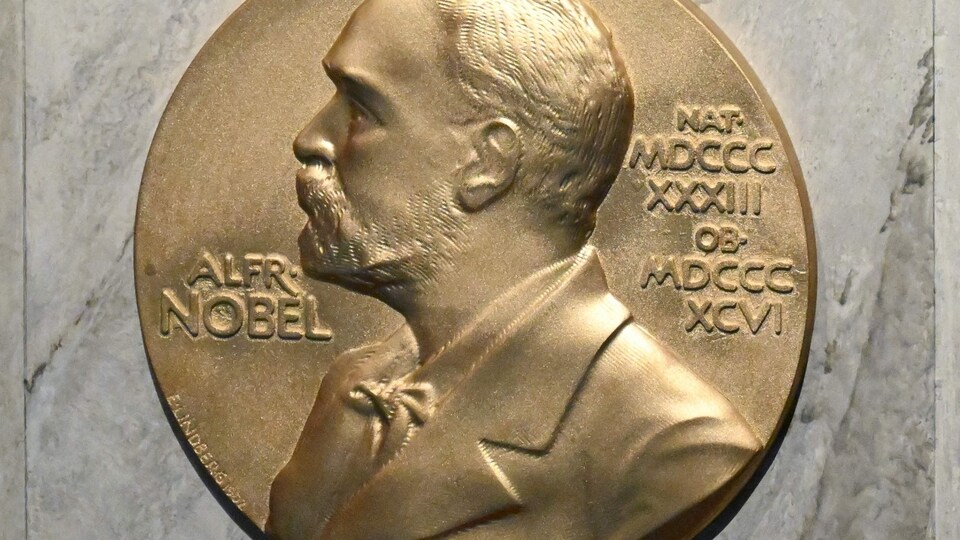
These anecdotal examples raise an interesting question. How long does it take for a path breaking scholarly work to win a Nobel Prize? Does this waiting period vary across disciplines? HT has done some in-house research to supplement already existing work on the waiting period for Nobel laureates after they have made path breaking discoveries to their professions.
What data did we use?
The Nobel Prize committees do not systematically indicate for which research publication a Nobel Prize is being awarded. The data on the year of research for which a Nobel Prize was awarded is hence tracked by comparing the information on the website of Nobel Foundation with the various works of the awardee. And on instances where there isn't enough information on the Foundation's website, other sources such as Britannica Encyclopaedia and news reports can also be used. Data from 1901 to 2019 used in this piece comes from the research of Pandelis Mitsis, an Assistant Professor at Casa College in Cyprus. They have in turn made use of the data collated by Jichao Li and his collaborators and available through the Harvard Dataverse. However, 26 Nobel Prizes conferred mainly between 2016 and 2019 have not been included because the identification of their prize-winning work was not possible. These include nine each in chemistry and physics and eight in medicine. The data from 2020 to 2024 has been manually collected by HT in a process that is similar to what has been described above. To be sure, since the Nobel Prize in Literature is primarily awarded for lifetime achievements, and the Nobel Peace Prize typically recognises contributions beyond scholarly works, this analysis focuses solely on the time lag between the publication of ground-breaking research and the awarding of the Nobel Prize in the fields of chemistry, medicine, physics, and economics.
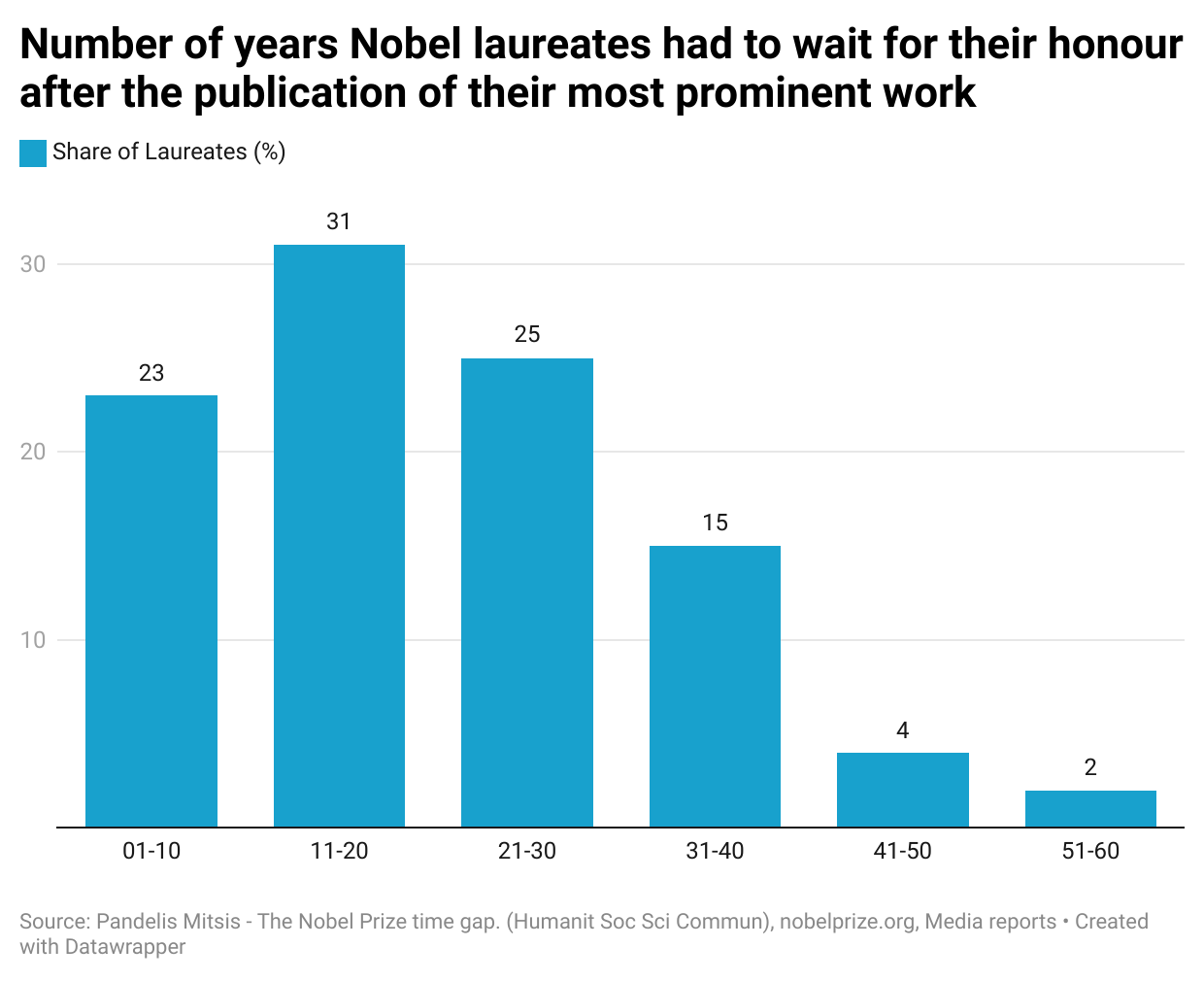
 Researchers have to wait a long time for the call from SwedenAnalysis of data from 1901 to 2024 shows that researchers in the four disciplines mentioned above have to wait an average 20.2 years after the publication of their work to be conferred a Nobel Prize. Nearly 31% of the 724 recipients analysed have received their Nobel between 11 and 20 years after publishing their breakthrough work, while a quarter of them have received it in 21 to 30 years. A smaller 23% have received it within 10 years, whereas around 21% of the awardees have had to wait more than 30 years. Chart 1: The number of years nobel laureates have to wait for their Prize
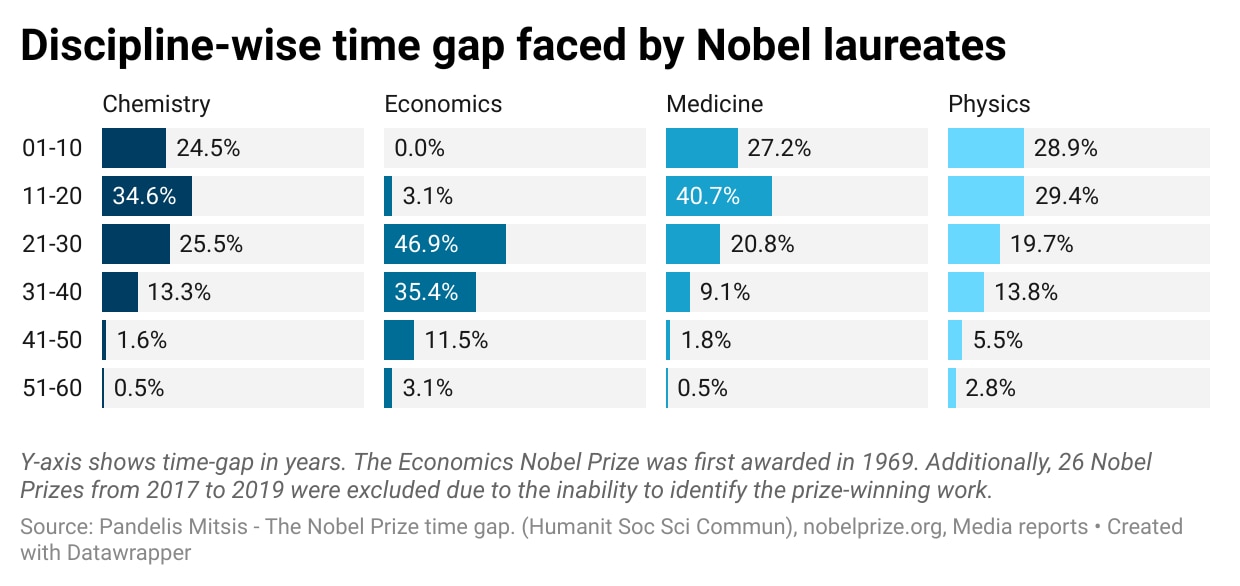
- Some disciplines have a larger waiting period than the othersNobel laureates in medicine typically receive recognition for their scientific work sooner than those in other disciplines, with an average waiting period of 17 years. In contrast, economics laureates experience the longest wait, averaging 32 years before their achievements are honoured with the Nobel Prize. Meanwhile, laureates in chemistry and physics on average have to wait around 18 and 20 years respectively. In economics, nearly 45% of Nobel laureates waited 21 to 30 years after the publication of their most significant work to receive the prize. By comparison, the majority of laureates in chemistry, medicine, and physics were honoured within a shorter window of 11 to 20 years. Chart 2: Discipline-wise time gap in receiving Nobel
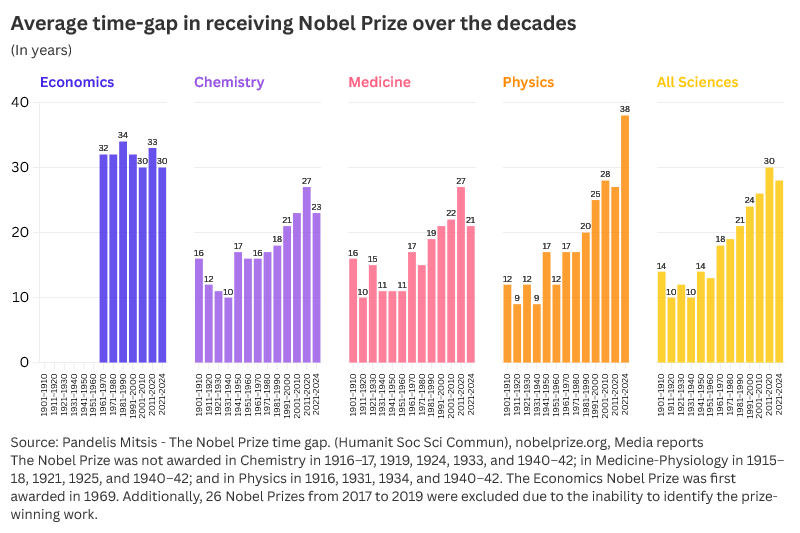
- The time-gap in receiving the Nobel have gone up over the yearsThe average time-gap between a prize-winning work and receiving the Nobel was around 19 years between 1931 and 1940. However, by 2011-2020, this went up to reach nearly 30 years. For Nobel laureates in chemistry, physics, and medicine, the average time between their work and receiving the prize has significantly increased from around 12–16 years in the 1950s to around 30 years by 2011–2020. In contrast, the time gap for economics laureates has remained steady, averaging 30 to 34 years throughout the years. Chart 3: Year-wise and discipline wise time gap
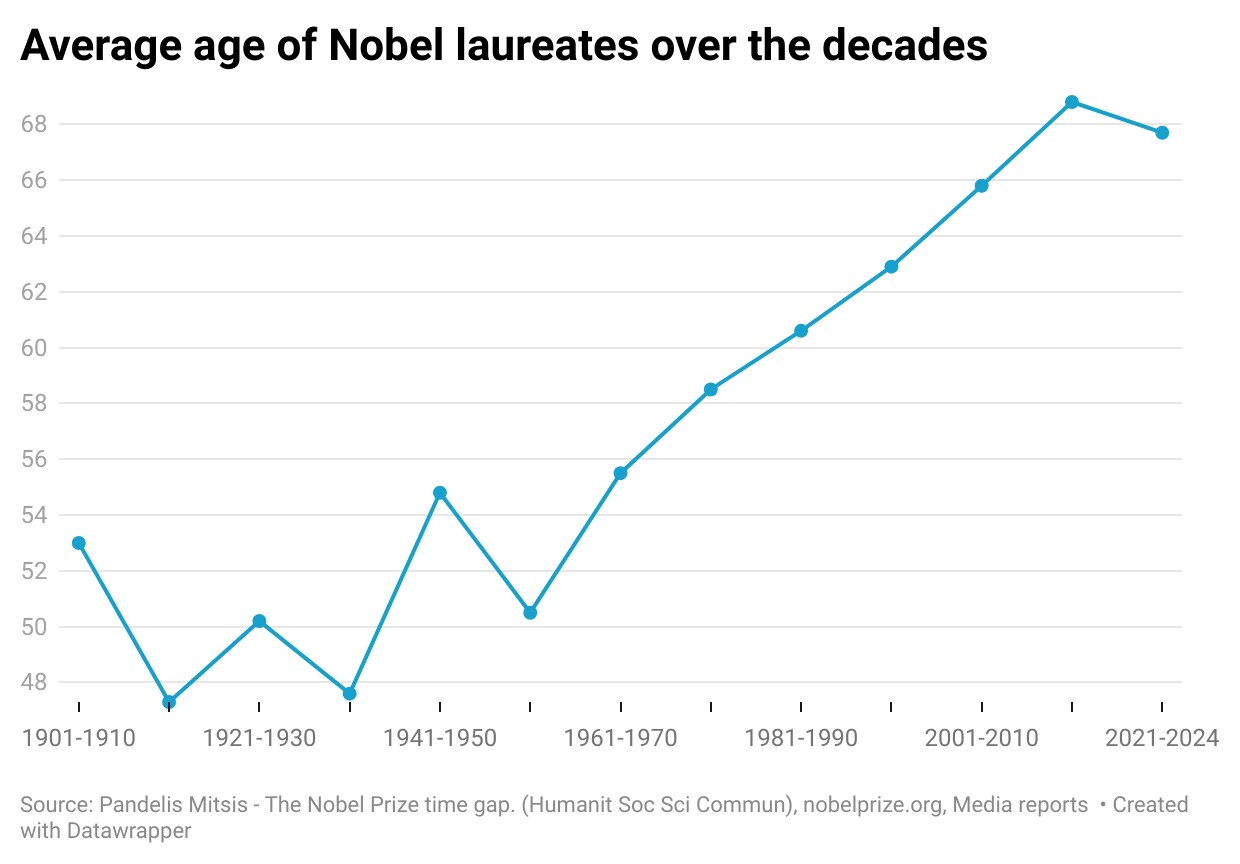
- And the average age of laureates have increasedWith a widening time-gap between ground-breaking research and the awarding of the Nobel Prize widens, the average age of laureates has also increased. The average has gone up from 58.5 in 1971-1980 to 68.8 in 2011-2020. Since 2021, it has been 67.7 so far. Except for economics, where the average has more or less remained between 64 and 67, all other disciplines have seen a considerable increase in the same. Physics especially have seen a significant rise in the average age of the laureates, as it has increased from 52.8 in 1971-1980 to 69.8 in 2011-2020, a rise of 32%. In Chemistry and Medicine, the average has gone up from 60.5 and 57.5 to 69 and 68.4 during this period respectively. Since the prize cannot be awarded posthumously, this growing time-gap and average age of laureates risks eroding the prestige of the Nobel by leaving major contributions unrecognized if their creators pass away before being honoured. Chart 4: Average age of Nobel laureates over the decades