
 E-Paper



Number Theory: India's inflation trajectory summarised
.
Published on: Mar 24, 2025, 09:13:43 IST

 Prefer HTon Google
Share via


Copy link

India’s retail inflation fell to 3.6% in February, coming below the Reserve Bank of India’s target rate of 4% after five months. The favourable inflation print has raised hopes of yet another interest rate cut by the RBI Monetary Policy Committee (MPC) when it meets in April. What has been the trajectory of inflation in the Indian economy in the recent past? Here are four charts that try and answer this question in detail.
India's inflation trajectory summarised
 Quarterly inflation has been above RBI’s target of 4% since September 2019One of the reasons the February Consumer Price Index (CPI) did not make really big news was that headline inflation came in lower than 4% in July and August 2024 as well. Quarterly inflation numbers, however, have not been under 4% since September 2019 when this number was 3.5%. Will inflation for the quarter ending March 2025 end up below the 4% mark? “The March inflation print is trending below RBI’s 4% target, though it must be noted that vegetable prices in the first 10 days of March were broadly unchanged from February. Currently, March quarter inflation is trending lower than RBI’s forecast (of 4.4%) for the quarter”, Aayushi Chaudhary and Pranjul Bhandari said in an HSBC research note issued on March 12.
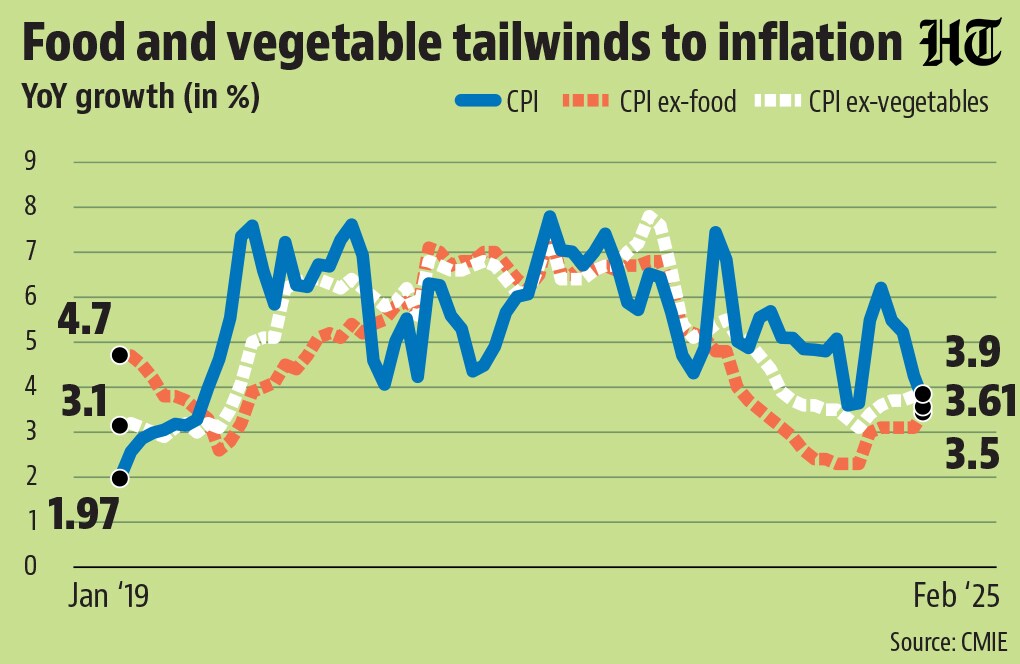
- The inflation picture becomes very different once food, or just vegetables are excludedThe Consumer Price Index (CPI), which is the headline inflation number measuring retail inflation, has been falling sharply since October 2024. Data from the Centre for Monitoring Indian Economy (CMIE) shows that CPI excluding food and CPI excluding vegetables have been much lower than headline CPI for a while. In fact, CPI ex-food and CPI ex-vegetables fell below the 4% target in September 2023 and January 2024, respectively. While vegetable prices are finally easing, bringing down overall food prices, retail inflation would have been under control for a while if not for food inflation. To be sure, CPI ex-food and CPI ex-vegetables have started rising moderately since the second half of 2024.
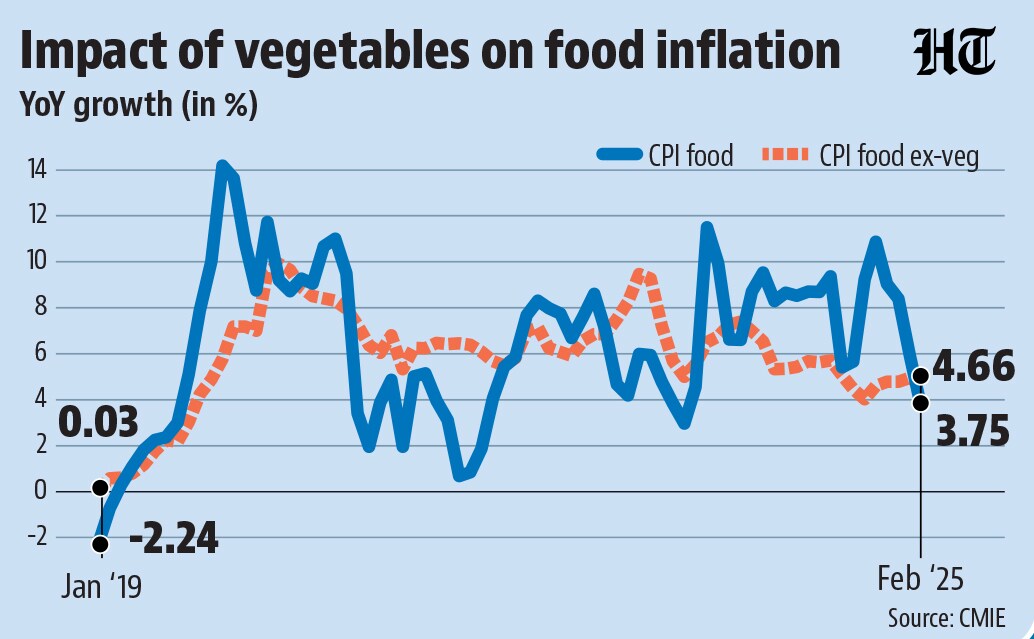
- Food inflation’s volatility has been largely driven by vegetablesThe food sub-category of CPI has seen a sharp fall in inflation from 10.9% in October 2024 to just 3.8% in February. Much of this fall is on account of vegetable prices rather than food items as a whole. Vegetables have a share of 15.5% in the food basket of CPI and 6.04% in overall CPI. If the vegetable sub-category were to be excluded from food, inflation has remained within 4.5%-5% range between the October 2024-February 2025 period. To be sure, vegetable prices have always been much more volatile than food prices excluding vegetables. This is basically a reflection of the fact that vegetable supply is far more susceptible to weather-related supply shocks.
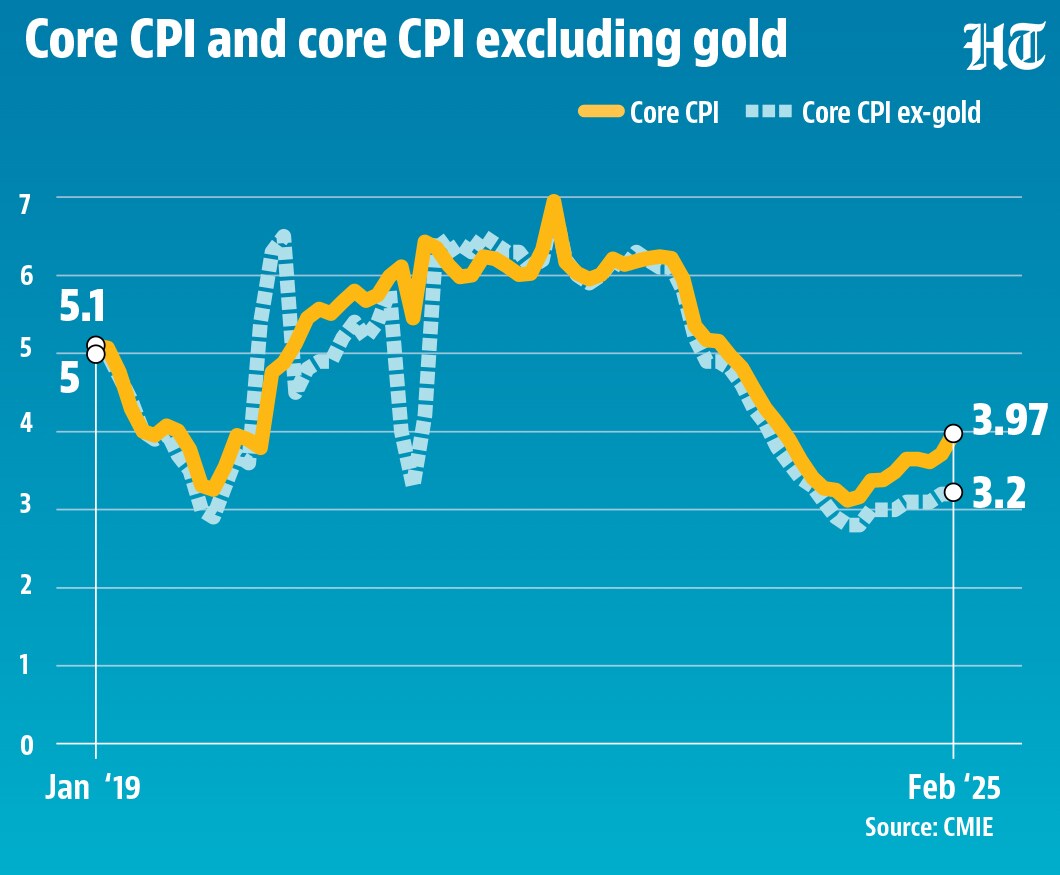
- Should rising core inflation be a matter of concern?Because the food and fuel component of the CPI are more prone to seasonal variations, economists often track core inflation – the non-food non-fuel part of the CPI basket – to get a better idea about whether or not the economy is overheated. Core inflation has been on a rising trajectory for nine months since June 2024. In February 2025, it reached 4% for the first time after November 2023. Should rising core inflation be a matter of concern? Before core CPI started rising last year, this reading was almost in line with the number for core CPI excluding gold, but as core inflation started to speed up, the two metrics have gradually been diverging with core excluding gold trailing the overall core. This means that the rise in core CPI is largely because of rising prices of gold. “Excluding gold, core inflation remained firmly below 4% mark in annual terms and, at its long-term average in sequential terms”, the HSBC research note said.


Unlock a world of Benefits with HT! From insightful newsletters to real-time news alerts and a personalized news feed – it's all here, just a click away! -Login Now!


