
 E-Paper



Number Theory: Indispensable yet invisible — What India’s tribal farmers need
.
Published on: Jan 21, 2025, 08:58:27 IST

 Prefer HTon Google
Share via


Copy link

The debate on India’s food problem increasingly focuses on food distribution, even though economic and institutional bottlenecks of agricultural production persist, particularly for marginalised sections. Tribal farmers, despite their community-led strategies rooted in seed conservation, production and consumption, remain largely excluded from the policy discourse. Here is what the data shows.
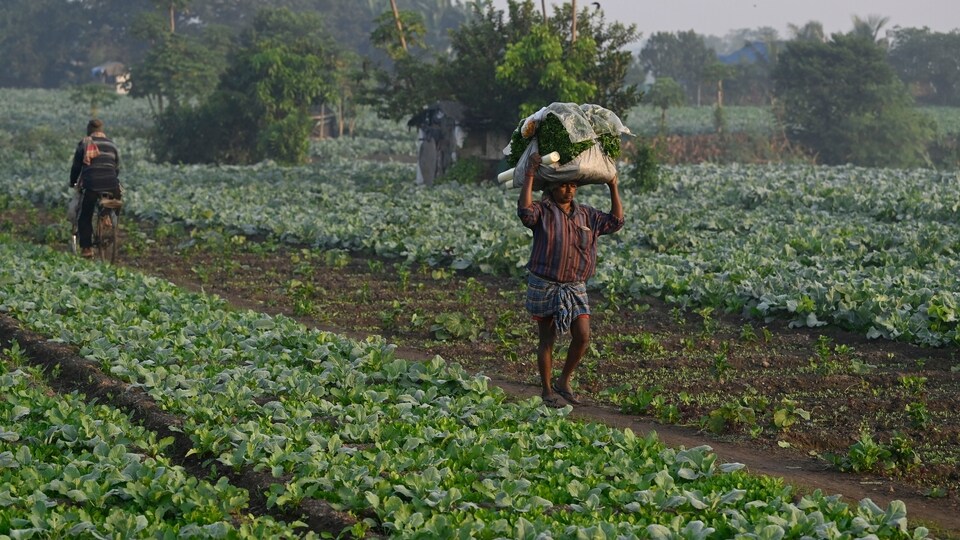
Indispensable yet invisible — What India’s tribal farmers need
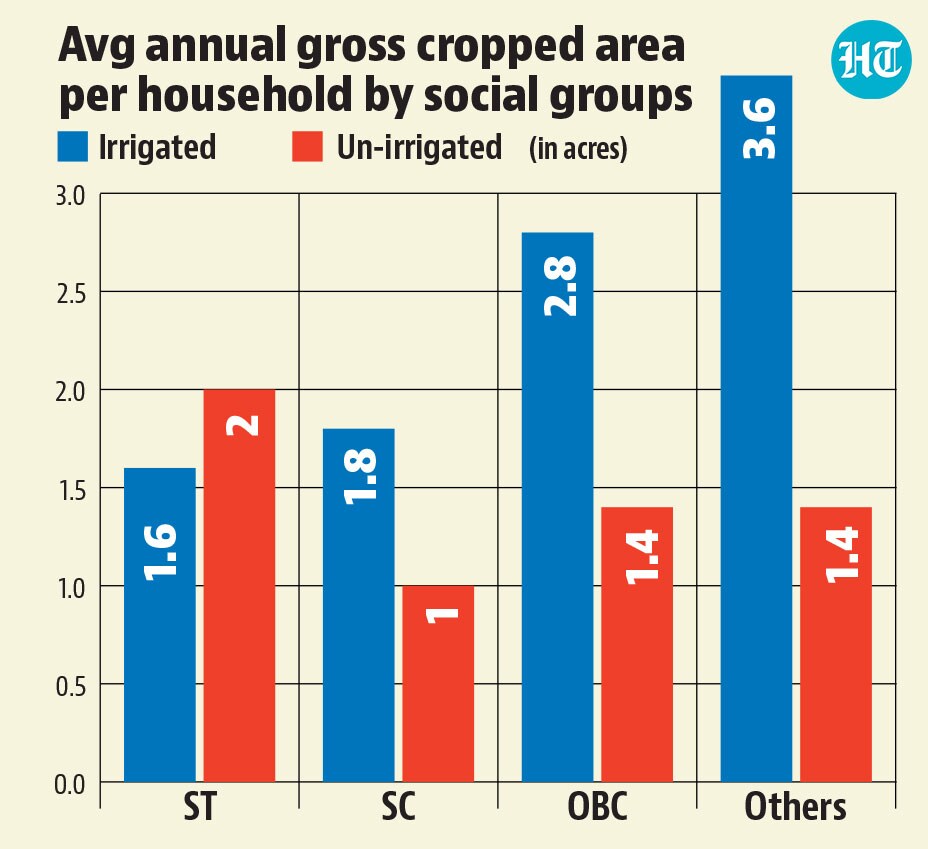
 Scheduled Tribes have the lowest land ownershipNearly 90% of the tribal population lives in rural areas, and by the National Sample Survey (NSS) 77th round estimates, accounts for 14% of agricultural households. Historically disadvantaged, tribal farmers have limited access to land, irrigation, modern inputs, and credit, which constrains their agricultural productivity. Nonetheless, the sustainable agricultural practices intrinsic to these farmers are being touted as solutions to the global climate crisis. Keeping this in mind, we look at the status of the tribal farmers in India through the NSS data. The average annual gross cropped area per household is the lowest among tribal farmers for irrigated area and highest for unirrigated land which indicates greater reliance on rain-fed cultivation.
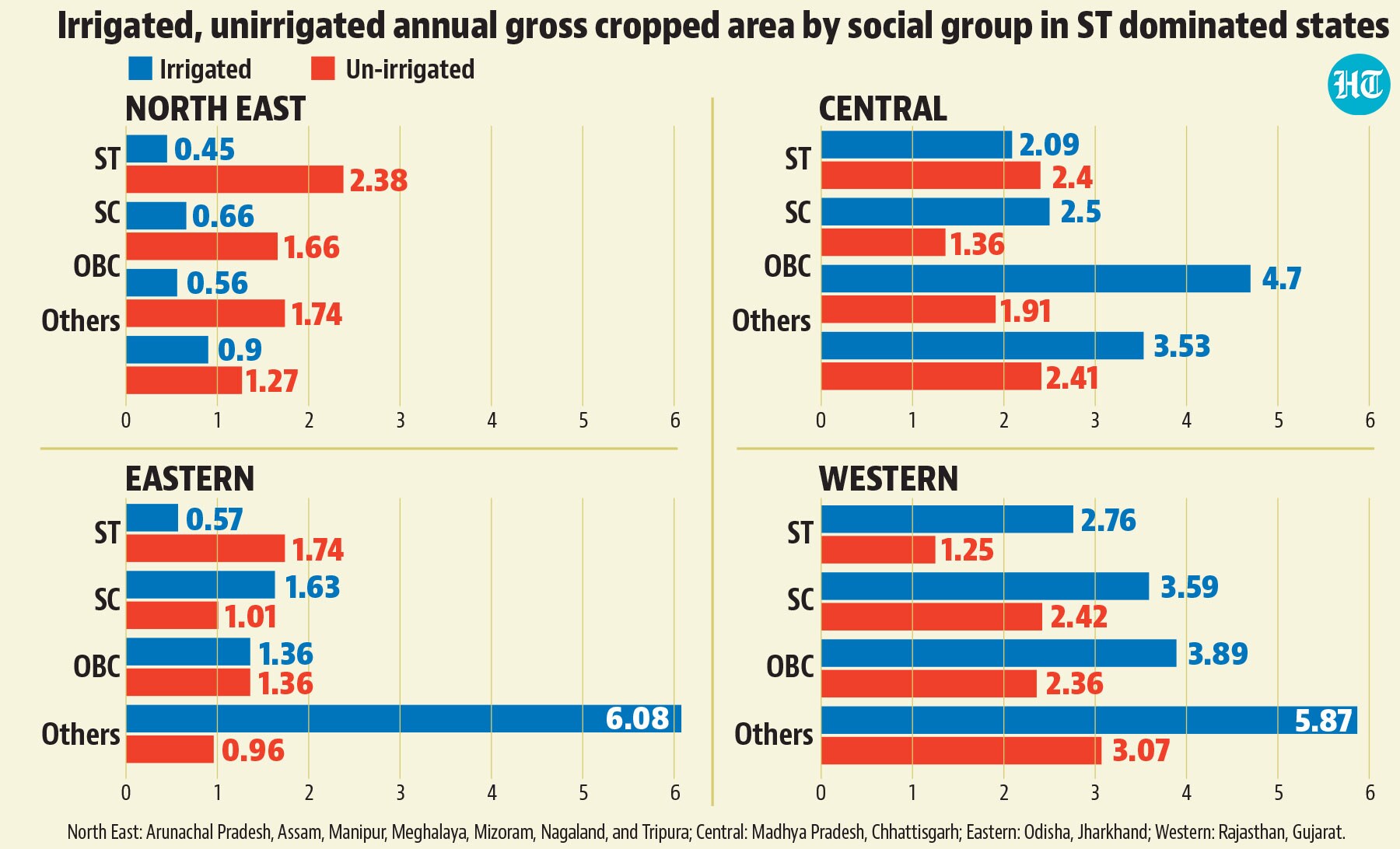
- This holds across different regions in the countryGeospatial factors play a significant role in differences to access in irrigation as most Scheduled Tribes (STs) live in dry, arid or hilly areas, making access to conventional irrigation a major challenge. When we compare tribal farmers with their geographical peers from other social groups -- say within NSS regions (which are cohorts of districts -- the difference in the size of irrigated land cultivated by STs diminishes substantially compared to that at the aggregate level. A region-wise analysis of states with a substantial proportion of tribal farmers (20% or more) indicates more variations for STs vis-a-vis the rest of the social groups in the eastern and western regions. This suggests that social inequities contribute to the vulnerabilities of tribal farmers.
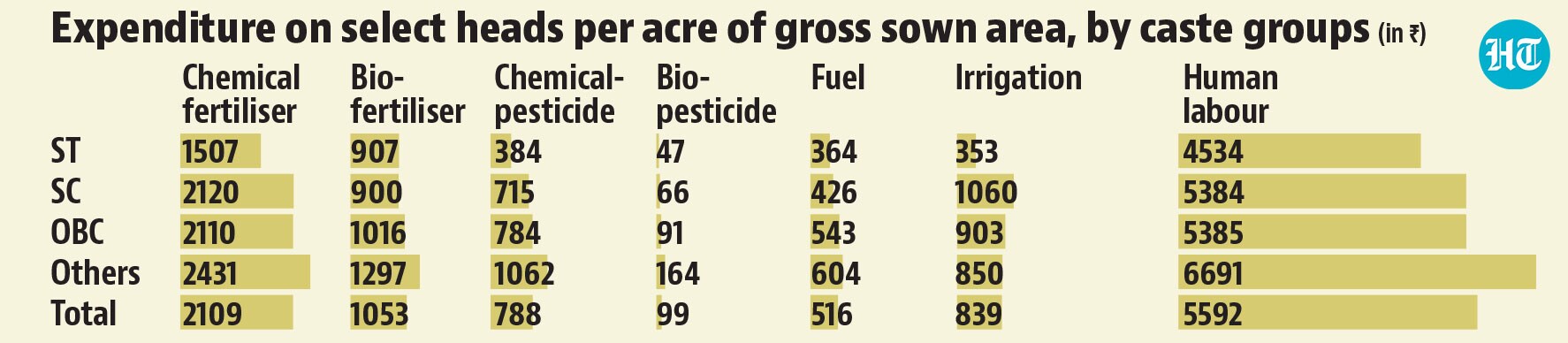
- Tribal farmers also lag in use of inputs in farmingTribal farmers are also poorer than farmers from other communities, which limits their capacity to invest in farming. This is exacerbated by low institutional support. For example, only 11.7% of tribal farmers have Kisan credit cards as opposed to 21.6% of other farmers, denying them the opportunity to secure formal credit. Additionally, only 4.4% of tribal farmers insure their harvest as compared to 7.8% of the other communities taken as a whole. Limited access to irrigation restricts the use of other inputs as well, and so does the lack of ability to invest. Hence, tribal farmers have much lower expenditure on inputs such as fertilisers, pesticides, fuel, irrigation, and labour. This is true for both predominantly commercial as well as subsistence farmers.
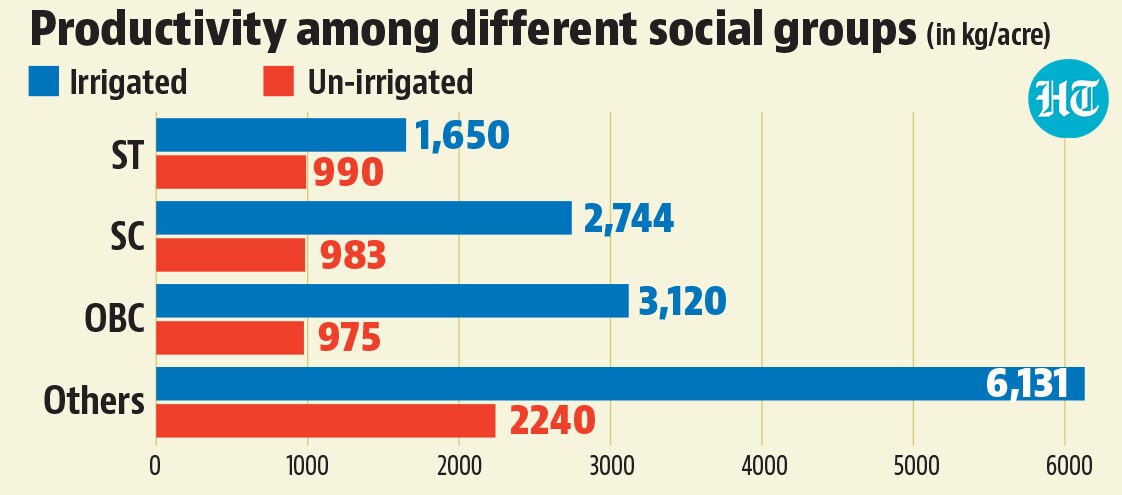
- All this culminates in low productivity and incomeResource scarcity leads to low productivity, even in the irrigated area, impacting both agricultural output and nutrition. Tribal farmers sell only 27-30% of the foodgrain they produce, indicating this is mostly used for self-consumption. According to the data from the National Family Health Survey-5, among the social groups, the incidence of acute undernutrition, anaemia, and child undernutrition is the highest among tribal groups. Tribal farmers in India face several challenges emanating from social inequities, geospatial constraints and institutional neglect that further amplify the magnitude of their vulnerabilities. Despite their significant contributions through sustainable farming and indigenous knowledge systems, they largely remain on the periphery of policy attention. A multidimensional approach of expanding irrigation infrastructure, institutional support (for inputs and output) and emphasising the sustainable practices for macro agricultural policy framework would help address these systemic challenges. Unless these interventions are initiated soon, tribal farmers will continue to remain trapped in poverty, malnutrition and invisibility in the national agriculture discourse. The next Union Budget will do well to focus on this.
Sourindra Mohan Ghosh is an assistant professor at Council for Social Development. Nivedita Sharma is associate professor, Jindal Global Business School, OP Jindal Global University and Visiting Fellow, Council for Social Development.

Unlock a world of Benefits with HT! From insightful newsletters to real-time news alerts and a personalized news feed – it's all here, just a click away! -Login Now!


