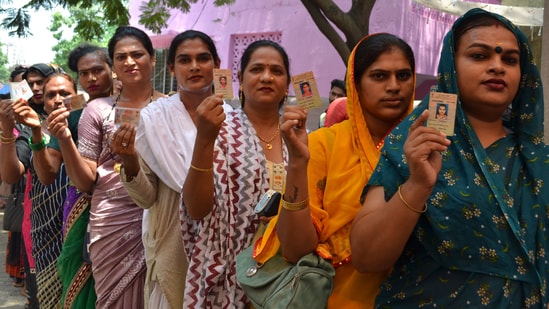
Jharkhand will elect a new assembly in a two-phase election scheduled for November 13 and 20. The main contest in the state is between the incumbent Jharkhand Mukti Morcha (JMM)-led alliance and the Bharatiya Janata Party (BJP)-led alliance. An extremely important, if not the most important factor, will be the alignment of scheduled tribe (ST) votes in the state.
How much do STs matter in the state’s politics? Are they a monolithic block politically and geographically or do they show
STs and their importance in Jharkhand politicsST-reserved ACs played a critical role in the JMM’s victory in the 2019 assembly elections
Twenty-eight of the 81 assembly constituencies (ACs) in Jharkhand are reserved for STs. This means that only ST candidates can contest from these ACs; and ST voters are also likely to be in a majority in these. In the 2019 elections, the JMM-led alliance won 47 of the 81 ACs in the state. Twenty-five of these came from ST-reserved ACs. If one compares the performance of the JMM-led alliance and the BJP on ST-reserved and other ACs in Jharkhand, the math is drastically different, making it clear that it was the ST vote that powered the JMM alliance to victory in the 2019 elections.
2019 was the JMM’s best performance in ST ACs and the BJP’s worst
In 2019, the JMM strike rate in ST-reserved ACs was 90.48% -- the highest ever since 1980. The strike rate of a party is defined as the number of ACs it won divided by the number of ACs it contested. BJP saw its worse performance in ST-reserved ACs in 2019 with a strike rate of just 7.14% -- the lowest for the party since 1980. The BJP won onlt two ACs out 28 it contested in ST-reserved ACs.
ST consolidation also played a big role in building an alliance behind the JMM in 2019
This is an extremely important fact to keep in mind. The 2019 assembly elections were the first in which the JMM built a pre-poll alliance with other parties. The alliance led to a significant improvement in the seat share to vote share ratio of both the JMM and the Congress, the two major partners in the alliance, while the BJP suffered a sharp fall in this metric. In the first-past-the-post system, the seat share to vote share ratio is a good measure of a party/alliance’s ability to convert votes into seats. It is useful to remember the political milieu in Jharkhand before the 2019 elections. The BJP and the All Jharkhand Students’ Union (AJSU) alliance won a majority in the 2014 elections and put in place a non-ST chief minister for the first time in the state.This was seen as an attempt to other the STs and was followed by controversial decisions. Proposed amendments in the Chota Nagpur Tenancy Act 1908 and Santal Pargana Tenancy Act 1949 (they were later withdrawn) further added to resentment among STs in the state, and were seen as a dilution of their property rights. It was this ST anxiety which gave a tailwind to the JMM’s campaign and facilitated its alliance with the Congress and other parties.
However, the ST population in Jharkhand is not distributed uniformly
According to the 2011 census, 26.2% of Jharkhand’s population is ST. However, the ST population in the state is not distributed uniformly. A district-wise breakup of population data shows this clearly . Of the 24 districts in the 2011 census,11 had a ST population share of 30% or higher while six had less than 10% ST population. A subregion-wise disaggregation of the state’s population, however, shows that the ST population is contiguous geographically speaking. It is the highest in the South Chhotanagpur and Kolhan subregions and the lowest in the subregion North Chhotanagpur which borders Bihar.
{{^htLoading}}{{/htLoading}}{{#usCountry}}{{/usCountry}}