Anxiety over the political and economic fallout of demographic divergence between the North and the South in India’s southern states is not a new thing. However, the chief ministers of two southern states, N Chandrababu Naidu of Andhra Pradesh and Tamil Nadu’s MK Stalin, went a step further when they asked people in their states to have more children to reverse the decline in population. While Naidu’s call for having more children was ostensibly aimed at making the population younger,
- Fertility rates have a strong link with income levels across the world and Indian states are no exceptionAt the heart of the demographic divergence debate in India is the difference between total fertility rates (TFR) – the average number of children a woman has in her lifetime – across states. TFR has fallen significantly below the threshold of 2.1 – considered the replacement level value at which the population maintains itself – in states such as Tamil Nadu (1.76), Andhra Pradesh (1.68) and Kerala (1.79),but is still much higher in states such as Bihar (2.98) and Uttar Pradesh (2.35), according to the 2019-21 National Family and Health Survey (NFHS). While the remarks by Naidu and Stalin would suggest that TFR is somehow driven by some metaphysical factors, a look at both international and national data shows this is not the case. TFR, both across countries and Indian states, has a strong correlation with per capita incomes, and falls with rising incomes. This is in keeping with the established wisdom on demographic transformation and economic growth which suggests that high-income societies tend to have fewer children. In other words, families in relatively prosperous societies are unlikely to have more children because politicians ask them to.
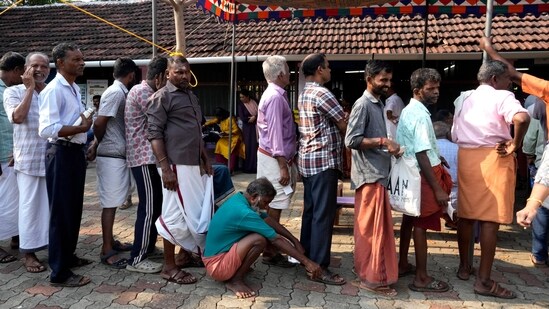
- States such as Tamil Nadu have gained from their falling populations with no losers at the national levelThis is the most obvious, yet politically most underappreciated part of the demographic debate. A declining TFR over a long enough period of time means a young-to-old change in the composition of the population which, in turn, leads to a shortage of working hands in the economy. One of the consequences of falling share of working-age population is a rise in wages. That states such as Kerala and Tamil Nadu have among the highest average rural wage levels in India – the best proxy for unskilled labour incomes – is testimony to this principle. In fact, Tamil Nadu’s ranking in rural wages among major Indian states has climbed significantly between 2000-01 and 2023-24. This is bound to have generated a premium for even the unskilled workforce. Without the availability of migrant labour from northern and eastern states, regions such as Tamil Nadu and Kerala would have faced, or will face, an acute shortage of labour that could cripple their economy. The migration to southern states has, therefore, not only fulfilled their labour requirements but also generated more earnings for blue-collared workers from some of India’s poorest states that have higher fertility rates. The failure to accept this mutually beneficial movement of labour across Indian states is to wish away among the most important and egalitarian dynamics in the Indian economy without which neither the North nor can South can survive.
- What parties such as DMK need to prepare for are the political consequences of migrationIt is only to be expected that short-term male-driven migration to labour-scarce states in the South from the North and the East will eventually become more long-term and family-centric. States such as Tamil Nadu and Kerala are already aware of these trends and even government schools are making special provisions to tend to the needs of children of migrant workers who do not speak the local language. As and when the number of migrants crosses a certain threshold, this group become a factor to reckon with in politics. A futuristic political organisation would focus on integrating and attracting migrants to its political fold rather than preaching a demographic autarky that is oblivious to economic realities. Cities such as Chennai and even Bengaluru can look at what has happened to peer cities Mumbai and Delhi where migrants have become a major factor in politics. While Delhi has had relative social stability since most of its migrants are Hindi-speaking, Chennai and Bengaluru are seeing a rise in the number of non-native speakers whose political and cultural integration may prove far more difficult.
Roshan Kishore is the Data and Political Economy Editor at Hindustan Times. He heads the newsroom's data journalism team, which produces Number Theory, a daily data-driven feature for the print edition and the HT app. Number Theory uses data analysis and story-telling based on it to add value to the newsroom’s daily coverage by putting stories in a larger context on a range of issues, including politics, macroeconomy, markets, global affairs and climate. Under his leadership HT’s data journalism work has established itself as a niche product in Indian journalism and pushed the boundaries of marrying academic rigour with news sense and speed. Along with writing and editing data stories, he has also been writing a weekly political economy column called Terms of Trade for HT Premium. A trained economist with an MPhil degree from Jawaharlal Nehru University, Kishore has also been a visiting fellow at the Centre for Advanced Studies of India (CASI) at the University of Pennsylvania. Along with his journalistic work, his writings have also appeared in journals such as the Economic and Political Weekly and working papers for CASI and UNESCAP.
Abhishek Jha is Assistant Editor-Data at Hindustan Times. He uses statistical programming to generate newsworthy insights from large datasets. He is part of the team that produces Number Theory, a daily data story feature of the paper’s print edition. Since March 2024, he has been writing Weather Bee, a weekly column for the Hindustan Times website. He is a chemical engineer by training, who specialises in stories related to weather, climate, and the environment. Jha has been at HT since 2018, where he offers data-driven perspective and analysis on politics, environment, weather, climate, economy and society. His work includes data coverage of elections in India and abroad, including the 2019 and 2024 Lok Sabha elections; the disasters and extreme weather resulting from changing climate, such as floods, droughts, heat waves, cold waves, and dwindling snow cap in the Himalayas; the factors that drive poor air quality in northern India; the changing patterns of land use; the Covid-19 pandemic and its impact on labour market conditions; the changing pattern of consumer spending seen in the new consumer spending surveys; and social norms seen in the surveys such as the National Family Health Survey.