E-Paper



Number Theory: Why southern states need to re-examine their fears over demography
.

 Prefer HTon Google


Anxiety over the political and economic fallout of demographic divergence between the North and the South in India’s southern states is not a new thing. However, the chief ministers of two southern states, N Chandrababu Naidu of Andhra Pradesh and Tamil Nadu’s MK Stalin, went a step further when they asked people in their states to have more children to reverse the decline in population. While Naidu’s call for having more children was ostensibly aimed at making the population younger, Stalin linked it directly to the need to prevent a reduction in Tamil Nadu’s parliamentary representation ahead of a delimitation exercise.
While there is an objective basis for political and economic anxiety (especially devolution of taxes) of southern states, there is enough evidence to suggest that a call to have more children to reverse demographic trends is not steeped in reality. In fact, smart politics would seek a realignment that tries to pre-empt the effects of such demographic divergence and associated economic and political consequences.
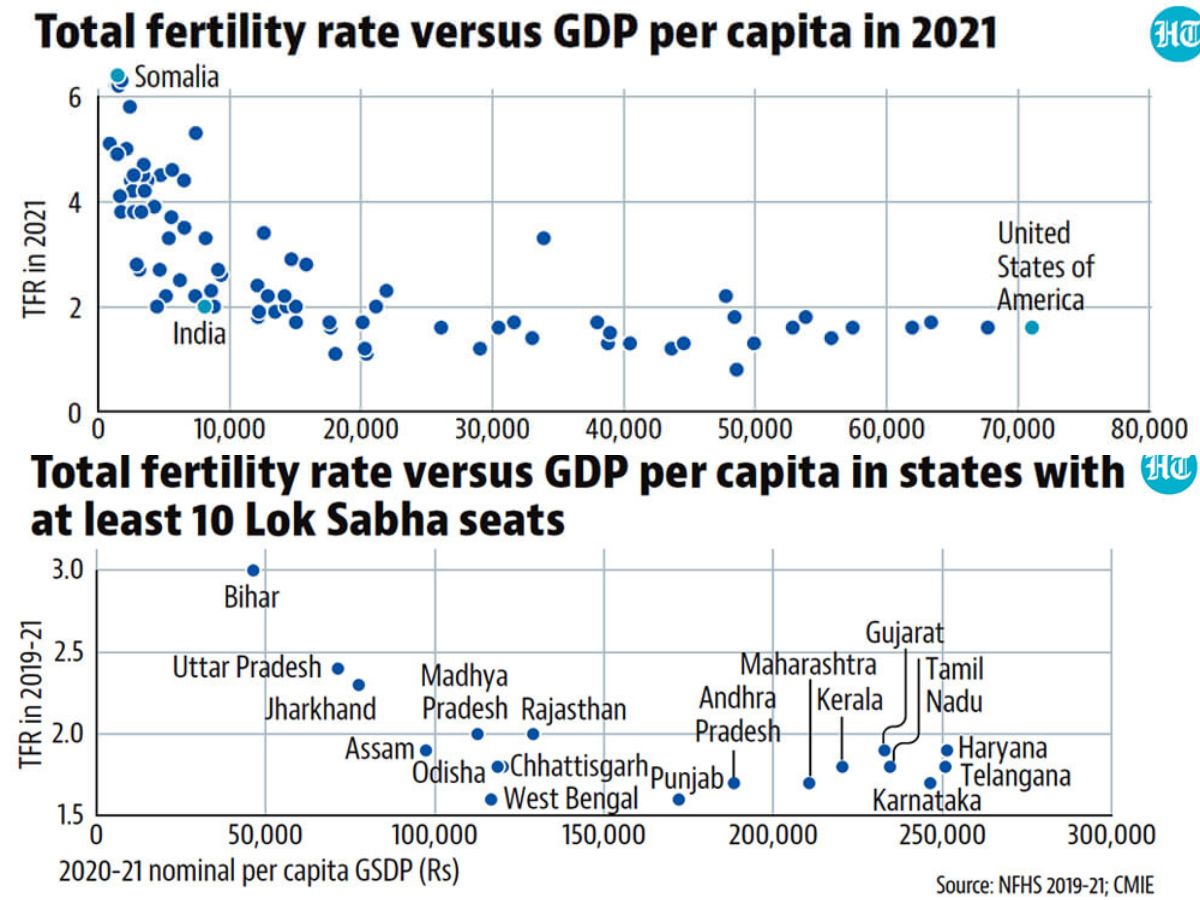
 Fertility rates have a strong link with income levels across the world and Indian states are no exceptionAt the heart of the demographic divergence debate in India is the difference between total fertility rates (TFR) – the average number of children a woman has in her lifetime – across states. TFR has fallen significantly below the threshold of 2.1 – considered the replacement level value at which the population maintains itself – in states such as Tamil Nadu (1.76), Andhra Pradesh (1.68) and Kerala (1.79),but is still much higher in states such as Bihar (2.98) and Uttar Pradesh (2.35), according to the 2019-21 National Family and Health Survey (NFHS). While the remarks by Naidu and Stalin would suggest that TFR is somehow driven by some metaphysical factors, a look at both international and national data shows this is not the case. TFR, both across countries and Indian states, has a strong correlation with per capita incomes, and falls with rising incomes. This is in keeping with the established wisdom on demographic transformation and economic growth which suggests that high-income societies tend to have fewer children. In other words, families in relatively prosperous societies are unlikely to have more children because politicians ask them to.
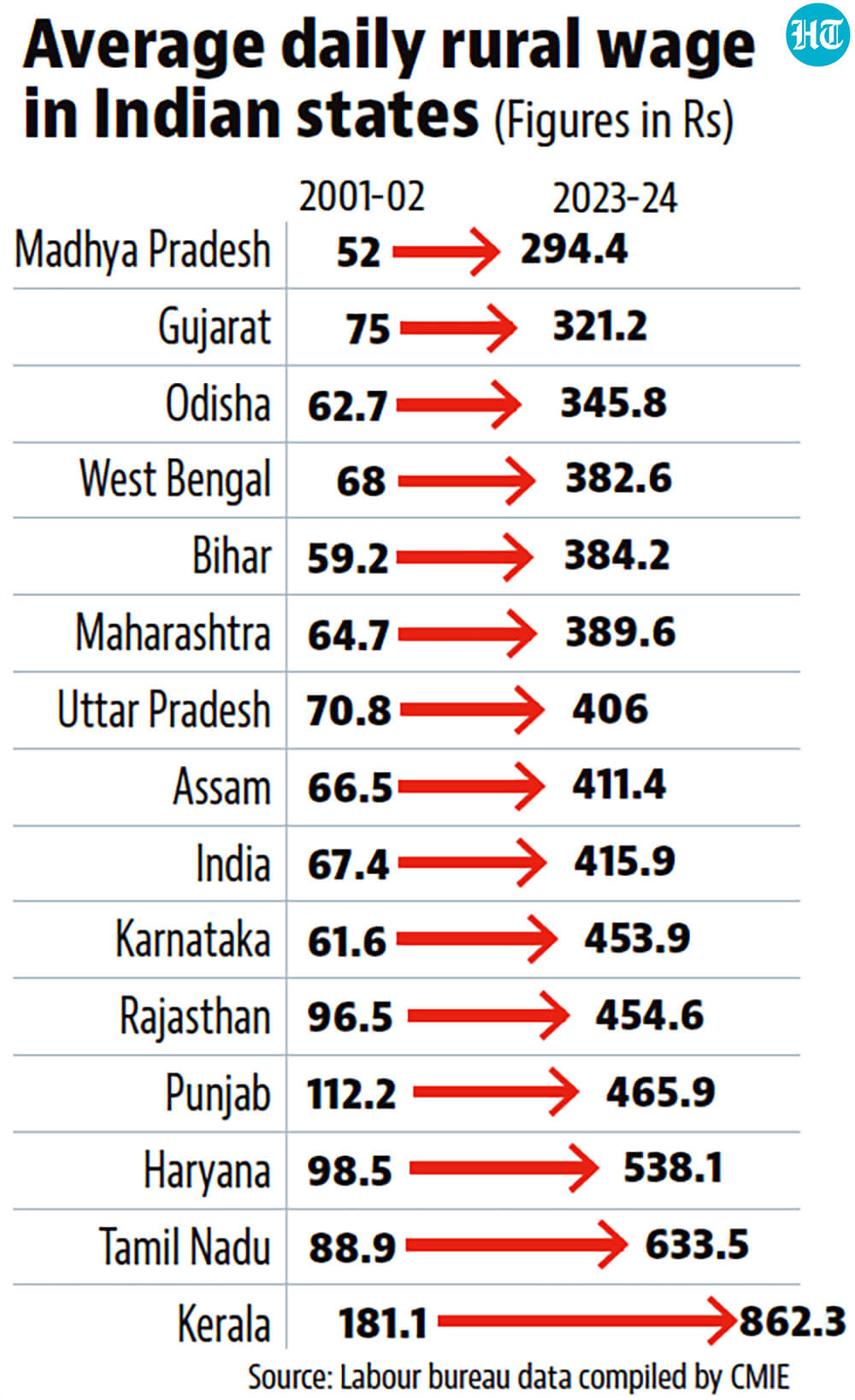
- States such as Tamil Nadu have gained from their falling populations with no losers at the national levelThis is the most obvious, yet politically most underappreciated part of the demographic debate. A declining TFR over a long enough period of time means a young-to-old change in the composition of the population which, in turn, leads to a shortage of working hands in the economy. One of the consequences of falling share of working-age population is a rise in wages. That states such as Kerala and Tamil Nadu have among the highest average rural wage levels in India – the best proxy for unskilled labour incomes – is testimony to this principle. In fact, Tamil Nadu’s ranking in rural wages among major Indian states has climbed significantly between 2000-01 and 2023-24. This is bound to have generated a premium for even the unskilled workforce. Without the availability of migrant labour from northern and eastern states, regions such as Tamil Nadu and Kerala would have faced, or will face, an acute shortage of labour that could cripple their economy. The migration to southern states has, therefore, not only fulfilled their labour requirements but also generated more earnings for blue-collared workers from some of India’s poorest states that have higher fertility rates. The failure to accept this mutually beneficial movement of labour across Indian states is to wish away among the most important and egalitarian dynamics in the Indian economy without which neither the North nor can South can survive.
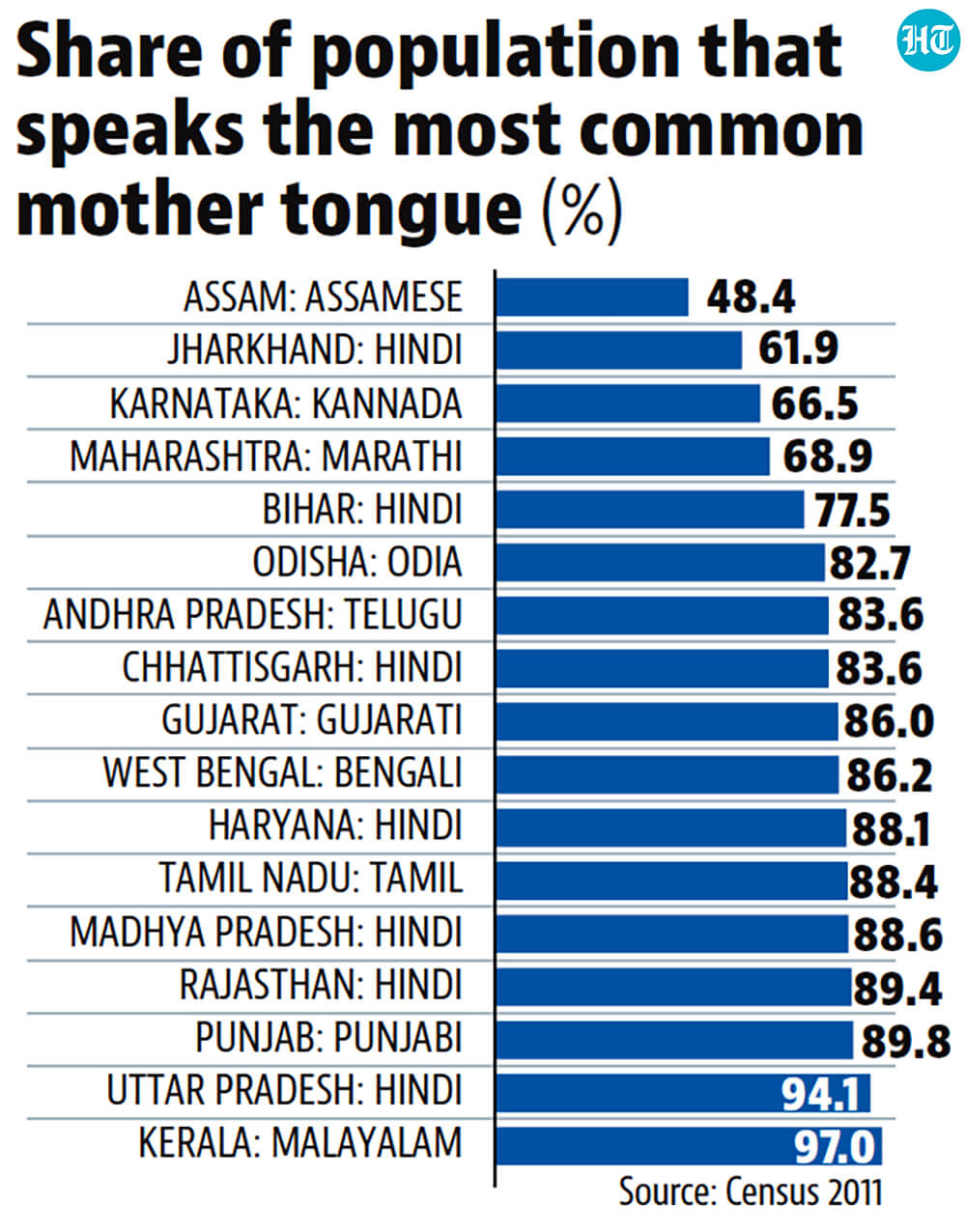
- What parties such as DMK need to prepare for are the political consequences of migrationIt is only to be expected that short-term male-driven migration to labour-scarce states in the South from the North and the East will eventually become more long-term and family-centric. States such as Tamil Nadu and Kerala are already aware of these trends and even government schools are making special provisions to tend to the needs of children of migrant workers who do not speak the local language. As and when the number of migrants crosses a certain threshold, this group become a factor to reckon with in politics. A futuristic political organisation would focus on integrating and attracting migrants to its political fold rather than preaching a demographic autarky that is oblivious to economic realities. Cities such as Chennai and even Bengaluru can look at what has happened to peer cities Mumbai and Delhi where migrants have become a major factor in politics. While Delhi has had relative social stability since most of its migrants are Hindi-speaking, Chennai and Bengaluru are seeing a rise in the number of non-native speakers whose political and cultural integration may prove far more difficult.