Students and teachers say the CBSE Class 12 physics paper, the exam for which was held on Wednesday, stuck to the syllabus and gave a chance to score high marks.
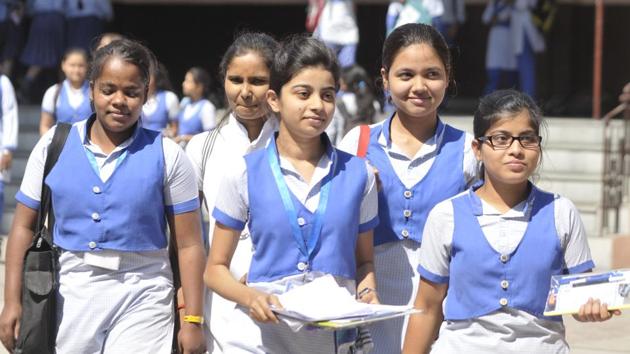
Astha Singh, a student of Gangagurukulam School in Allahabad, said the question paper was balanced and easy. “Diagram-based questions were scoring while value based questions, like on electrostatic, were easy to answer,” she said.
Shivansh Tripathi, a class 12 student Gangagurukulam, said decrypting questions, like that on transistor and band energy, were scoring. “The 70 marks question paper was scoring and an average student could perform well,” he said.
Anvay Rai, a student of DAV School in Khagaul, Patna, said found questions on numbers tough. “Numericals section were tough. Questions from derivation very moderate. The questions were direct.”
“I had seen the pattern of questions asked in 2016 and 2017. Questions were tough in 2017 but it was easy this year. I found the questions about magnetism a bit difficult but overall questions were easy,” said Vaishnavi, of Holy Mission School, Patna.
Harsh Vardhan, another student of DAV School in Khagaul, said, “The questions were easier than last year. I had prepared for the toughest but the questions asked were way too easy. I solved the paper half an hour before time.”
{{/usCountry}}Harsh Vardhan, another student of DAV School in Khagaul, said, “The questions were easier than last year. I had prepared for the toughest but the questions asked were way too easy. I solved the paper half an hour before time.”
{{/usCountry}}Physics teacher Anil Thakur said that some sections of the exam were lengthy, but students can score “above 85%”.
Jitendra Yadav, a physics teacher at Gangagurukulam School, said he considered the question paper was fair.
“The physics question paper of Class 12 was in accordance to the pattern prescribed by the board, which allowed the examinees to answer almost all the questions. Almost all topics were covered besides diagram based questions were also scoring for students on topics such as wave optics and ray optics, current electricity, reflecting and refracting,” said Yadav.”
(With inputs from Kenneth John in Allahabad and Nandini in Patna)