More Indian experts are heading to teach in British universities, attracted by better research opportunities and conditions, according to latest figures that show a consistent rise in their numbers over recent years.
There were 2845 Indian citizens employed at UK universities as academic staff during 2018-19 , the Higher Education Statistics Agency (HESA) said. The number has risen over the years: 2019 in 2014-15; 2345 in 2015-16; 2440 in 2016-17; and 2620 in 2017-18.
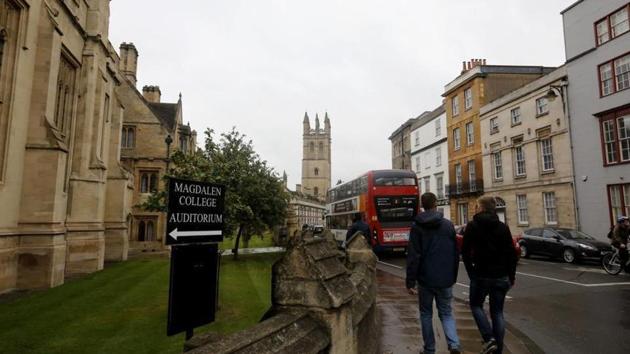
The number includes Indians who come to the UK for higher studies and are recruited to faculty and research positions. Universities with the highest number of such academics include Oxford, Cambridge, University College London, and King’s College London.
The HESA figures complement findings of a 2015 study that said Indian academics in research-intensive universities are preferred due to their “single-mindedness, competitiveness, resilience and work centrality”, as well as their links with Indian institutions and knowledge of India.
Of the 2845 Indians in 2018-19, the largest number – 775 – were based in Engineering & Technology centres, followed by 715 in Biological, Mathematical & Physical Sciences. The figure includes 595 in Medicine, Dentistry & Health subjects, the figures show.
The Indian academic staff included 20 who head schools and faculties or hold senior management positions; 130 professors, 730 senior/principal lecturers or readers, and 1360 categorised as senior professionals (technical), lecturer, research fellow or researcher.
{{/usCountry}}The Indian academic staff included 20 who head schools and faculties or hold senior management positions; 130 professors, 730 senior/principal lecturers or readers, and 1360 categorised as senior professionals (technical), lecturer, research fellow or researcher.
{{/usCountry}}The 2015 study by Dulini Fernando of the Warwick Business School and Laurie Cohen of Nottingham University Business School found that Indian academics are “singled out for jobs over other candidates” partly due to their willingness to “play the game” of prioritising research over teaching.
The study said research-intensive universities in science and engineering departments, which recruit high numbers of international staff, found that “cultural, social and domestic capital” can put Indian academics in a more favourable position than home-grown talent.
According to Fernando,“The Indian academics in our study used their valuable social connections to India and important cultural knowledge to obtain highly prized symbolic capital in the form of research partnerships with leading academics in the West, thus challenging the assertion that migrants’ networks and resources do not facilitate upward career mobility”.
“These findings show ‘ethnic capital’ advantages such as cultural knowledge and networks can be used to move up the career ladder.”
Of the academic staff employed at UK higher education providers on December 1, 2018, 18 per cent of were non-UK nationals from European Union countries and 14 per cent from non-EU countries such as India, HESA figures show.