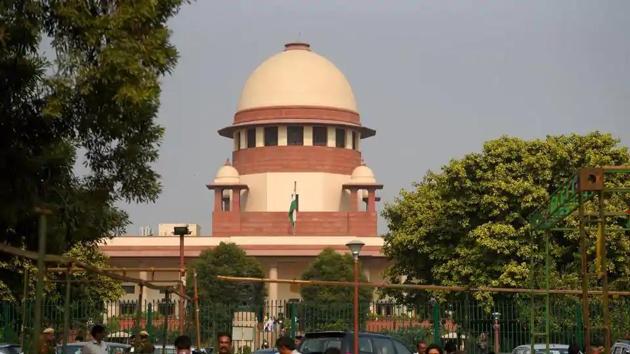
A petition has been filed in the Supreme Court seeking a moratorium on payment of school fees for the period beginning on April 1 till the commencement of physical classes.
The petition by a group of ten parents from Delhi, Maharashtra, Gujarat, Punjab, Haryana, Rajasthan, Odisha, and Uttarakhand has also demanded facilities to be provided for socially and economically backward students to cope up with the online classes till the lockdown is in force.
The petition filed by advocate Mrigank Kshirsagar has been numbered by the SC Registry and is expected to be listed in the coming weeks.
Though the issue of school fees is pending before seven High Courts, the petition highlighted how every High Court has issued a different order causing confusion among students and parents across the country.
For instance, the Delhi High Court has ruled no waiver of tuition fees while in Rajasthan, the HC has held that the entire school fees will not be waived. In Uttarakhand, the judges have tweaked the order to the extent that tuition fees will only be payable if the student has opted for and has access to online classes. In the case of Punjab and Haryana High Court, a direction has been issued allowing schools to collect 70 percent of the fees while Madhya Pradesh HC is categorical that no charge for un-incurred expenses will be payable, such as transport, mess charges. The Kerala High Court recently held that schools cannot additionally charge for conducting online classes.
The petitioner-parents demanded the apex court take note of the situation and pass uniform directions applicable to each state. They sought a three-month moratorium on payment of fees from April-June or till such time when the schools reopen. Most petitioners claimed that they faced tremendous financial and emotional hardships to pay fees and will be forced to withdraw their children if forced to deposit fees.
{{/usCountry}}The petitioner-parents demanded the apex court take note of the situation and pass uniform directions applicable to each state. They sought a three-month moratorium on payment of fees from April-June or till such time when the schools reopen. Most petitioners claimed that they faced tremendous financial and emotional hardships to pay fees and will be forced to withdraw their children if forced to deposit fees.
{{/usCountry}}The parents argued that online classes were not an effective tool to impart education as most families do not have the technological wherewithal. Quoting National Sample Survey (NSS) data of 2017-18, the petition claimed that only 4.4 percent rural households and 23 percent urban households have access to computers. Interestingly, the internet penetration is restricted to 14.9 percent in the rural sector and 42 percent in the urban sector.
The petition flagged the technological challenges faced by economically weak students admitted under the 25 percent economically weaker section (EWS) quota by private schools under the Right of Children to Free and Compulsory Education, 2009, also known as RTE Act. The petition requested the Court to direct States for providing facilities to such students to ensure these students are not discriminated in getting an education.
The petition also demanded uniform directions for schools not to strike out students or impose penalties for defaulting on fees. In the event the schools are allowed to charge fees, they must structure fees based on actual expenses incurred without any hike during the lockdown.