A Widow's Game review: New Netflix thriller based on a shocking true crime story lacks bite
A Widow's Game review: Directed by Carlos Sedes, this new Spanish thriller on Netflix is based on a real-life story that hinges on deceit and manipulation.
People are truly crazy in love, or they are just too good at pretending. People are also capable of the worst, even if they seem to be ticking all the right boxes from a distance. The new Netflix entry, A Widow's Game (La Viuda Negra in Spanish), tells the story of just the two most easy-going people who commit a serious crime.
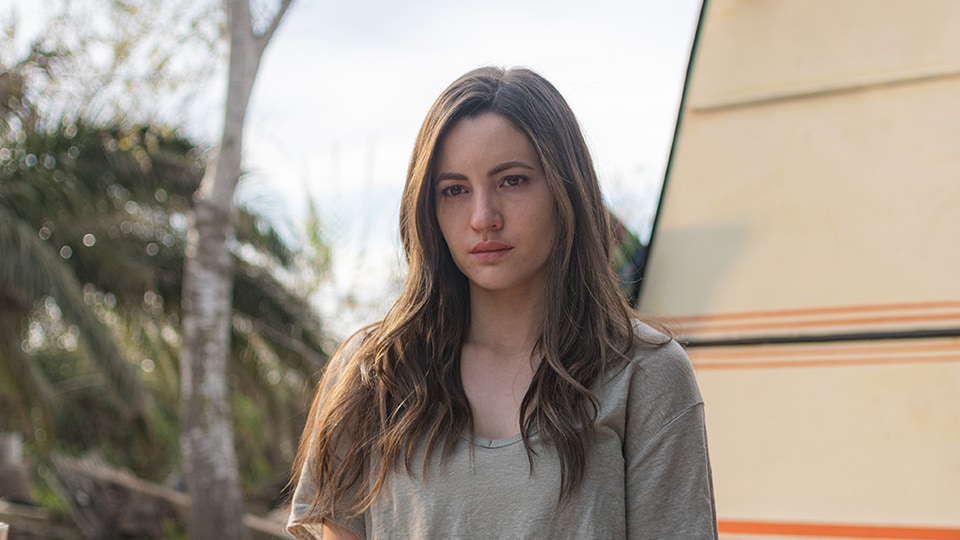
Ivana Baquero plays the titular widow Maje in A Widow's Game.
The premise
It is based on the real-life story of the murder of Antonio Navarro Cerdán, a 36-year-old industrial engineer, after which his widow, María Jesús Moreno Cantó, known as Maje, fell under the scanner. Even if you do take a quick second to Google what really happened to Antonio and what propelled it, this new film is worthy enough for your time. It just doesn't smell like dirt enough. (Also read: Sirens review: Julianne Moore leads a possible wellness cult in campy new Netflix show)
The film begins like a standard investigative police procedural with the introduction of Eva (Carmen Machi), who is the well-known inspector of the local Homicide Group. Antonio has been stabbed in the garage, the blood is all over the place. Eva is told the intensity of those multiple hits resembles that of a man- it seems the murderer kept prepared to kill. Eva nods and proceeds with business-like propensity: she has also got to uphold the impressive track record of her team. Soon, the news reaches Antonio's wife, Maje (Ivana Baquero), who is called in for questioning. This definitely isn't robbery, there's something too concise and incisive about it all.
What works and what doesn't
Maje is called in for questioning, and some of her lies are caught at the very beginning. But this is not about the lies per se; it is more about the cover-up and why it went in this nasty direction. From here on, the film makes a strategic narrative choice, shifting the perspective from Eva to Maje and then to someone else entirely. It is a move that ultimately kills the intrigue and, more bafflingly, the nuance of these characters.
The sleek production design and fuss-free mise en scène begin to itch. Even as the focus shifts to multiplicities, the film does not really take a breath to care about these perspectives. There's a certain distance between character and subjectivity that makes the film feel polished on all fronts. But this is a story of a ruthless, passion-filled crime, one that demands push and pull, a certain brashness to it. A Widow's Game feels morbid without the stench of death, and hollow in the way it avoids confronting the banality of this evil.
Final thoughts
Even as Maje goes through a range of conflicting emotions and dilemmas, the film somehow finds a way to conclude that it will be taken care of. It all comes down to the cast, and thankfully, they inject some vitality into their performances. Tristán Ulloa is the standout, so convincing and quietly terrifying in his silences that pop up quite late into the narrative. Carmen Machi adds the much-needed concern and heart into this cold, sanctimonious treatment.
As Maje, Baquero is in fine form, but we never really get to meet the woman behind the walls of her slowly crumbling household. Later, when she visits her husband's parents to seek a pragmatic response, it is shocking to see how little we, the viewer, really do care about her immediate actions. She is no Gone Girl.
A Widow's Game is a neat and polished dramatisation of a messy and radical crime. Perhaps that's the point the film wants to make, that it does not matter much because the root of all of it is just too vile to care about. It denies involvement, a lack of provocation in this unforgivable act of deceit. Mostly, it lacks the heart to dig deeper into the wound that it capitalises upon.
Santanu Das is a Senior Content Producer at Hindustan Times with over 5 years of experience, writing on films, pop culture and film festivals. He has a keen interest in writing about South Asian independent films and has covered several film festivals, including Sundance and CPH: Docx. He also brings a sharp perspective to the monthly column called The Fault in Our Stars, where he writes about a recent film/series and what stops the ‘good’ from becoming ‘great’.
A gold medalist from Banaras Hindu University, Santanu completed his postgraduate studies in English from Jadavpur University. He is also a Rotten Tomatoes-certified film critic. When not watching films or speaking to celebrities, Santanu can be found reading a book. Some of his favourite films are Aparajito, Ponyo and The Double Life of Veronique. His favourite books include The Corrections, The God of Small Things and A Room of One's Own.
Santanu continues to write passionately about films and celebrity culture. He brings a relatable, as well as critically informed, lens to entertainment and culture for a wide audience.
Find him on LinkedIn: santanudasfilm
Instagram: @santupechaRead More

 E-Paper