
 E-Paper



FIFA World Cup 2018: Who are the dirtiest players in the game?
To look at who are the dirtiest players at the FIFA World Cup 2018, an analysis was done of players in the 32 teams and their disciplinary record in club football over the past four seasons.

 Prefer HTon Google


These are the players we love to hate. The ones who deliberately foul opposition forwards as they’re clear on goal. The ones who have no issues taking one for the team if it helps gain an advantage.
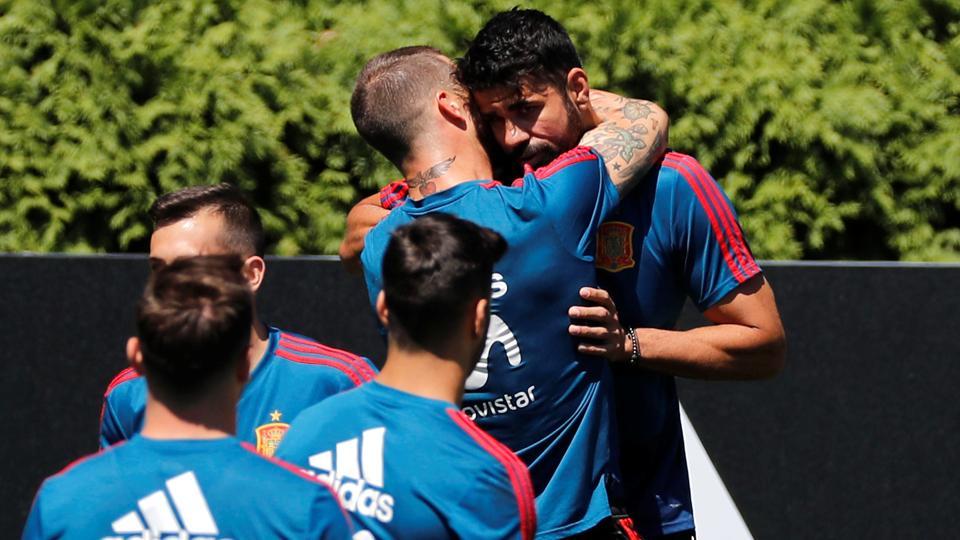
These are also the ones who have the red mist descend on them and end up as liabilities for their teams.
All teams have one or two of them. It might be argued that every team needs players like them around if you want to win matches.
It could also be argued that football isn’t all about skill and grace. It’s also about resorting to the dark arts if the situation demands it.
READ | FIFA World Cup: Colombia look Group H pace setters in race to knockouts
To look at who are the dirtiest players at the FIFA World Cup 2018, we looked at the players of the 32 teams and their disciplinary record in club football over the past four seasons.
This is roughly the period since the last World Cup in June-July 2014. It must be noted that because of the way seasons in South America and Scandinavia are structured, the data might include a few months before the 2014 World Cup too. Data from Transfermarkt.co.uk was used in this analysis.
We tallied the number of yellow and red cards players have accumulated since the last World Cup while playing for their clubs.
The reasoning being that since World Cup players would have played more club football than national team football over the past four years, club football might give us a better idea of how prone these players are to getting yellow and red cards.
READ | FIFA World Cup: Mohamed Salah still a doubt for Egypt’s opener vs Uruguay
Looking at the players who have got the most yellow and red cards over the past four seasons, it might be no surprise to see who’s on top.
Sergio Ramos of Spain, who has been in the news recently for the injuries caused to the Liverpool players Mohamed Salah and Loris Karius in the 2018 Champions League final.
He has accumulated 63 yellows or red cards in 161 club matches for Real Madrid and his clubmate and national teammate Dani Carvajal isn’t far behind. Carvajal has received a yellow or red card 58 times during the same period over 155 matches.
Who are the dirtiest World Cup players?
The table below shows the World Cup players with the most yellow or red cards over the past four seasons for their clubs. This table has the top 10.
Third in the table is Enzo Perez, an Argentian midfielder who has just been drafted into the national team squad to replace the injured Manuel Lanzini.
Almost all the players in top 10 are defenders or defensive midfielders for their clubs, but it is surprising to see a creative midfield player such as Ever Banega of Argentina in the top 10 list too.
The thing though about adding up cards like this is that it doesn’t take into account the differing amounts of time various players would have played.
READ | Belgium rip into Costa Rica in final FIFA World Cup 2018 warm-up game
So to equalise that and give us a way of fairly comparing the players, we can take a look at the rate at which players get a card.
So how long on average, has a player taken to get a yellow or red card? We tallied the number of minutes all the World Cup players played, divided them by the number of cards each player got and came up with the table below.
How long does it take for a player to get carded?
The table below looks at the disciplinary record of World Cup players in club football. Specifically, it looks at how long it has taken on average for a player to get a yellow or red card. (Players would have had to play a minimum of 3600 minutes over the past four seasons.) These are the top 10 players.
While making the table above, we have excluded players who haven’t played at least 3,600 minutes over the past four club seasons. (Meaning, they would have had to play on average, at least 30 minutes in 30 matches for four seasons in a row.)
Two of the players are from Peru with Pedro Aquino and Wilder Cartagena getting carded every 162 minutes and 224 minutes respectively. They both currently play in the Mexican first division Liga MX.
READ | FIFA World Cup 2018: Russia won’t let hooligans ruin image
Surprisingly, a forward, Ante Ribic of Croatia is third in the list getting a card every 179 minutes, or roughly, every other match. Ribic plays in the German Bundesliga at the moment for Eintracht Frankfurt.
Now what if we took yellow cards out of the equation? Meaning, we take only red cards into consideration. Either straight red cards or red cards given out for a second yellow. This would give us a better idea of who are the players who are most likely to get sent off and leave their team a man down, the players who are the biggest liabilities.
Who is most likely to get sent off?
This table looks at which World Cup players have gotten the red card most often over the past four seasons in club football. This excludes players who have played under 3,600 minutes. This table has the top 10 players.
Senegalese defender Saliou Ciss seems like the biggest accident waiting to happen. Over the past four club seasons, he was sent off every 992 minutes, or once every 11 matches.
In the 6,941 minutes he has played in club football over the past four seasons, he has gotten two red cards as a result of second yellows and five straight red cards.
Three different players from Peru appear in this top 10 – Yoshimar Yotun, Christian Cueva and Luis Advincula.
Combined with the two Peruvian players from the previous table, it means that matches involving Peru in Group C are likely to see a lot of action, and not of the good kind!


