
 E-Paper



How Artificial Intelligence Is Shaping the Future of Language Learning and Global Careers
AI is revolutionising language learning by personalising education, enhancing accessibility, and bridging academic knowledge with real-world application.

 Prefer HTon Google


Artificial Intelligence (AI) is transforming the way people learn, work, and communicate across borders. Among the many sectors influenced by AI, language learning stands out as one of the most visibly reshaped fields. As careers become increasingly global and cross-cultural collaboration becomes important, AI-powered language education is changing how learners prepare for international opportunities.
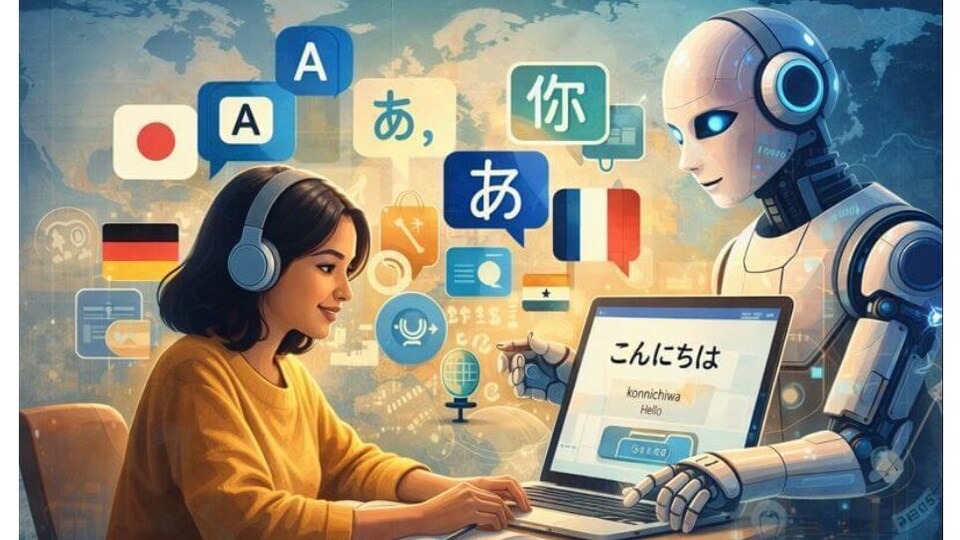
For decades, language education followed a traditional model based on textbooks, classroom instruction, and fixed curricula. While these methods established solid foundations, they often struggled to adapt to individual learning speeds, professional goals, and real-world communication needs. AI has introduced a more flexible and learner-centric approach—one that personalises instruction, supports progress, and aligns language learning with practical outcomes.
Personalised Learning Through Artificial Intelligence
One of the most contributions of AI to language education is personalisation. AI-driven systems analyse learner behavior in real time, tracking pronunciation accuracy, grammar usage, vocabulary development, and listening comprehension. Based on this data, learning pathways are continuously refined to suit each learner’s strengths and areas for improvement.
Speech recognition tools now provide immediate feedback on pronunciation and fluency, while writing assistants help learners improve sentence structure, clarity, and tone. This feedback loop enables learners to practice independently and confidently, supporting retention. For adult learners and working professionals, this flexibility makes language learning more accessible and sustainable.
Educational institutions that integrate structured pedagogy with technology are actively participating in this transformation. The Indian Institute of Foreign Languages follows a hybrid approach that combines expert-led instruction with digital learning tools, helping ensure technology enhances the learning process without replacing human guidance.
Language Skills and Global Career Readiness
In today’s job market, language proficiency is linked to employability and professional mobility. Employers across industries tend to value multilingual professionals who can communicate with international clients, collaborate with global teams, and operate in multicultural environments. AI-enabled language learning supports these expectations by focusing on real-world communication rather than theoretical knowledge alone.
AI tools simulate professional conversations, workplace scenarios, and industry-specific interactions, helping learners develop practical language skills that may be relevant to their careers. This approach helps in bridging the gap between academic learning and professional application, making language education more outcome-oriented.
Languages such as Japanese have gained greater importance in global careers due to economic, technological, and industrial ties with international markets. Proficiency in Japanese opens opportunities in sectors such as manufacturing, engineering, information technology, healthcare, and global services. AI-supported learning makes mastering such languages more approachable by simplifying scripts, reinforcing memory through adaptive repetition, and presenting contextual usage examples.
The career advantages of Japanese language proficiency—particularly for jobseekers exploring international roles—are discussed in depth through insights on the benefits of Japanese language skills for jobseekers, which highlight how language learning can support long-term employability and professional growth.
The Continued Importance of Human Expertise
Despite the rapid evolution of AI tools, human instructors remain central to effective language education. Language learning is connected to cultural understanding, social context, and real-world interaction—areas where experienced educators provide important guidance. AI excels at repetition, analytics, and feedback, but instructors bring nuance, cultural insight, and direction.
The most effective learning environments are hybrid in nature. AI supports personalisation, practice, and progress tracking, while educators focus on communication strategy, cultural competence, and learner motivation. This balanced approach can support learners in developing both linguistic accuracy and confidence in real-life situations.
Accessibility and Lifelong Learning
AI has expanded access to quality language education. Learners are no longer constrained by geography or rigid schedules. Online and hybrid learning models allow students and professionals to learn at their own pace, revisit lessons, and practice consistently alongside work and personal commitments.
This flexibility is particularly relevant in a changing job market where continuous upskilling is essential. Language learning supported by AI can help individuals to adapt to evolving career demands while maintaining balance and continuity in their learning journey.
Cognitive and Professional Benefits
Beyond career outcomes, language learning offers cognitive advantages. Research shows that multilingual individuals often demonstrate improved memory, stronger problem-solving abilities, and adaptability. When supported by AI-driven learning systems, these benefits are reinforced through structured practice and data-driven insights.
As automation continues to reshape industries, communication skills, cultural intelligence, and multilingual ability remain important human strengths. Professionals who combine these skills with technological literacy are better positioned to collaborate, lead, and innovate in international environments.
Looking Ahead
The future of language learning will continue to be shaped by AI innovations, including adaptive learning engines, immersive simulations, and intelligent tutoring systems. However, language education will remain human-centered, supported by technology rather than driven by it.
Institutions that adopt this balanced approach—combining AI tools with structured pedagogy and experienced instruction—are helping prepare learners for global careers where communication, adaptability, and cultural understanding are required. The Indian Institute of Foreign Languages continues to reflect this direction by aligning technology with outcome-oriented language education.
As global careers become more common, AI-enabled language learning will play an important role in helping individuals communicate across cultures, navigate international workplaces, and succeed in an interconnected world.
Note to the Reader: This article is part of Hindustan Times' promotional consumer connect initiative and is independently created by the brand. Hindustan Times assumes no editorial responsibility for the content.


