Uttarakhand Chief Minister Pushkar Singh Dhami on Monday said strengthening cooperative institutions can play an important role in supporting the state’s rural economy and creating greater opportunities for farmers, youth and women.
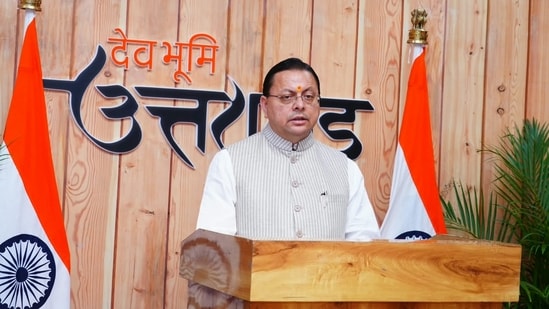
Dhami was addressing the inaugural session of the Shri Laxmanrao Inamdar Second Cooperative Leadership Training Programme, organised by Sahakar Bharati Uttarakhand at Govind Ballabh Pant University of Agriculture and Technology, Pantnagar. He joined the programme virtually from the Chief Minister’s residence.
Paying tribute to Sahakar Bharati founder Laxmanrao Inamdar on his birth anniversary, Dhami said leadership training would help strengthen cooperative institutions and improve their ability to respond to changing requirements.
“Strong leadership will strengthen M-PACS, strong M-PACS will strengthen villages, and strong villages will contribute to a prosperous Uttarakhand,” he said.
The chief minister also highlighted several recent initiatives related to cooperation that were launched from Pantnagar. These include the release of the Sahakar Granth, the Devbhoomi Sarathi initiative of the state cooperative federation, the introduction of new courses in the cooperative sector, a social media reels campaign to connect youth with cooperatives, and the M-PACS leadership training programme.
Focus on farmers, youth and women
Dhami said cooperation can help address several challenges faced by Uttarakhand as a predominantly mountainous state. He said cooperative institutions can contribute to reducing migration, strengthening mountain agriculture, creating market access for local products and supporting rural livelihoods.
{{/usCountry}}Dhami said cooperation can help address several challenges faced by Uttarakhand as a predominantly mountainous state. He said cooperative institutions can contribute to reducing migration, strengthening mountain agriculture, creating market access for local products and supporting rural livelihoods.
{{/usCountry}}He described Primary Agricultural Credit Societies (PACS) as an important part of the state’s cooperative system and said they are being developed into M-PACS to make them more capable of meeting emerging needs.
According to the chief minister, M-PACS can help provide better services to farmers, create opportunities for young people and support economic activity in rural areas. He said effective implementation would require trained and forward-looking leadership, which was one of the key objectives of the training programme.
Dhami said connecting farmers, youth and women with the cooperative movement remains a priority for the state government. He added that the government was working to expand the role of cooperation beyond cooperative societies and use it as a means of public participation and economic empowerment.
He urged the participants to strengthen the cooperative spirit in their respective areas and encourage more people to participate. The chief minister said collective efforts would be required to strengthen villages, expand opportunities for youth and support the economic position of farmers.
Cabinet minister Dhan Singh Rawat, Pantnagar university vice-chancellor Shivendra Kumar Kashyap, Sahakar Bharati national general secretary Deepak Chaurasia, state president Vinod Kumar Gaud, organisation minister Maniram Nautiyal, state treasurer Sudhir Kumar Joshi, Dr Brijesh and Dr Dinesh Kumar Singh also participated virtually.