
 E-Paper



The Perception of Safety: Why A Name Display Will Always Fall Short in the Fight Against Fraud
India's Caller Name Presentation system intends to provide caller identification, yet it may mislead users into overconfidence amid rising fraud.

 Prefer HTon Google


In the ongoing effort to control spam and financial fraud, being able to see a name on an unknown call is often positioned as a potential game changer. The telecom regulators and operators in India are in the midst of rolling out an initiative, a nationwide system called CNAP (Caller Name Presentation) - which promises to do exactly this: show a name on every unknown call.
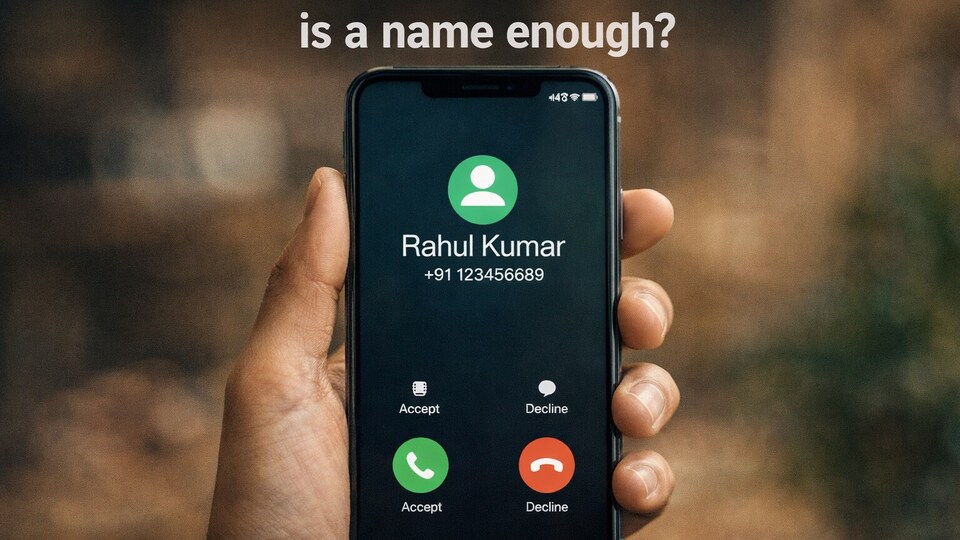
On the surface, this kind of transparency appears to be a safety net. But the harsh truth is that in today’s fraud landscape, just showing a name on a call will never give users the confidence to trust the caller. In some cases, showing a name could also create more problems.
Let’s dive deeper. Communication fraud has evolved far beyond the era of random, cold calling. A notable share of scams now begin on third-party communication platforms, social media, investment forums, dating platforms or through fake customer care numbers impersonating legitimate businesses.
Another important consideration is the reliability of the data. Caller name display systems depend on telecom KYC databases being clean, current and reliable across one telecom provider to another. In reality, India’s KYC ecosystem is complex and fragmented. In a predominantly pre-paid economy like India, numbers are frequently recycled, records become outdated and SIM cards change hands without proper transfer. Corporate connections are sometimes used for personal purposes. Even officially, up to 9 SIM cards can be purchased on one official ID.
Instead of curbing scams and spoofing, it may end up being counterproductive, leading to reduced service quality, increased call setup times, and a worse user experience—without delivering any value.
Fraudsters operate through mule accounts or identities borrowed sometimes unknowingly from others. A number registered to one person may be in the hands of someone entirely different. In such cases, the name displayed may not reflect the real caller. And an incorrect name does not merely fail to help, it risks creating a false sense of legitimacy.
Even when the displayed name is accurate, a deeper question remains: what does a name alone truly convey? Will a call coming from someone called “Rahul” give the user any context?
A common name offers no context. It does not indicate intent, credibility, or affiliation. It does not confirm whether the caller genuinely represents a bank, a government department, a courier service, or none of the above. Fraud thrives on authority, urgency, and emotional manipulation. Scammers trigger fear (“Your account will be blocked”), panic (“A parcel is stuck in customs”), or greed (“Limited-time”). investment opportunity”). Against these tactics, a standalone name offers very little or no defense. In some cases, seeing a real, correctly registered name may even increase trust, making the deception more convincing.
Looking globally reinforces this reality. Countries like the United States and Canada have long had similar (CNAM) systems embedded within telecom networks. Yet spam calls, robocalls and impersonation fraud have continued to increase. Caller ID spoofing continues despite name display infrastructure. The presence of CNAM has not eliminated fraud; it has simply become one more data point in a much larger and more complex risk environment. The lesson is clear: static identity display does not equal fraud prevention.
Modern fraud is not really about names, it is about behaviour. What actually protects users today is not just a name attached to a phone number, but additional signals that look at how a number behaves. These include spam reports from millions of users, unusual calling patterns, sudden spikes in activity, and reputation signals that are analysed in real time. Protection systems constantly learn and adapt, spotting suspicious behaviour across networks and warning users instantly. A name taken from static KYC records simply cannot keep up with fast-moving, technology-driven fraud networks.
There is also a human dimension that must not be overlooked. Safety tools shape user behavior. If people begin to believe that seeing a caller’s name automatically means the interaction is safe, they may lower their guard. They may share OTPs more readily. They may disclose financial information without double-checking. They may assume legitimacy where none exists. In that sense, oversimplified safety signals can inadvertently create overconfidence and overconfidence is precisely what social engineering exploits.
At its heart, the real question users care about is not simply, “Who is calling?” but “Can I trust this interaction?” Identification is not the same as verification. A name does not equal reputation. Reliable digital trust requires layered architecture — verified business badges, historical spam reports, behavioral analytics, cross-platform signals, and dynamic risk assessment. It requires systems that help users understand context, not just identity.
Caller name display can certainly play a role as one layer within a broader ecosystem. But presenting it as a singular or transformative solution risks misunderstanding the nature of today’s fraud problem. In a world where scams begin across digital platforms, identities can be misused, and numbers are frequently reassigned, a name alone cannot meaningfully prevent deception.
To address India’s rapidly evolving fraud landscape, the focus must shift from static identification to dynamic, intelligence-led protection that supports users not just to recognize a name, but to assess risk in real time.
Note to the Reader: This article is part of Hindustan Times' promotional consumer connect initiative and is independently created by the brand. Hindustan Times assumes no editorial responsibility for the content.


