
 E-Paper



Voices of Impact: Helping writing and speaking skills in government schools
Aariv Patel’s initiative, Voices of Impact, is transforming quiet classrooms into environments where students can build essential writing and speaking skills.

 Prefer HTon Google


India’s government schools have long carried a familiar rhythm: teachers explain, students copy, and the class moves on. The approach gets the job done but often leaves little scope for conversation. That missing element, expression, is what caught Voices of Impact’s attention when the founder was still a student himself.
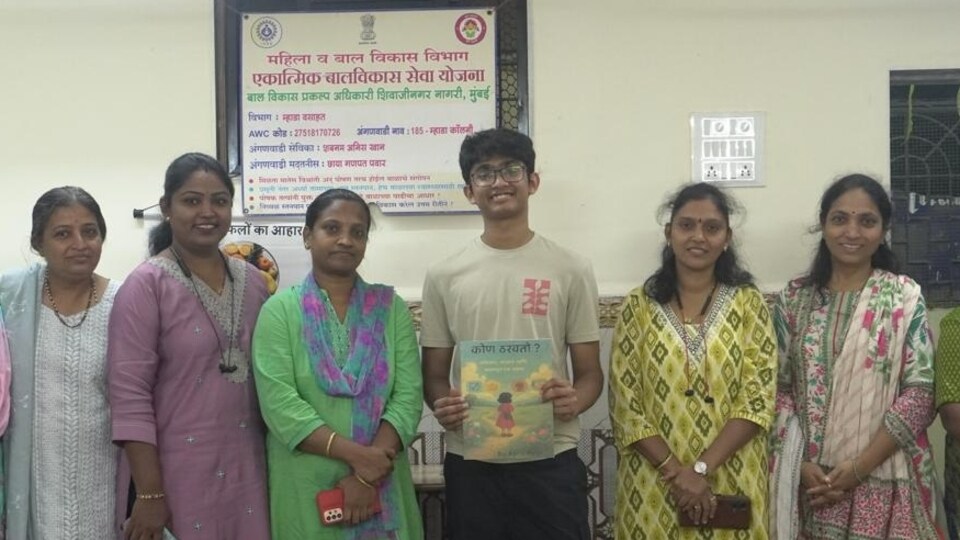
In Class 9, Aariv Patel realised that many of his classmates avoided speaking up even when they knew the answers. As a member of his school’s debating team, Patel had seen what structured discussion could do. He began a small club where students read together, wrote short notes and discussed their views. It was an idea that quickly made a difference: once students began talking about what they were learning, they became more involved in it.
What began in 2021 as small reading clubs has now evolved into a youth-led programme for expression, reaching more than 3,000 students through 30+ workshops across five government schools in Mumbai. Alongside over 25 trained student volunteers, Patel’s team has distributed 600 bilingual books and continues to collaborate with NGOs such as Pratham to scale their reach.
As part of this communication-based initiative, the programme now conducts interactive sessions that go beyond storytelling — incorporating quizzes, discussions, and short writing exercises that prompt students to think critically and speak with confidence. These sessions are designed to move away from rote learning, encouraging children to connect lessons to real issues in their communities and to express those experiences in their own words.
Using Stories to Spark Discussion
To make the approach practical, Patel wrote Who Decides?, a bilingual storybook in English and Marathi written with input from language educators. The stories, set in familiar surroundings such as schools, playgrounds and homes, explore how everyday decisions are made and why listening and sharing matter. The goal is to help students understand concepts like equality and teamwork through relatable examples.
The idea drew support from Pratham, one of India’s leading education NGOs. Pratham partnered with Voices of Impact to distribute the book and design classroom workshops built around it. Thousands of students in government schools across Mumbai, Delhi and other regions have since taken part. Each workshop emphasises empathy, purpose and collaboration, helping students listen to every voice, act with intention, and work together as a community.
Why Communication Still Lags
What Patel encountered mirrors a national trend. According to UDISE+ 2021-22, India has over 10.2 lakh government schools, which make up around two-thirds of all schools (68.7%) in the country. Yet the quality of learning remains uneven.
Findings from ASER 2023 show that while enrolment exceeds 95 per cent at the primary level, about one-fourth of adolescents aged 14-18 cannot fluently read a Class 2-level text. More than half struggle with basic arithmetic. Teacher vacancies, over 8.4 lakh across government schools, mostly in rural areas, compound the challenge, leaving limited time for activities that build confidence through reading, writing or dialogue.
The Case for Expression
Experts have long argued that literacy should cover more than decoding words; it should include the ability to question, reason and articulate ideas. The National Education Policy 2020 echoes that view, encouraging schools to promote multilingual, experiential learning and to give students opportunities for creative expression.
For students in government schools, the link between communication and opportunity is direct. Research by organisations such as the World Bank and Azim Premji University shows that strong foundational language and literacy skills such as reading, writing, and communication are closely linked to better learning outcomes and school retention. They are also more confident in group settings, a skill that influences everything from classroom participation to job interviews later in life.
This aligns with Voices of Impact’s mission to bridge the gap between education and expression by equipping students with skills in public speaking, writing and civic awareness — shaping a generation that can think, speak and act for positive change.
Signs of a Broader Shift
Other initiatives are beginning to move in the same direction. Delhi’s Project Voices has introduced public-speaking sessions in government schools, while reading campaigns in Maharashtra and Karnataka are using storytelling to strengthen language skills. Together, they signal a slow but meaningful change, one where participation and dialogue are seen as integral to learning.
For Patel, that change is what keeps the project going. In schools that once followed lessons word for word, students now question, respond, and relate what they learn to their own lives. Each conversation, he says, builds confidence and connection.
To know more about the programme, visit the website.
Note to the Reader: This article has been produced on behalf of the brand by HT Brand Studio and does not have journalistic/editorial involvement of Hindustan Times.


