E-Paper



Supreme Court asks Railways to reconsider term ‘second class passenger’: ‘Offensive to Constitution spirit’
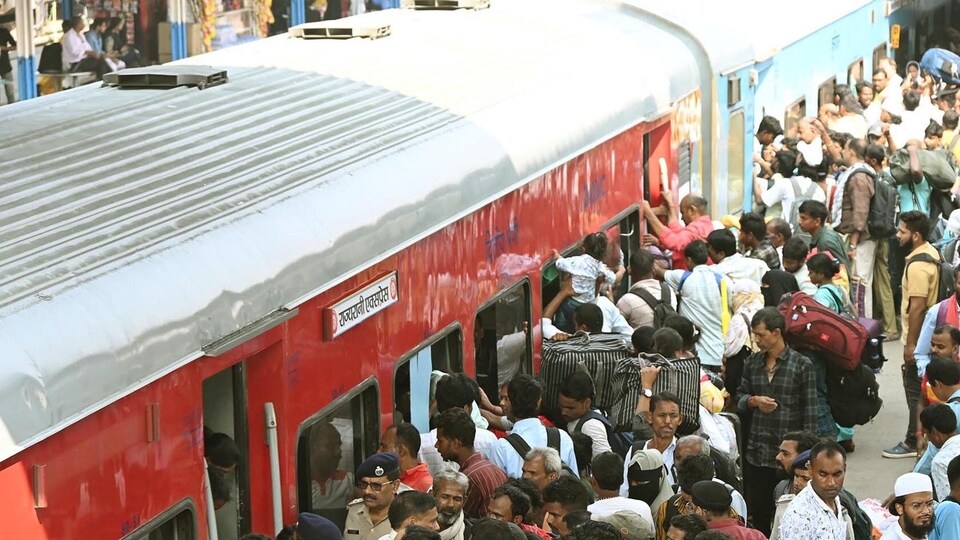
The SC judgment also focused on the problem of overcrowding in trains, which the bench described as a regular occurrence.

 Prefer HTon Google


The Supreme Court on Friday asked the Railways to clarify and reconsider the continued use of the term “second class passenger” in its manuals and official documents, observing that the class connotation should attach to the coach and not to the passenger, as the expression is “offensive to the spirit of the Constitution of India”.
A bench of justices Sanjay Karol and N Kotiswar Singh made the observation while deciding a compensation claim arising from the death of a passenger who fell from a running train in 2015.
The court also suggested that the Railways consider an “exponential increase” in manpower at stations and trains to ensure effective implementation of safety measures aimed at preventing overcrowding and accidental falls.
ALSO READ | Rath Yatra: SC upholds temporary stay on animated movie, clears release after festival
SC awards widow ₹8 lakh
The judgment was delivered in an appeal filed by Lata, whose husband Chandrakant Thakkar died after falling from the Ahmedabad-Howrah Mail between Khandbada and Khatgaon while travelling from Raipur to Ahmedabad on November 28, 2015.
The Railway Claims Tribunal and the Madhya Pradesh High Court had denied compensation on the ground that the deceased could not be proved to be a bona fide passenger because his ticket was not recovered after the accident. The Supreme Court reversed both decisions, holding that the absence of the ticket was not fatal to the claim and awarded ₹8 lakh compensation to the widow.
ALSO READ | ‘Even though BJP not in power here...’: PM Modi's big rail, road push in Punjab ahead of elections
'Offensive to the spirit of the Constitution'
While examining the Indian Railway Commercial Manual and other operational documents, the bench noted that the expression “second class passenger” continued to be used in several provisions relating to passenger accommodation and overcrowding.
“One aspect that caught our attention while perusing the manual and other related documents, was the use of the term ‘second class passenger’. While it is ostensibly linked to the expenditure incurred by the passenger to travel, we may suggest that the class connotation be attached to the coach and not to the passenger, in recognition of the history of class divisions in our country and the same being offensive to the spirit of the Constitution of India,” the court said.
ALSO READ: HT Explainer | India’s first hydrogen train: All you need to know
The observation came after the bench reproduced several provisions of the Railway Commercial Manual, including those dealing with the accommodation of passengers, prevention of overcrowding, ticket checking and safety precautions before trains depart.
The court noted that the manuals repeatedly referred to “upper and lower class passengers” and “second class passengers”, language which, according to the bench, required reconsideration in a constitutional democracy committed to equality and dignity.
Overcrowding concerns
The judgment also focused extensively on the problem of overcrowding in trains, which the bench described as a regular occurrence and “more often than not the reason for such unfortunate incidents”.