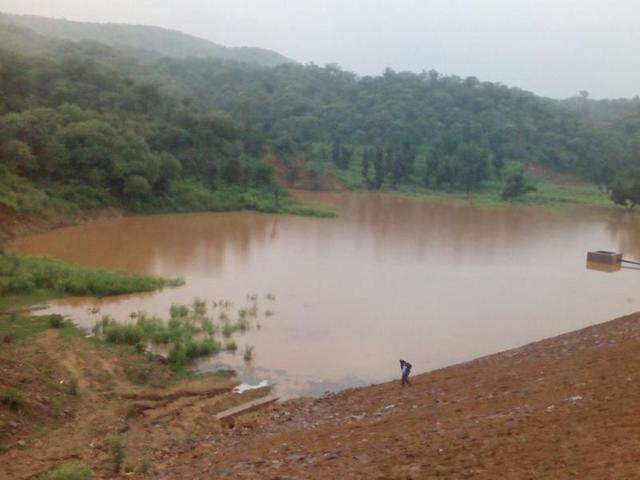
Following the recent spells of rain, around 3.5 lakh cubic metres of water has been collected in the water recharge dams in the Aravalli areas of Gurgaon and Mewat. The dams were constructed to replenish the groundwater table and provide wildlife with a source of drinking water.
According to experts, Aravallis has the potential to capture one-thirds of the rainfall in the region every year, and the run-off from the hills is 10%-12%. Thus, this part of the district also serves as a recharge zone for the neighbouring regions.
It took eight months for the forest department to construct four dams to recharge groundwater. These dams are located in Gurgaon’s Manesar and Ghamdoz villages and Mewat’s Nuh and Ferozepur Jhirka. These units are currently storing rainwater from the hills and will improve the forest cover. The plan is to store around 1 million gallons of water in such structures.
As per instructions from the state government, about 40 check dams will be constructed in the Aravallis of Gurgaon and other adjoining districts to recharge groundwater and provide wildlife a water source.
Strategically, these locations are surrounded by hills on all sides so that water flows downhill towards these check dams and gets accumulated in the structures. The dams are about 20 foot deep and 50 foot wide. Water stored in these structures seep into the ground and will improve the groundwater table, officials said.
{{/usCountry}}Strategically, these locations are surrounded by hills on all sides so that water flows downhill towards these check dams and gets accumulated in the structures. The dams are about 20 foot deep and 50 foot wide. Water stored in these structures seep into the ground and will improve the groundwater table, officials said.
{{/usCountry}}“We completed the construction of dams before the monsoon so that rainwater can be collected in these structures. The construction material used includes eco-friendly substances such as mud and rocks,” MD Sinha, conservator of forest, South-circle, Gurgaon, said.
As the foothills are now holding water it will also stop the process of soil erosion, which results in flooding of the nearby areas. “Not only will the groundwater table be improved but we also aim to improve the texture of the soil by retaining the silt in the catchment area,” Sinha said.
This effort was initiated keeping in view the groundwater extraction in the two districts, which is more than 312%. The groundwater table in Gurgaon has been depleting at an alarming rate — decreased by 14.16 metres between 2005 and 2014.
Stay updated with all the Breaking News and Latest News from Mumbai. Click here for comprehensive coverage of top Cities including Bengaluru, Delhi, Hyderabad, and more across India along with Stay informed on the latest happenings in World News.
Stay updated with all the Breaking News and Latest News from Mumbai. Click here for comprehensive coverage of top Cities including Bengaluru, Delhi, Hyderabad, and more across India along with Stay informed on the latest happenings in World News.