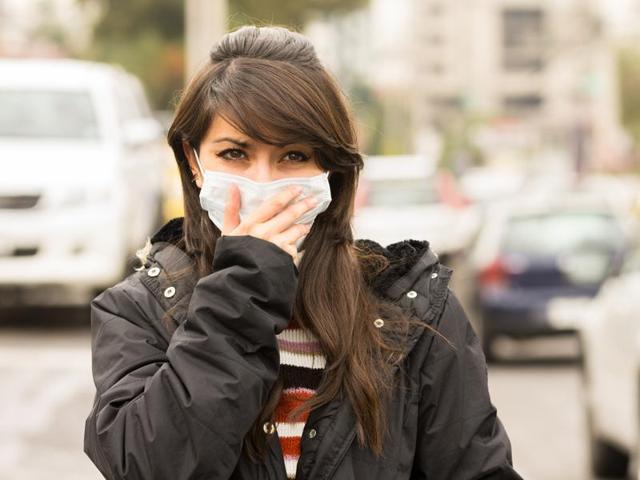
Prolonged exposure to air pollution can increase the risk of cancer in humans, warns a new study.
The findings add to mounting concern around the health risks of long-term exposure to ambient fine particulate matter, researchers from the University of Birmingham in the UK and University of Hong Kong said.
Particulate matter is the term for particles found in the air, including hydrocarbons and heavy metals produced by transportation and power generation, among other sources.
The study focused on ambient fine particulate matter, or matter with an aerodynamic diameter of less than 2.5 micrometres (PM2.5).
Read: Track pollution in your city with this real-time air quality map
For every 10 microgrammes per cubic metre of increased exposure to PM2.5, the risk of dying from any cancer rose by 22 per cent, researchers said.
“The implications for other similar cities around the world are that PM2.5 must be reduced to reduce the health burden. Air pollution remains a clear, modifiable public health concern,” said Neil Thomas from University of Birmingham.
“Long-term exposure to particulate matter has been associated with mortality mainly from cardiopulmonary causes and lung cancer, but there have been few studies showing an association with mortality from other cancers,” said Thuan Quoc Thach from University of Hong Kong.
{{/usCountry}}“Long-term exposure to particulate matter has been associated with mortality mainly from cardiopulmonary causes and lung cancer, but there have been few studies showing an association with mortality from other cancers,” said Thuan Quoc Thach from University of Hong Kong.
{{/usCountry}}“We suspected that these particulates could have an equivalent effect on cancers elsewhere in the body,” said Thach.
Researchers recruited 66,280 people aged 65 or older between 1998 and 2001, and followed the subjects until 2011, ascertaining causes of death from Hong Kong registrations.
Annual concentrations of PM2.5 at their homes were estimated using data from satellite and fixed-site monitors, researchers said.
The study showed that for every 10 microgrammes per cubic metre of increased exposure to PM2.5, the risk of dying from any cancer rose by 22 per cent, they said.
Increases of 10 microgrammes per cubic metre of PM2.5 was associated with a 42 per cent increased risk of mortality from cancer in the upper digestive tract and a 35 per cent increased risk of mortality from accessory digestive organs, which include liver, bile ducts, gall bladder, and pancreas.
Read: Indian scientists develop technology for effective cancer treatment
For women, every 10 microgrammes per cubic metre increase in exposure to PM2.5 was associated with an 80 per cent increased risk of mortality from breast cancer.
Men experienced a 36 per cent increased risk of dying of lung cancer for every 10 microgrammes per cubic metre increased exposure to PM2.5, researchers said.
They believe that possible explanations for the association between PM2.5 and cancer could include defects in DNA repair function, alterations in the body’s immune response, or inflammation that triggers angiogenesis, the growth of new blood vessels that allows tumours to spread.
The findings were published in the journal Cancer Epidemiology, Biomarkers and Prevention.
Follow @htlifeandstyle for more.
Catch your daily dose of Fashion, Taylor Swift, Health, Festivals, Travel, Relationship, Recipe and all the other Latest Lifestyle News on Hindustan Times Website and APPs.
Catch your daily dose of Fashion, Taylor Swift, Health, Festivals, Travel, Relationship, Recipe and all the other Latest Lifestyle News on Hindustan Times Website and APPs.