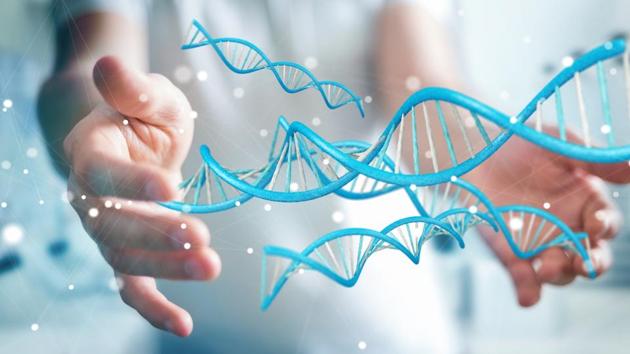
A group of scientists from the Northwestern University has identified a key enhancer of Sox9 - a gene critical for male sex development. The study has deepened understanding of sex determination in mammals. The findings, the scientists believe, have important implications for patients with differences in sex development (DSDs), in which reproductive organs don’t develop as expected.
This research was a collaboration between the laboratories of the late Danielle Maatouk and corresponding author Robin Lovell-Badge.
Maatouk’s research focused on sex determination, the process during which embryos develop either testes or ovaries. Her laboratory was specifically focused on exploring how non-coding elements - parts of DNA that don’t encode for proteins - regulate gene expression and impact this process.
The Sox9 gene is crucial for male differentiation and the proper formation of testes; if Sox9 is mutated or incorrectly expressed, an individual who is chromosomally male (XY) can develop ovaries instead of testes. Previously, it was known that some patients with DSDs have changes in their genome near the Sox9 gene that alter its expression and lead to sex reversal. But it was unclear exactly why.
In the current study, the scientists identified an enhancer (a short region of DNA that can increase gene transcription) that is necessary to regulate expression of the Sox9 gene. When the scientists deleted the enhancer in mouse models, they discovered that Sox9 expression was decreased enough to cause complete sex reversal; mouse embryos that were chromosomally male (XY) developed as phenotypically normal females, with ovaries that were indistinguishable from those of XX females.
{{/usCountry}}In the current study, the scientists identified an enhancer (a short region of DNA that can increase gene transcription) that is necessary to regulate expression of the Sox9 gene. When the scientists deleted the enhancer in mouse models, they discovered that Sox9 expression was decreased enough to cause complete sex reversal; mouse embryos that were chromosomally male (XY) developed as phenotypically normal females, with ovaries that were indistinguishable from those of XX females.
{{/usCountry}}This is the first time scientists have identified an enhancer of Sox9 that, when lost, causes sex reversal, according to Isabella Salamone, one of the co-authors. The findings could help improve the genetic diagnosis of patients with DSDs in the future; currently, only about 20 percent of such patients receive a genetic diagnosis.
“We believe that many undiagnosed patients have mutations in regulatory regions - such as the one that we identified near Sox9 - and regulatory regions are usually not investigated by genetic testing,” said Salamone.
“Often genes important for sex determination are also crucial for other developmental processes, and a mutation in one gene or its regulatory region can impact a patient’s health in many ways. As we begin to understand the genetic underpinnings of these disorders, we can improve our care of these patients.”
Follow @htlifeandstyle for more
Catch your daily dose of Fashion, Taylor Swift, Health, Festivals, Travel, Relationship, Recipe and all the other Latest Lifestyle News on Hindustan Times Website and APPs.
Catch your daily dose of Fashion, Taylor Swift, Health, Festivals, Travel, Relationship, Recipe and all the other Latest Lifestyle News on Hindustan Times Website and APPs.