E-Paper



Watching Close Encounters Of The Third Kind before Steven Spielberg’s Ready Player One: No villains in science
Before Steven Spielberg returns to the big screen with what many are already calling yet another blockbuster, we watched one of his first films ever.

 Prefer HTon Google


Steven Spielberg insisted on not calling Close Encounters Of The Third Kind a science fiction film. On the outside, such a request would seem ridiculous to many. How could this not be a sci-fi? There are alien spaceships zooming in the night sky, scientists in lab coats solving complex scientific riddles and -- the absolutely obvious, final clue – there are creatures from the outer space. What else could it be?

But if you are consciously walking into a Spielbergian production, you should also know better that genres, and their protocols, take a back seat to something far more potent -- a giant, hopeful heart. The violence of war loses to the selflessness of human spirit in Saving Private Ryan, the ugliness of the concentration camps loses out to the kindness of the human soul in Schindler’s List and the fear induced by an alien being is defeated by the power of friendship in E.T. Similarly, the looming threat and the sense of peril are overpowered by the optimism about our future in Close Encounters.
Ready Player One movie review: Vintage Steven Spielberg, his best blockbuster in years
Spielberg’s third film ever is also the second most important film to release in 1977 in the genre. The other? Oh just a little something called Star Wars. While George Lucas went to distant universes to find faith in human friendships, Spielberg gave us a peek into the greatness humanity can achieve in a world driven by curiosity and courage.
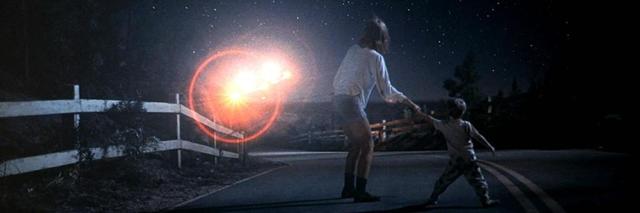
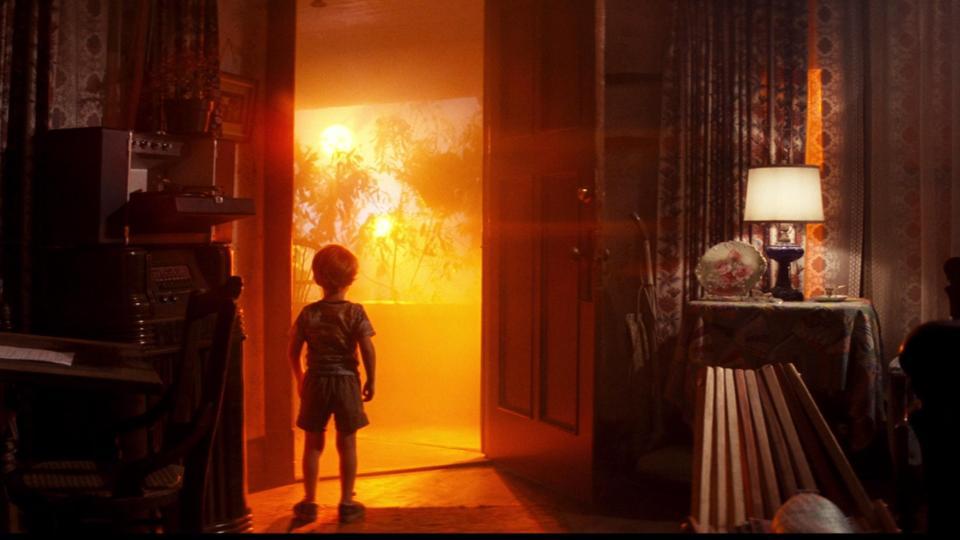
Close Encounters begins as any other film about an alien invasion, setting a sombre tone for a major part of the film. The little child is lured into the woods by ‘the visitors’, a man is scared to the bone in his truck and an entire town branded liar for spotting UFOs. Men and women gather around to welcome the guests with placards and picnics but their party is spoiled before it could begin. Not to forget that chilling scene with all the orange lights when a child is snatched from his mother’s arms by the unseen visitors. The little boy opening his door to a flood of light is perhaps the most frightening scene of this or any other film.
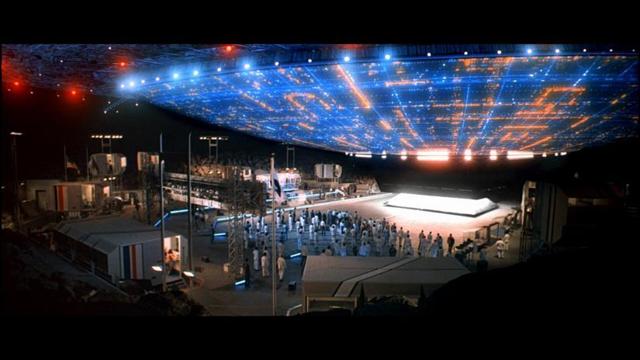
The sense of peril sticks with us right until the very last scene of the film. However, when it lifts, it delivers one of the most hopeful ideas for a first contact. Even though the characters and the viewers were in constant fear through the two hour run-time, we ultimately learn that there was no villain in this story at all. To have delivered such a potent thriller without revealing the threat is a feat in itself. One could have felt cheated at the end but the pay-off was wholesome enough to forgive it all.
However, there were still a few things that perhaps could not manage the same effect on someone watching it 40 years later. The child’s mother’s delayed reactions, the protagonist’s sudden slip into madness and the general body language of all characters was rather difficult to get used to. It was as if someone was using a different language to communicate with me. Was there more to what she is saying? Is there a reason why he is behaving like that? More often than what was perhaps intended, I saw myself in the perplexed wife than in the man looking for answers.
But it doesn’t really matter what people think 40 years later, this film impressed fans, improved the genre and inspired several filmmakers’ work in the decades to come. From the ominous, looming spaceship and the eager men and women waiting for contact in Independence Day to the scared boy looking out of the door at the blood red skies of Hawkins in Stranger Things, the film’s influence can be seen everywhere. Also, now I know when Rohit’s dad in Koi Mil Gaya got the idea to send tunes into space. However, I still don’t understand what made Hrithik Roshan and Preity Zinta dance to the same music.
Follow @htshowbiz for more