Scientists announced on Thursday that they have engineered lettuce and tobacco plants to produce myoglobin — the protein that gives meat its red colour, its iron content, and much of its distinctive taste — directly inside their leaves.
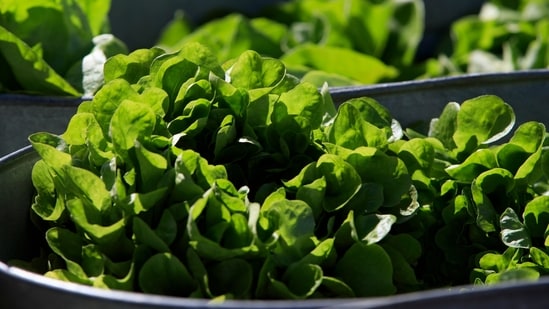
The results, published in Frontiers in Plant Science, are being described as the first stable production of an animal meat protein in an edible crop.
The study was carried out by researchers at Imperial College London and Cambridge biotech Kyomei Ltd, working with collaborators in California and China. Two of the study's authors are employed by Kyomei, which partly funded the doctoral research behind the work, the paper disclosed.
The paper matters because myoglobin is the single molecule that plant-based meats have struggled hardest to replicate. It's the reason meat looks and tastes the way it does — and the reason meat alternatives, however well spiced, tend to fall short of actual meat.
Myoglobin, and why it matters for meat
Myoglobin is a small protein found in the muscles of all vertebrates. It stores oxygen, releasing when the muscle needs oxygen to keep working.
{{/usCountry}}Myoglobin is a small protein found in the muscles of all vertebrates. It stores oxygen, releasing when the muscle needs oxygen to keep working.
{{/usCountry}}It's also what makes muscle tissue red. At its core is a chemical unit called heme — an iron-containing pigment that binds oxygen, gives blood and muscle their colour, and delivers the metallic, umami note characteristic of cooked meat. Heme iron is also the form of dietary iron the human body absorbs most efficiently, far better than the iron in spinach or lentils.
This is why plant-based meat companies have poured effort into finding substitutes. Impossible Foods, one of the best-known examples, uses a related plant protein called soy leghemoglobin, grown in genetically engineered yeast inside industrial bioreactors.
The study, however, asks a different question: what if the crop itself could make the animal protein, no industrial fermentation tank required?
Why the chloroplast, not the plant's main genome?
The researchers didn't insert the myoglobin gene into a plant's regular genome — the DNA in the cell nucleus. They put it into the chloroplast, a small compartment inside plant cells that carries out photosynthesis and has its own separate mini-genome.
That mini-genome is a fossil of ancient biology. Chloroplasts descend from free-living bacteria that were engulfed by a larger cell more than a billion years ago and never left. They retained a stripped-down version of their bacterial DNA. This ancestry turns out to be extremely useful for genetic engineers.
"Due to their bacterial ancestry and their high number of copies per cell, chloroplasts are generally much better at making large amounts of protein than the cell nucleus," Dr Alexia Groff, lead author of the study, said.
There's a second reason chloroplasts are the right neighbourhood for this experiment: they are already the place inside a plant cell where heme itself is manufactured, as a step in producing chlorophyll — the green pigment behind photosynthesis. Putting the myoglobin gene in the chloroplast means the protein is being made in the same room as the raw material, heme, that it needs to work.
Also read: Weight loss, muscle mass, heart risk: Study decodes strengths & weaknesses of 19 GLP-1 drugs
How did they get the gene in?
Using a device nicknamed a "gene gun" — technically, a biolistic (a biological ballistic) delivery system — the team fired microscopic gold particles coated with copies of the myoglobin gene at leaves of young tobacco and lettuce plants. The method exists because plant cell walls are too tough for DNA to simply diffuse in; it has to be injected under high pressure.
Some particles pierced cells and landed inside chloroplasts, where the new DNA integrated into the chloroplast genome. Those cells were then coaxed, through tissue culture, into growing into full plants — which flowered, set seed, and passed the trait on to their offspring.
Why tobacco and lettuce?
Tobacco is not edible and none of its myoglobin is headed for a dinner plate — the plant served only as a testing ground. Its chloroplast genome is among the best understood and easiest to modify of any plant, making it what scientists call a "model" organism, used to prove a technique before attempting it in a food crop.
Lettuce was the food-relevant target — and, the paper claims, the first plant of its kind ever engineered to make a hemoprotein of any sort.
The difference between the plants showed in the results too, with myoglobin output being recorded higher in tobacco (2.7% of soluble protein) than lettuce (1.5%).
The catch: heme, not protein, is the bottleneck
When researchers purified the myoglobin from tobacco leaves, only around 35% of it had a heme molecule properly attached, compared with roughly 80% when the same protein is made in bacteria. Structurally the plant-made version was fine — correctly folded, undamaged — but heme is what actually delivers meat's colour and much of its flavour. A myoglobin protein without heme is, in effect, meat protein that isn't yet doing the meat job.
The plants did try to compensate. Total heme levels roughly doubled in the engineered tobacco. But the plants' native heme-making machinery couldn't keep up with the extra demand from producing large amounts of a new hemoprotein alongside their normal photosynthetic workload.
The study's authors noted that this issue was the next to crack, possibly through further genetic engineering to boost the plant's heme pathway, or by feeding plants heme precursor chemicals.
How does the yield compare with real meat?
Not favourably, yet.
The engineered plants produced roughly 800 mg of myoglobin per kilogram of dry weight. Real beef muscle contains between 8,100 and 11,200 mg per kg — around ten times more.
But the authors argued that per hectare of land, crops could still theoretically compete with, or beat, livestock, given how much less water, land and greenhouse gas plant farming uses compared with rearing cattle.
That case remains a projection, not an economic reality, with the paper also noting that no formal cost analysis had been done yet.
What could this practically become?
The realistic near-term outcome is not a lettuce-that-tastes-like-steak. It's more prosaic — and potentially more useful.
If the heme and yield problems are solved, plant-made myoglobin could be extracted from crop leaves, purified, and sold as an ingredient to plant-based meat manufacturers — the same slot Impossible Foods' yeast-fermented leghemoglobin fills, but grown in a field rather than a fermentation tank.
A second, more speculative use, floated by co-author Dr Kyoko Morimoto of Kyomei, is edible lettuce itself as a "heme-iron-enriched biofortified food" — a leafy vegetable engineered to deliver more absorbable dietary iron, useful in tackling anaemia, "depending on legislative approval".
Independent replication in other labs, and testing across multiple engineered plant lines rather than a single one, are the standard next steps before this can graduate from proof-of-concept to a food-technology platform.