Among the disputes at the heart of the Tata turmoil this week is whether the holding company of India's largest conglomerate should sell shares to the public. The Reserve Bank of India (RBI) is pushing for a listing, Tata Trusts chair Noel Tata is opposing it, and key shareholder Shapoorji Pallonji (SP) group is backing it.
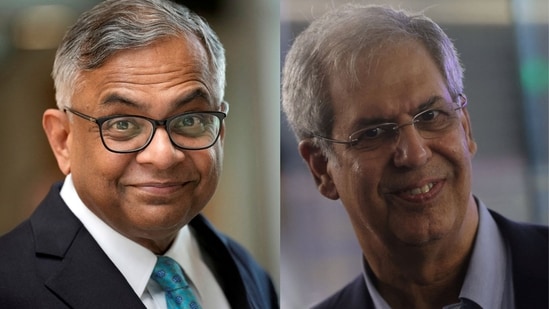
On Thursday, the Tata Sons board sided with the regulator. The Trusts, which owns 65.9% of the company's shares, called that decision a breach of the articles of association, and on Friday the SP group publicly welcomed it.
To make sense of where each side stands, and why, it helps to start with the rulebook.
Also Read | Noel Tata vows to veto IPO listing, seeks 3-yr window from RBI: ‘If I’m forced to vote…'
Why RBI wants big finance companies listed
The RBI issued its scale-based regulation framework on October 22, 2021. This framework sorts non-banking financial companies (NBFCs) into four layers by size, activity and perceived risk, with regulation tightening at each level.
Companies placed in the upper layer face requirements close to those applied to banks: higher-quality capital, limits on large exposures, restrictions on directorships and a compliance officer answering to the board. The framework states that an upper-layer company "shall be mandatorily listed within 3 years of identification", and must adopt the disclosure standards of a listed company even before the listing happens.
{{/usCountry}}Companies placed in the upper layer face requirements close to those applied to banks: higher-quality capital, limits on large exposures, restrictions on directorships and a compliance officer answering to the board. The framework states that an upper-layer company "shall be mandatorily listed within 3 years of identification", and must adopt the disclosure standards of a listed company even before the listing happens.
{{/usCountry}}The reasoning is set out in the RBI's discussion paper of January 22, 2021. The paper recorded that the balance sheet of the non-bank sector more than doubled in five years, from ₹20.72 lakh crore in 2015 to ₹49.22 lakh crore in 2020, and that non-banks were the largest net borrowers from the financial system, with gross payables of ₹9.37 lakh crore as of end-September 2020. Growth of that scale under lighter regulation can seed systemic risk, the paper argued, and the failure of one large, deeply interconnected company can transmit shocks across the financial sector.
The paper pointed to the second half of 2018, noting that one of the largest core investment companies (CIC) defaulted on its market liabilities and a series of defaults followed, damaging the ability of both large and small non-banks to raise money. The discussion paper did not name any company, but was likely referring to Infrastructure Leasing and Financial Services (IL&FS), whose board the government had replaced through a National Company Law Tribunal (NCLT) order on October 1, 2018.
On listing specifically, the paper said firms posing higher systemic risk need the strongest corporate governance standards and a diffused ownership structure, to reduce the scope for abuse of dominance, and that the tools should be calibrated on the lines applied to private banks.
Tata Sons was named in the first such list of 16 upper-layer NBFCs on September 30, 2022, setting a three-year listing deadline.
The deadline went by but there weren't any consequences at the time because Tata Sons application to surrender its CIC registration remained pending with the RBI until this month.
Also Read | From not seeking another term to re-appointment: What led to N Chandrasekaran's return as Tata Sons chairman
Tata Sons’s plan for a way out
Tata Sons neither lends to the public nor takes deposits. It holds shares in Tata companies, and Indian law treats a firm whose business is holding shares in its own group as a core investment company, or CIC, which is one of the categories of NBFC the RBI registers and regulates. This tag is what pulled the holding company of a salt-to-software group into a framework whose upper-layer rules are targeted at the largest lenders.
Under the RBI's 2025 rules for such firms, a CIC may operate without registration in two situations: if its assets are below ₹100 crore, or if its assets exceed that level but it does not use public funds, meaning money raised from banks, markets or depositors.
Tata Sons went after the second route to get an exemption from having to list. It repaid ₹21,813 crore of debt during 2023-24 and applied in March 2024 to surrender its registration as a CIC, according to news agency PTI.
But two changes this year made that strategy tougher. In an amendment to the 2025 rules issued on April 29 and effective from July that year, the RBI added a line to its definition of public funds: "Indirect receipt of public funds means funds received not directly but through associates and Group entities which have access to public funds."
This meant that while Tata Sons itself carries no borrowings of its own, group companies — including Tata Capital that raises money from banks and the debt market — will again trigger the condition calling for a listing.
In a second amendment dated June 24 that year, the RBI scrapped its scoring method for identifying upper-layer companies and replaced it with a single test of size: assets of ₹1 lakh crore or more.
Tata Sons reported standalone assets of ₹2.01 lakh crore as of March 31, 2026, Mint reported, well above that threshold.
Government-owned lenders were brought into the upper layer at the same time too, but a carve-out exempted them from listing. In the list of 17 upper-layer NBFCs published on August 6, according to an RBI press release, Tata Sons was the only unlisted one.
One earlier case had gone the other way, Mint reported. Shanghvi Finance, the Sun Pharma promoter holding company named in the same 2022 list, applied to surrender its registration on February 9, 2023, after repaying ₹879 crore, and was permitted to do so on May 17 that year.
Also Read | Chandrasekaran decides to step down in 2027, then gets reappointed: What changed at Tata Sons | Timeline
Where shareholders stand
The chairperson of Tata Trusts, which owns 65.9% and funds its philanthropy from the dividends, wants the company to remain private. The chair, Noel Tata, told the board on Thursday that if forced to vote, "I would have no option but to veto any such decision to list", according to a statement released by the Trusts and reported by Mint.
The Trusts said separately that a listing would "destroy its character", Reuters reported. Noel Tata has asked the board to seek at least three years from the RBI, until September 2029, to list.
Experts cited by PTI said a listing would force fuller disclosure of how capital is allocated, and that shareholder demands for returns would make long-term bets harder to sustain. Proxy advisory firm InGovern Research said in a note ahead of the September 17 board meeting that a listing would give Tata Sons "capital flexibility to raise funding" and would "subject the Tata Trusts' special rights to greater scrutiny", Bloomberg reported.
The Shapoorji Pallonji group, which owns 18.38% of Tata Sons, has argued for a listing for months. Chairman Shapoor Mistry welcomed the RBI's decision and called a listing a "social and moral imperative", PTI reported on Friday.
The construction and infrastructure group has to repay about ₹3,500 crore by the end of September and roughly ₹11,275 crore over the next 24 months, HT reported. It had raised $2.25 billion (approximately ₹21,580 crore) in July by refinancing debt against its Tata Sons shares, Reuters said. It cannot simply sell the stake, because Tata Sons is a private limited company whose board can block share transfers.
But the group has also offered to sell 2% to 3% of Tata Sons shares back to the company for ₹25,000 crore, an offer Noel Tata placed before the board on Thursday, according to an executive familiar with the matter, Mint reported. The Trusts confirmed in its statement that the group had proposed monetising part of its holding for at least ₹25,000 crore, in two tranches over 18 months.