When deliberating the creation of an energy-secure India, the narrative often revolves around two contrasting factors. The first is the country’s traditional dependence on coal, while the second concerns its ambitious drive for clean, renewable energy. But for a burgeoning nation of more than 1.4 billion people, we need a nuanced approach that maintains a fine balance between economic growth and India’s global climate commitments.
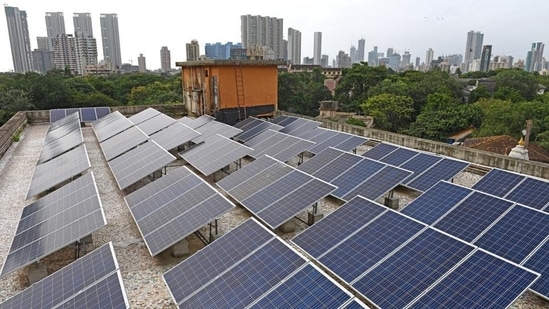
While solar and wind energy continue to establish new growth benchmarks, another segment of the industrial conundrum lies unaddressed. Agriculture, heavy manufacturing and chemical refineries cannot operate efficiently on solar power alone, as these sectors require high temperatures. Moreover, most clean energy components are imported, leaving the nation vulnerable to trade wars, geopolitical flashpoints and global market disruptions.
It is against this backdrop that one needs to view India’s historical asset: coal. The Union minister for coal and mines recently noted that coal gasification will be crucial in supporting energy security, curbing imports and boosting industrial growth. The country’s coal reserves are estimated at almost 400 billion tonnes, among the world’s largest. Coal still plays a major role in India’s energy generation, accounting for 55% of its energy mix and almost 74% of electricity generation. Further, coal’s annual demand of around one billion tonnes is anticipated to soar significantly by 2047. Despite the reliance on coal, India is making steady progress towards meeting its net-zero commitment by 2070.
Besides, the government is promoting coal gasification to convert coal into syngas. With an overall investment exceeding ₹85,000 crore, India plans to target a coal gasification capacity of 100 million tonnes by 2030. The gasification process converts coal into syngas, which is used to produce cleaner fuels, fertilisers, chemicals and hydrogen. Being an efficient approach, it enables the sustainable use of domestic resources.
{{/usCountry}}Besides, the government is promoting coal gasification to convert coal into syngas. With an overall investment exceeding ₹85,000 crore, India plans to target a coal gasification capacity of 100 million tonnes by 2030. The gasification process converts coal into syngas, which is used to produce cleaner fuels, fertilisers, chemicals and hydrogen. Being an efficient approach, it enables the sustainable use of domestic resources.
{{/usCountry}}Given that around 83% of crude oil, 50% of natural gas and more than 90% of fertilisers and methanol are imported, the Central Government has prioritised energy security as a strategic imperative. It is in this context that coal gasification offers a realistic energy transition strategy spanning the gap between intense industrial growth and a low-carbon future. Coal gasification is part of India’s general strategy to maximise the use of its rich coal reserves and enhance energy security. The coal gasification mission could potentially save the country ₹60,000 to ₹90,000 crore annually via import substitution, while creating a low-carbon chemicals and fertiliser economy.
Some elaboration is needed on the coal gasification process, which transforms solid coal into synthetic gas or syngas – a blend of carbon dioxide, carbon monoxide, hydrogen and methane. This is obtained by reacting coal at extremely high temperatures with a limited amount of steam and oxygen, rather than by complete combustion.
Syngas can also function as the basic building block for value-added industrial segments. In agriculture, it can be processed into ammonia and then used to produce affordable domestic urea fertilisers. In transport, it is converted to methanol, which can be used for fuel blending and to reduce oil imports. Gasification contributes to the local production of key chemicals used in the manufacture of paints, plastics and pharmaceuticals, among others.
Gasification creates an opportunity for India to leverage its abundant coal reserves and reduce its forex outflows for imports of natural gas, fertilisers and chemicals. The ability to manufacture essential commodities locally also helps stabilise input costs and protect local supply chains from global markets. Although gasification is a fossil-fuel-based process, it acts as an ecological bridge, unlike legacy coal combustion. Since gasification occurs within a highly controlled, sealed chemical reactor, it captures sulphur, particulate matter and other byproducts more easily and efficiently than scraping them from the chimneys of traditional power plants.
Gasification streams concentrated CO₂ and the technology is best suited for Carbon Capture, Utilisation and Storage (CCUS) systems. This captured carbon can be safely stored deep underground or reused to make commercial products such as solid carbonates and synthetic fuels. Through carbon management and the integration of biomass into gasification reactors, the net carbon footprint of the country’s heavy industries can be reduced.
The transformation of coal into value-added industrial products helps in safeguarding the nation’s critical manufacturing base, even as it promotes the Make in India mission. The future of coal in India now transcends its role of fuelling traditional power grids. Instead, it focuses on powering a self-reliant, well-diversified industrial ecosystem to ensure India remains energy-secure, increasingly competitive and progressively greener in the global enterprise landscape.
(The views expressed are personal)
This article is authored by Ratul Puri, chairman, Hindustan Power.