Few natural events shape India's economic fortunes as profoundly as the southwest monsoon. This year, prolonged heatwaves, concerns around the possible development of El Niño conditions and forecasts of below-normal rainfall once again brought India's water security into sharp focus. The India Meteorological Department (IMD) projected the 2026 southwest monsoon at 92% of the Long Period Average (LPA), while highlighting an increased probability of below-normal and deficient rainfall. (Source: IMD) Yet, as the season unfolded, some parts of the country experienced torrential downpours while others continued to grapple with prolonged deficits. The challenge before India is therefore no longer simply one of water availability, but one of water variability. Rain is arriving differently, and our water systems must evolve accordingly.
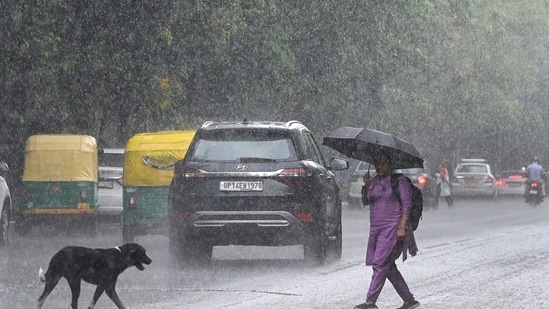
The implications extend far beyond agriculture. More than half of India's net sown area continues to depend on rainfall, making millions of farmers vulnerable to delayed monsoons, prolonged dry spells and sudden bursts of excessive rainfall. Cities are confronting a similar reality. Short spells of intense rainfall frequently overwhelm urban drainage systems while failing to adequately replenish reservoirs and groundwater. Industries dependent on reliable water supplies are also increasingly exposed to operational disruptions. Scientific studies indicate that India's rainfall patterns are becoming more erratic, with heavier rainfall events interspersed with longer dry spells, making conventional approaches to water management progressively less effective.
India has already demonstrated that ambitious water transformation is possible. Since the launch of the Jal Jeevan Mission, rural tap water coverage has increased from 16.7% in 2019 to over 80%, illustrating what focused policy, sustained investment and institutional coordination can achieve. The next phase of India's water journey, however, must move beyond expanding infrastructure. It should focus on building intelligent water systems that can anticipate, adapt and respond to increasingly unpredictable rainfall.
The first priority is to rethink how India plans its water infrastructure. Reservoirs, canals and storage systems have been designed around historical rainfall averages. Water infrastructure should increasingly incorporate probabilistic monsoon forecasts, seasonal climate outlooks and predictive hydrological models while determining storage requirements, reservoir operations and district-level contingency planning. Instead of preparing for one expected outcome, India's water systems must be designed to perform across multiple rainfall scenarios.
{{/usCountry}}The first priority is to rethink how India plans its water infrastructure. Reservoirs, canals and storage systems have been designed around historical rainfall averages. Water infrastructure should increasingly incorporate probabilistic monsoon forecasts, seasonal climate outlooks and predictive hydrological models while determining storage requirements, reservoir operations and district-level contingency planning. Instead of preparing for one expected outcome, India's water systems must be designed to perform across multiple rainfall scenarios.
{{/usCountry}}Secondly, India must accelerate the use of technology across the water value chain. AI-enabled reservoir operations can optimise releases ahead of anticipated rainfall, minimise flood risks and preserve storage during dry periods. Smart distribution networks equipped with digital sensors can detect leakages in real time, reduce transmission losses and improve operational efficiency. The future of water management will depend as much on data-driven decision-making as on physical infrastructure.
The third opportunity lies in treating water as a circular resource rather than a linear one. India receives substantial annual rainfall and generates significant volumes of wastewater, yet much of it remains underutilised. Freshwater should increasingly be prioritised for drinking and agriculture, while treated wastewater becomes a mainstream resource for industrial operations, landscaping and other non-potable applications. Successful examples such as Nagpur's treated wastewater model demonstrate that reuse is not merely an environmental aspiration but an economically viable solution capable of reducing pressure on freshwater resources.
Water efficiency must also become central to India's agricultural strategy. Wider adoption of micro-irrigation, precision agriculture and crop planning aligned with local water availability can significantly improve productivity without increasing water demand. Equally important is integrating these interventions with weather forecasts and district-level water budgeting, enabling farmers to make more informed cropping decisions before rather than after rainfall uncertainties emerge.
Urban India, too, must rethink how it captures and manages rainfall. Stormwater should no longer be viewed merely as runoff to be drained away, but as a valuable resource. Expanding rainwater harvesting, restoring urban lakes, strengthening groundwater recharge and creating decentralised storage infrastructure can help cities retain water during periods of intense rainfall instead of allowing it to flow away unused.
None of these interventions require India to reinvent its water policy. Many are already underway in different forms across states and sectors. The challenge now is to connect them through a coherent framework that recognises climate variability as the new planning reality. India's water infrastructure has historically been designed to manage scarcity. The challenge before us now is to build systems capable of managing variability.
The conversation around water can no longer begin and end with whether the monsoon has been good or bad. It must focus on whether every season leaves India better prepared for the next one, regardless of how the rains arrive. India has shown through initiatives such as the Jal Jeevan Mission that large-scale transformation is possible. The next chapter should ensure that every reservoir becomes smarter, every city becomes more water efficient and every drop of water must live more than once. In an era of increasingly unpredictable rainfall, India's future water security and economic resilience will depend not on how much rain falls, but on how effectively we manage every drop once it reaches the ground.
(The views expressed are personal)
This article is authored by Yashovardhan Agarwal, managing director, Welspun BAPL, and director, Sintex BAPL.