
 E-Paper



Strengthening India's clean energy supply chains
This paper is authored by Dhruv Warrior, Vibhuti Chandhok, Abhinandan Khajuria, Shruti Gauba, and Rishabh Jain, CEEW.

 Prefer HTon Google


This report provides an in-depth analysis of India’s potential as a global manufacturing hub for the clean energy sector while addressing challenges such as intense competition and market uncertainties. Focusing on solar photovoltaics, wind turbines, and lithium-ion batteries, it identifies key supply chain segments for an indigenisation strategy through product space map analysis, industry insights, and a thorough literature review of manufacturing processes. Given the strategic factors influencing this sector—geoeconomic opportunities, technological advancements, energy transitions, and security—the report calls for a shift from conventional industrial and trade policies, which may prove inadequate in a market dominated by developed economies having massive fiscal bandwidths. Indigenising clean energy manufacturing is strategically crucial for establishing the foundation for a future green economy and positioning India as a competitive global player. Moreover, by capitalising on a fragmenting global market, India can attract international investment and diversify supply chains currently concentrated in the People’s Republic of China, enhancing its role in the global energy transition.
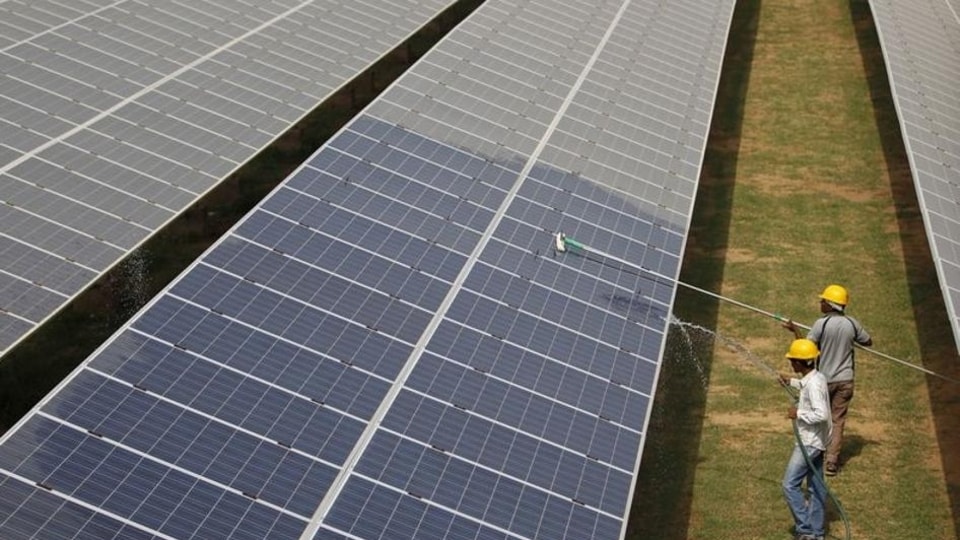
The pace of deployment of clean energy is increasing at an unprecedented rate every year. Presented with the opportunity to produce for both domestic and international markets, clean energy manufacturing in India is poised at a critical juncture. In a fragmenting global market, India possesses the potential to become a globally competitive manufacturing hub. However, this opportunity is also accompanied by several risks arising from global manufacturing overcapacities, razor-thin profit margins in the post-Covid economy, and uncertainties associated with domestic demand. These risks threaten the investments of $4.56 billion (Rs. 36,492 crore) committed by governments to catalyse this nascent sector through production-linked incentive (PLI) schemes. Strategic policy choices made now will determine whether Indian manufacturers of clean energy technologies emerge as world leaders or remain reliant on continuous government support in the short- to medium-term.
Precisely targeted policymaking is essential to align the wide-ranging economic prospects of indigenisation with India’s energy security and energy transition goals. Therefore, we critically evaluate the strategic value of deepening clean energy manufacturing in this report, and assess the efficacy of central government policies at realising this value. We argue that the conventional industrial and trade policy tools instituted so far can prove inadequate in securing the myriad strategic advantages of this sector, given the intense competition across various segments of the supply chain, and the larger fiscal capacities of other developed economies. We aim to fill these gaps by providing a nuanced rationale and a methodological approach for advancing the indigenisation of this sector in India.
Recognising that industrial development is a gradual process contingent on a country’s existing production capabilities, we utilise product space mapping analysis to identify segments of the supply chain that India should prioritise in its indigenisation strategy. We complement this with a bottom-up analysis based on stakeholder engagements, discussions with industrial players, and literature reviews to complete the identification exercise. Identification of the relevant supply chain segments is hence based on a comprehensive and methodological approach, taking into account their complexity, competitiveness, impact on the total cost of the final technology/product, and potential to open up pathways into more complex sectors.
To ensure a focused analysis, we deep-dive into three key clean energy technologies –solar photovoltaics, onshore and offshore wind turbines, and lithium-ion batteries. Each has a mature manufacturing sector globally as well as an existing demand base in India, offering relevant insights to scale these sectors rapidly. We also touch upon certain alternative solar, wind, and battery technologies where relevant to the discussion. However, we have not assessed the supply chains for clean energy technologies such as green hydrogen or biofuels in this study. By addressing the strategic imperatives and identifying key areas for policy intervention for select technologies, we aim to provide targeted recommendations for India – and possibly other developing countries – to build sustainable, future-oriented, globally competitive clean energy value-chain segments.
This paper can be accessed here.
This paper is authored by Dhruv Warrior, Vibhuti Chandhok, Abhinandan Khajuria, Shruti Gauba, and Rishabh Jain, CEEW.


