
 E-Paper



Can renewed push for energy security pass the policy predictability test?
This article is authored by Amir-Ullah Khan, economist and research director, CDPP and adjunct professor, TISS and Manipal University.

 Prefer HTon Google


India’s renewed emphasis on domestic oil and gas exploration comes against a backdrop of global energy volatility, geopolitical uncertainty and sustained import dependence. Strengthening upstream production has once again been positioned as central to national energy security, with policymakers highlighting the need to accelerate exploration, attract capital, and diversify risk in an increasingly uncertain global market.
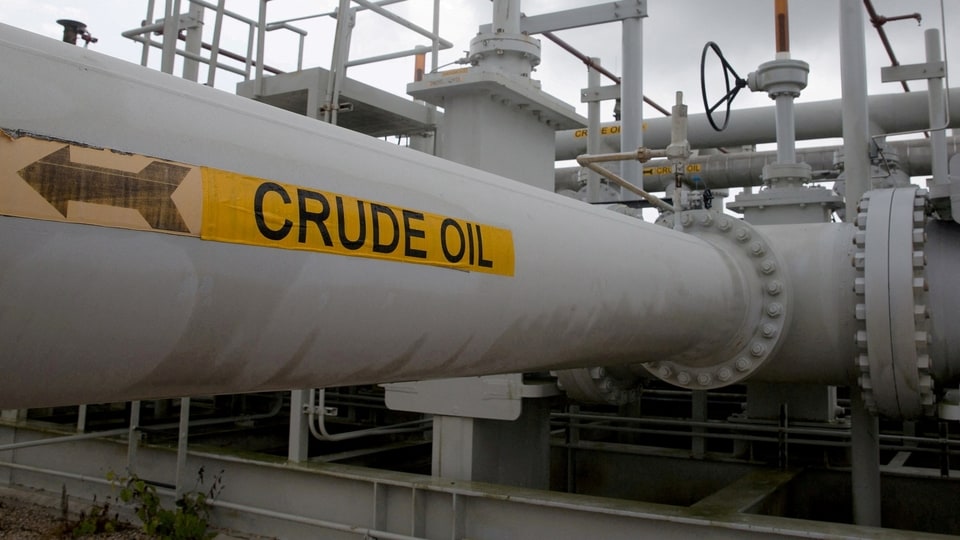
At India Energy Week 2026, Prime Minister Narendra Modi reiterated the government’s aim to attract $100 billion of investment in oil and gas by 2030, while highlighting a broader $500 billion energy opportunity. Pointing to a liberalised E&P regime, expanded exploration acreage, and easier business conditions, the message was clear: India intends to be a competitive destination for upstream investment at a time when capital is becoming more selective worldwide.
That outreach was reinforced with the sudden launch announcement of the 11th round of the Open Acreage Licensing Policy (OALP XI). Covering more than 80,000 sq kms across onshore, shallow-water, deep-water and ultra-deep-water areas, the round underscores the government’s intent to unlock unexplored basins and revive exploration momentum.
Policy reforms over the past decade—including the Hydrocarbon Exploration and Licensing Policy (HELP), ORDA amendment, new PNG Rules 2025 and Model Revenue Sharing Contracts —have all been positioned as evidence of India’s investor-friendly- shift. Latest media reports quoting senior MoPNG officials reassuring bidders that assets awarded under recent OALP rounds will not be subject to arbitrary intervention, and that oilfields will not be nationalised, are yet another shot in the arm.
This is indeed a welcome statement and one that investors are watching closely. But whether words match, action remains to be seen. Ultimately, confidence will hinge on whether policy intent is matched by consistent execution.
Upstream investment decisions depend as much on execution as on announcements. Oil and gas projects typically span over 30 to 50 years, and investor confidence is shaped by how governments manage regulatory transitions, contract expiries and legacy assets—particularly during periods of policy change.
India’s upstream sector has experienced several such moments over time. Earlier disputes involving junior explorers such as Prize Petroleum and HOEC, as well as international players like ENI, highlighted challenges around cost recovery, pricing approvals and contractual interpretation under the Production Sharing Contract (PSC) regime. While these cases stem from older frameworks, they continue to inform how investors view regulatory consistency.
High-profile developments such as the KG-D6 block operated by Reliance, also faced cost recovery challenges due to alleged under production. Although legally grounded, these episodes reinforced the importance investors place on predictability during policy transitions.
More recently, investor attention has extended to how producing assets approaching contract expiry are handled. One such case involves the CB-OS/2 offshore block in the Cambay basin, operated by Cairn, Vedanta, where operatorship was advised to be transferred to the national oil company, ONGC, after over four years of inaction on renewal application. While the government has described this as an interim step to safeguard production and national resources, the episode has been closely observed by industry participants.
The block, although a relatively small contributor, is a producing asset with remaining reserves and operational continuity. The abrupt denial of extension has reinforced concerns about what international oil companies often describe as above-ground risk.
Industry observers note that assurances about future contracts can ring hollow if existing contracts appear vulnerable. Legal experts point out that while PSC extensions are not automatic rights, producing assets with established infrastructure typically expect rollover mechanisms or transparent re-bidding pathways to avoid operational disruption.
“Investors evaluate policy credibility not only by what is promised but by how expiring contracts are handled,” said a senior upstream consultant. “When a producing block reverts to a national oil company without a clearly articulated framework, it increases perceived sovereign risk, even if the GoI perceives this action as technically legal.”
This risk perception is particularly relevant as India seeks global participation in frontier basins such as the Andaman offshore, where exploration costs are high and commercial success uncertain.
From the government’s perspective, enforcing contractual discipline and safeguarding national resources remains a legitimate priority.
Whether these initiatives translate into higher confidence will depend on consistency in application. Investors tend to assess policy credibility not solely through new announcements, but through the handling of existing contracts during periods of change.
India’s upstream opportunity is substantial—with 300 bn barrels in reserves potential – and difficult for global exploration and production players to ignore. The combination of scale, growing energy demand and stated reform intent keeps the country firmly on the global investment map.
However, as India undertakes the largest expansion of exploration acreage in its history, the central challenge will be reassurance. Attracting bids is only the first step; sustaining long-term capital flows will depend on confidence that contracts will be governed by stable and predictable rules.
For global E&P players weighing multi-decade, capital-intensive investments, the balance between sovereign oversight and execution certainty may ultimately determine whether India’s upstream ambition delivers durable gains in domestic production.
(The views expressed are personal)
This article is authored by Amir-Ullah Khan, economist and research director, CDPP and adjunct professor, TISS and Manipal University.


