
 E-Paper



Empowering women to lead India’s agricultural transformation
This article is authored by Subroto Geed, president, South Asia, Corteva Agriscience.

 Prefer HTon Google


Traditionally viewed as a legacy profession, farming is now emerging as India’s next growth engine. The country is building a new agricultural ecosystem—one that restores dignity to farmers, opens doors for women agri-entrepreneurs, and invites youth back to the soil with innovation in their hands and aspiration in their hearts.
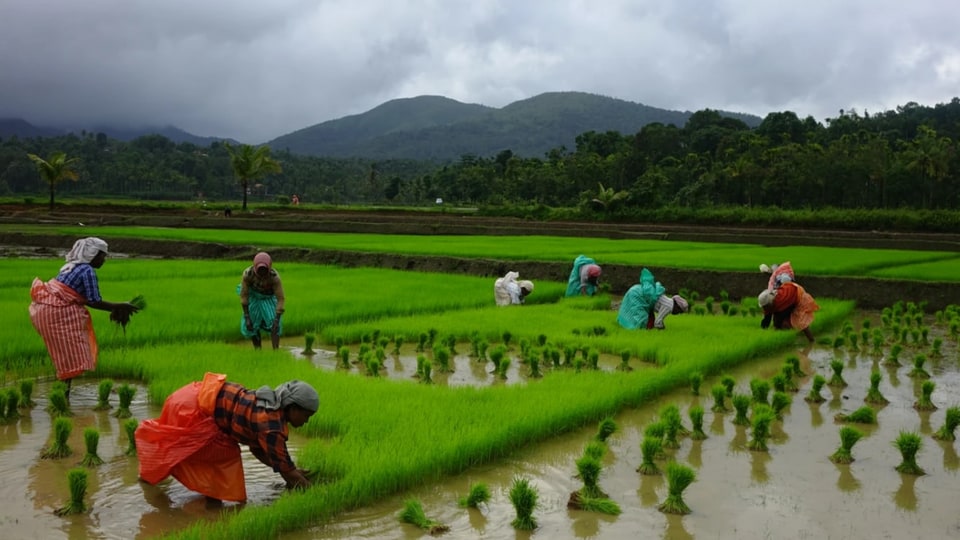
The UN’s declaration of 2026 as the International Year of the Woman Farmer is more than symbolic—it is both a moral responsibility and an economic opportunity. Indian women have long been the invisible backbone of agriculture. Today, they are stepping into leadership roles: heading FPOs in Maharashtra and Telangana, adopting climate-smart practices in Rajasthan, and pioneering organic farming in the Northeast.
Institutions like the Central Institute for Women in Agriculture (CIWA), Krishi Vigyan Kendras (KVKs), and schemes such as ATMA are driving this change. Over the past three years, these platforms have trained millions of farmers in scientific and modern agricultural practices. They are not just empowering women—they are democratising knowledge and laying the foundation for an inclusive agricultural renaissance.
As climate volatility reshapes the agricultural landscape, women are emerging as frontline innovators. In Balotra, Rajasthan, Leela Devi transformed two hectares of once-barren land into a thriving pomegranate orchard after receiving technical training in pest management, judicious use of inputs, and drip irrigation. By adopting these practices, she not only improved soil health and secured a sustainable income but also demonstrated how climate-smart farming can turn challenges into opportunities. Her success has inspired neighbouring farmers to embrace similar methods, creating a ripple effect of resilience in the community.
Similarly, in Madhya Pradesh, Saraswati Bai has embraced hybrid maize varieties and combined them with advanced agronomic methods. These practices have helped her achieve stronger yields, minimise crop losses, and better withstand climate-related risks. By integrating innovation, she has not only strengthened her household income but also demonstrated how women farmers can lead the adoption of modern practices to ensure long-term resilience.
Women farmers are not just adapting to climate resilience—they are pioneering it. Their grassroots innovations are building climate resilience from the ground up, making them indispensable to India’s food and environmental security. These efforts are supported by a growing network of programmes that promote climate-smart agriculture, including the National Innovation on Climate Resilient Agriculture (NICRA) and various state-level initiatives. By integrating traditional knowledge with modern techniques, women are helping India transition toward a more sustainable and shock-resilient agricultural future.
India’s agricultural transformation will only succeed if it is inclusive—and that requires convergence across sectors. Public-private partnerships, civil society initiatives, and academic collaborations must work in tandem to amplify the impact of women-led agricultural models. Whether it’s startups co-creating solutions with women farmers, corporates investing in gender-responsive value chains, or universities documenting and scaling grassroots innovations, convergence must be driven by purpose and equity.
Empowering women in agriculture is not a siloed effort—it is a shared responsibility. When diverse stakeholders align behind this goal, we move from isolated success stories to a nationwide movement for rural prosperity.
India has laid a strong foundation for food and nutritional security—and now, the focus must shift to farmer prosperity. This next milestone requires a mindset change—from viewing farmers as beneficiaries to recognising them as entrepreneurs and innovators.
Women are not side stories in this journey—they are central protagonists. Empowering them is not just sound economics; it is smart policy, effective governance, and the only path to lasting rural transformation.
India stands at a rare intersection: Politically committed, demographically young, and technologically empowered. This moment must not be another policy cycle—it must become a movement.
Let us make agriculture aspirational. Let us make rural India entrepreneurial. Let us position women-led farming as a model of inclusive innovation for the world to follow.
Let us move from celebrating freedom to democratising opportunity—through the soil, through skill, and through self-reliance.
This article is authored by Subroto Geed, president, South Asia, Corteva Agriscience.


