
 E-Paper



Female Genital Mutilation: Time to ban this practice
This article is authored by Anita Anand, development and communications consultant, Goa.

 Prefer HTon Google


On April 7, a nine-judge Supreme Court Bench is scheduled to hear arguments concerning the expansion of religious freedom issues arising from the Sabarimala review, involving Articles 25 and 26. These articles address freedom of religion and freedom of management.
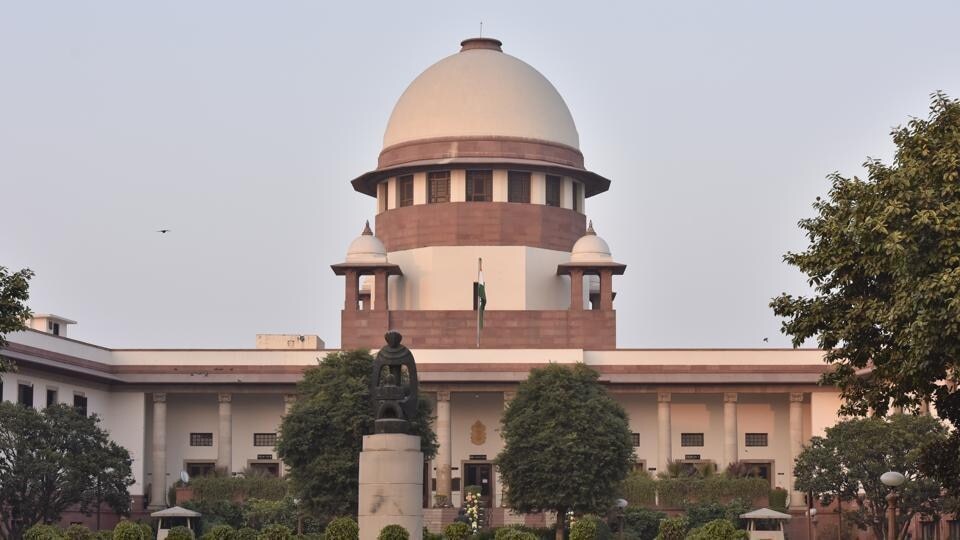
The Bench will consider important issues, including the scope of "essential religious practices," judicial review of faith, and the balance between gender equality and religious rights across various faiths. It will analyse the conflict among individual freedom of religion, the rights of religious denominations, and constitutional equality.
Additional matters include the entry of Muslim women into mosques and dargahs, the entry of Parsi women married to non-Parsis into fire temples, Female Genital Mutilation (FGM) among Dawoodi Bohras, the relationship between personal law and constitutional morality, and the scope of judicial review over "essential" religious practices.
Perhaps the most harmful of these issues is FGM, a religious practice mainly observed by the Dawoodi Bohra community, a sect of Shia Islam. It is estimated that 75–85% of girls in this community have undergone the procedure, and the practice has also been reported, although in smaller numbers, among Bohra sects and some Sunni communities in Kerala.
What is FGM? It is a practice known as khatna, khafz, or khafd, in which girls, around the age of seven, are usually subjected to cuts and incisions that involve the partial or complete removal of external female genitalia.
This procedure is usually performed by traditional practitioners using a knife or blade. There are four types of procedures, ranging from minor to the most severe. Besides being a brutal practice, it can cause urinary infections, sepsis, and lifelong physical and psychological trauma, such as post-traumatic stress disorder (PTSD), as well as childbirth complications, among others. It is performed as a rite of passage into womanhood, often to control a girl’s sexuality or to ensure her purity and fidelity for marriage. In some cases, religious texts are misunderstood to justify female genital mutilation, even though it is not endorsed by major religions like Islam or Christianity.
Despite the documented health risks, FGM in India remains legal, creating challenges for eradication. A Public Interest Litigation filed in 2017 argued that FGM violates Articles 14, 21, and 25 of the Indian Constitution, which protect equality, personal liberty, and religious freedom. In 2025, the Supreme Court issued a notice on a newly-filed Public Interest Litigation (PIL) by Chetna Welfare Society, urging the Court to establish binding guidelines and acknowledge the urgent need for legal and judicial reform to curb the practice.
Masooma Ranalvi is the founder of We Speak Out, an organisation dedicated to ending FGM. At age seven, her grandmother took her to an old building where a woman performed FGM on her. Ranalvi’s two older sisters also underwent FGM. “We never discussed it among us sisters. It was only after we grew up, got married, and had children that we started talking about FGM,” she says.
In 2015, Ranalvi wrote a blog about her experience. It was published on the NDTV portal and received widespread coverage. It was the early days of WhatsApp, and she started a group with five women to share their stories. The group grew to 50 members within a week, and a movement was born. Women from across India, Canada, and the US joined, using it as a safe space to discuss FGM, sex, sexuality, pleasure, and related issues.
Ranalvi founded We Speak Out, and in 2016, drafted a petition on Change.org, a digital platform, which garnered 200,000 signatures. The media covered the campaigns and the issue of FGM. The petition, presented to the government, received no response. In the same year, a PIL filed by a child rights lawyer compelled the organisation We Speak Out to join the petition and go to court. The Supreme Court admitted the petition.
Dawoodi Bohras oppose a ban, arguing that circumcision is a religious practice protected by Articles 25 and 26 of the Constitution. In response to the PILs, in May 2017, they founded a Public Religious Trust representing tens of thousands of Bohra women across India, called the Bohra Women's Association for Religious Freedom (DWARF), who argue to keep FGM alive.
In court, the DWARF women stated that, as women of the Bohra community, it is their tradition and dismissed the stories of post-FGM trauma as being influenced by the West.
Ranalvi points out that the Bohra community is well organised and that even before Aadhaar, each Bohra had a biometric card containing full information about its members. Primarily traders by profession, they are financially strong and possess a powerful public relations machine.
FGM is a global issue. UN Women reports that about 230 million girls and women alive today have undergone FGM, a figure that has increased by 15% – adding 30 million more cases – in the past eight years. Each year, over two million girls undergo female genital mutilation, often before their fifth birthday and sometimes within days of birth. This situation is alarming.
It is more of a tradition, passed down from one generation to the next, without questioning: Does this make sense today? The answer is a resounding no.
It's time for the Indian government to ban the practice.
This article is authored by Anita Anand, development and communications consultant, Goa.


