
 E-Paper



Gap between women’s electoral power and presence
Authored by - Bhavya Razshree, advocate, Delhi Courts and co-founder, LawSarathi.in. and Aditya Ashok, public policy consultant, Government Advisory.

 Prefer HTon Google


In Tamil Nadu, 2.52 crore women cast their vote this April, against 2.35 crore men. In Kerala, female turnout outpaced male turnout for the third consecutive election. In West Bengal, the turnout gender gap closed completely. Across the five legislatures that went to polls, women voted in numbers that parties have stopped being able to ignore.
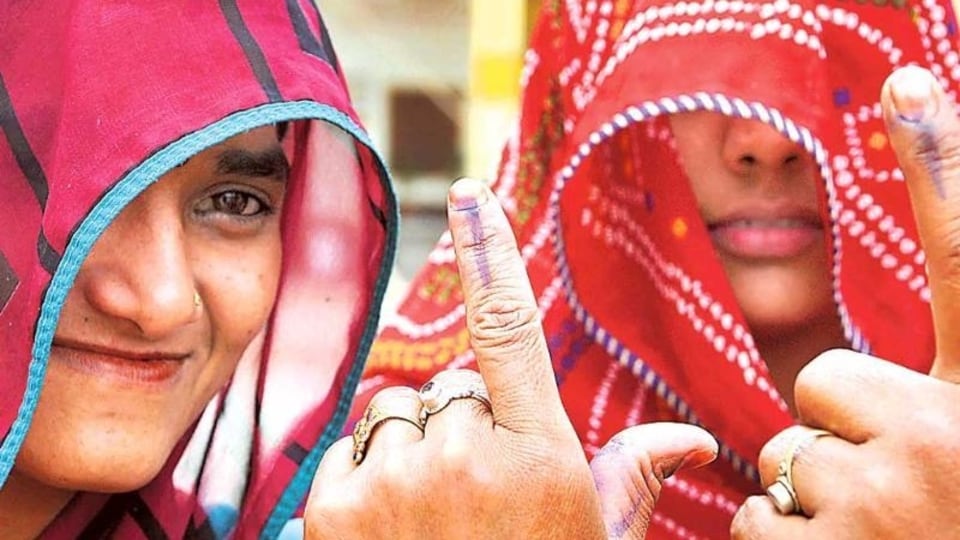
And yet, when the counting ended on May 4, the 824 winning candidates included fewer than 90 women. Roughly one in ten. The Nari Shakti Vandan Adhiniyam, passed in September 2023 with the support of 454 out of 456 voting members, promises a third of all legislative seats to women once delimitation and a fresh census make it operational. On the present arithmetic, the five new assemblies fall well short of even that threshold.
The gap between women’s electoral power and women’s legislative presence is not a failure of any single party. It is a structural feature of Indian democracy that the reservation law was designed to correct. The 2026 results demonstrate why that correction remains urgent.
Kerala elected 11 women to its 140-member assembly, one fewer than the previous house. Less than 8% representation in a state that tops national rankings on every other measure of women’s development. Tamil Nadu fielded 443 women candidates, the highest in the state’s electoral history. Roughly 20 will sit in the 234-member assembly. West Bengal did marginally better: About 40 of its 294 winning candidates are women, close to 13.6%, the highest share among the five states. Both major parties in Bengal gave more tickets to women than parties elsewhere, driven by competition for the same women voter base. Assam returned half a dozen women to its 126-seat assembly, a figure that has barely moved in 20 years. Puducherry sent two women to its 30-member assembly.
The aggregate is unforgiving: 824 seats, fewer than 90 women, somewhere between 9 and 11%. Below the national average for state legislatures, which itself sits at about 9%.
If election to the assembly is one filter, appointment to the cabinet is the much narrower second one. The pattern across India has been consistent: parties promote a few women to visible positions, rarely to the heavyweight portfolios that decide state finances, home affairs, or industry.
The challenge is not unique to any party. It is endemic across the political spectrum. When women are given cabinet berths, they tend to receive social welfare or women and child development portfolios, which keeps them outside the ministerial inner circles where fiscal and security policy is decided.
Three structural reasons, none unique to a single political formation. First, parties across the spectrum continue to treat women voters and women candidates as separate categories. Welfare schemes designed to win the female vote are rarely accompanied by investments in cultivating female candidates. The voter outreach budget and the candidate development budget do not meet.
Second, ticket distribution remains controlled by entrenched local networks that women find harder to access, especially in rural and tribal constituencies where party tickets follow established succession patterns. This is true of every major party in every state.
Third, even when women win, portfolio allocation tends to confine them to social sector ministries. The structural barriers operate at three successive gates: Candidacy, election, and cabinet appointment. The reservation law addresses the first gate. The second and third remain open challenges.
The Nari Shakti Vandan Adhiniyam represents the most significant legislative commitment to women’s political representation in India’s history. It passed with near-unanimous support. Its implementation, linked to delimitation and a fresh census, creates a window during which the structural barriers documented in the 2026 results will continue to operate.
India’s own experience suggests that reservation works. The 73rd and 74th Constitutional Amendments reserved one-third of panchayat and municipality seats for women. Today, 1.45 million women serve in local government, roughly 46 percent of all elected positions. Research from the panchayat experience demonstrates that women representatives invest differently: More in water, sanitation, and education infrastructure, less in prestige projects. The evidence base for what reservation produces is no longer theoretical. It is empirical, Indian, and three decades deep.
The 2026 results make the case for the Nari Shakti Vandan Adhiniyam more forcefully than any policy paper could. Women voters have arrived as a decisive electoral bloc. Women legislators have not arrived in matching numbers. Women ministers, less so. The space between these three facts is where Indian democracy will be tested over the next decade.
When the new cabinets complete their portfolio lists in the weeks ahead, the question to ask is not how many women are in them. It is which portfolios they hold.
(The views expressed are personal)
This article is authored by Bhavya Razshree, advocate, Delhi Courts and co-founder, LawSarathi.in. and Aditya Ashok, public policy consultant, Government Advisory.


