When Educate Girls became a 2025 Ramon Magsaysay Awardee, India rightly celebrated. Bringing millions of adolescent girls back to classrooms is an extraordinary, people-powered achievement and a reminder of what’s possible when communities, government systems and civil society pull in the same direction. But if the last decade was about re-enrolment, the next one must be about first chances. The most profound gender gaps are seeded long before secondary school, inside our preschools and our anganwadis, where three- to six-year-olds learn what voices count, whose dreams matter and whether school is a place for them at all. Evidence has consistently shown that even before the age of three, children begin observing gendered expectations from adults and peers and by age six, they already hold biases about what boys and girls are supposed to be good at.
The early-years evidence is blunt: Researchers, writing in a peer-reviewed journal based on National Family Health Survey-5 (2019-21) found that girls are 10.7 percentage points less likely than boys to be in private preschool and, within the same household, ~16.7% less likely to have an invisible sorting that compounds over time. Earlier ASER findings from the early years 2019 report show the same pattern at ages four and five: more girls in government pre-schools; more boys in private, which means boys are more enrolled in fee-charging private preschools, the ones parents often perceive as better or English-medium or quality education. If we read between the lines and a troubling norm appears, families stretch quality spend for sons, while daughters are steered to whatever is free or nearest. That early sorting is corrosive, with each grade it widens and calcifies into inequality.
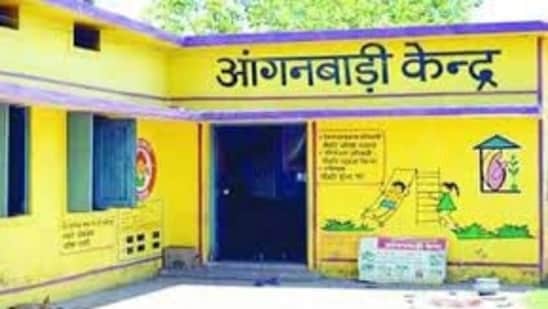
By age six, too many children begin primary school already behind. We often argue about board results, the real crisis starts in preschool, when nutrition, stimulation and language and numeracy exposure diverge and when girls’ learning time is most likely to be compromised by lower-quality provision or less support at home. Strengthening anganwadis and government preschools has to become part of the solution to gender inequality in education - because that is a space where girls can overcome the barriers they encounter at home.
{{/usCountry}}By age six, too many children begin primary school already behind. We often argue about board results, the real crisis starts in preschool, when nutrition, stimulation and language and numeracy exposure diverge and when girls’ learning time is most likely to be compromised by lower-quality provision or less support at home. Strengthening anganwadis and government preschools has to become part of the solution to gender inequality in education - because that is a space where girls can overcome the barriers they encounter at home.
{{/usCountry}}Foundational learning in anganwadis and preschools cannot be divorced from bodies and beliefs. Malnutrition and anaemia blunt attention and memory, gendered feeding practices too often leave girls last and least. Unicef’s Early Childhood Education guidance is unequivocal: good-quality early learning reduces dropout and repetition and improves outcomes at all subsequent stages. India’s policy architecture recognises this (National Education Policy (NEP) 2020; National Curriculum Framework (NCF) for Foundational Stage 2022), but practice lags especially on integrating play-based learning with routine growth monitoring and caregiver coaching.
No country has a frontline like India’s anganwadi workforce. The government has already begun upgrading centres as Saksham Anganwadis and extended health insurance to AWWs (aganwadi workers), yet, the lived reality includes low pay, administrative overload, and centres short on space, toys and books. If AWW didis are to be gender transformers, we must first fix the structure of protected learning time, dignified pay, lighter admin loads, and gender-audited kits that avoid pink-blue stereotypes and include stories of girls leading, boys caring, and shared household work. Measure not just enrollment, but time-use, decision-making, father participation, and safety.
Other systems show how to do this without overburdening women workers. Chile’s Crece Contigo links Early Childhood Development (ECD) with health and social protection, exactly the model India can adapt by making monthly Play & Poshan days routine: growth checks plus 20 minutes of structured, gender-balanced play and responsive-feeding demos.
BRAC Institute of Educational Development’s Play Labs in Bangladesh and Rocket Learning’s work in India prove low-cost corners can lift development and shift norms, convert AWC into a Play Lab and pair it with WhatsApp father-child micro-nudges. Bottom line: Don’t ask women workers to empower others while keeping them precarious. Protect their time, equip them with gender-smart tools, involve fathers by design, and pay for the transformation we expect.
India will lead on gender-equitable Early Childhood Care and Education (ECCE) only if policy pivots from counting enrolment to closing the quality gap, embedding explicit gender outcomes in daily routines and holding systems accountable for parity, so girls aren’t steered into lower-quality settings while boys capture private advantages.
Further, India must move beyond Beti Bachao Beti Padhao slogans and conditional cash-transfer fixes; while they have contributed to delay in the age at marriage and improving girls’ secondary enrolment, it’s important that they are recognised as mere entry points, not endpoints. Symbolism and transactions don’t change what girls learn, nor how they are raised and treated, or how authority is shared at home and school.
The pivot is structural: equalise ECCE quality through public, sex- and caste-disaggregated scorecards, embed explicit gender outcomes in daily routines not posters. Treat anganwadi workers as educators at the centre of reform, not as polio-drop givers or porridge ladies, reducing them to clerical roles squanders our strongest asset, frontline women with unmatched last-mile reach and deep community trust.
Protect their time and pay them with dignity, make father participation the default, and turn Saksham Aganwadi upgrades into everyday pedagogy and norm change. With 1.7 lakh Saksham Aganwadi upgrades underway, credibility now turns on whether budgets, training, and accountability move from counting beneficiaries to shifting norms and learning.
The government can set the floor, setting NCF-aligned gender-sensitive routines, quality scorecards, AWW time protection and pay, and integrated ECD days. Civil society and CSR can equip anganwadis with gender-audited story kits, father-engagement nudges, micro-coaching, and transparent measurement, lifting classroom quality and narrowing early gender gaps in participation and learning. Families and communities can do what matters most: celebrate a daughter’s birth by proudly enrolling her at the anganwadi; read with her; let her lead--at home, in class, in life.
If the last decade taught us how to win back out-of-school adolescent girls, the next must ensure every girl gets a fair start. India’s demographic dividend should not be decided by the strength of mere headcounts, but by preparing all children right--early and equally. Fix the start, not the fallout, we must fund, measure, and hold accountable to provide equal, high-quality early learning to each and every child in the country- irrespective of their gender, caste or income, they can reach their full potential. Let our anganwadis be where the country’s boldest gender reform begins.
This article is authored by Aparna Mukherjee, deputy strategic lead, health and gender equity and Namya Mahajan, co-founder, Rocket Learning.