There is a troubling entitlement that has seeped into contemporary politics and the concept of citizen engagement. Today, many believe that citizen participation is limited to voting or being spurred into protests in service of partisan political agenda. The idea that effective governance means shielding citizens from the reality of global crises has become an accepted norm, one far removed from the foundational discussions held during the Constituent Assembly debates, where duties were frequently mentioned alongside rights.
Currently, the political class seems fixated on keeping citizens insulated and reactive. Oil wars may erupt, shipping lanes can collapse, and once stable regions may ignite, yet if petrol prices rise, forex reserves dwindle, or the government calls for restraint, leadership is deemed to have ‘failed’. That is not how nations navigate turbulent times.
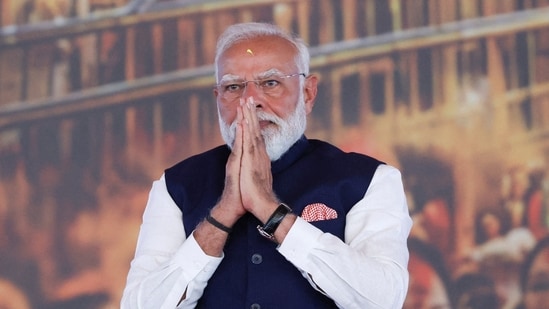
Prime Minister (PM) Narendra Modi’s address regarding the West Asia crisis was significant not only for its appeal but for the psychological shift it represented. He didn't announce rationing, emergency controls, or introducing wartime restrictions. Instead, he did something increasingly rare in politics: He treated citizens as informed adults and stakeholders. He encouraged responsible fuel use, careful foreign travel, delayed gold purchases, carpooling, remote work, and reduced waste--merely suggestions, not diktats.
The immediate backlash from some political factions was panic-driven. Many claimed that these appeals reflected governmental incompetence, asserting that urging citizens to alter their behaviour indicated failure. Yet, governance is not about eradicating global pressures; it’s about managing them, fostering citizen cooperation, and issuing timely warnings to cushion impact.
{{/usCountry}}The immediate backlash from some political factions was panic-driven. Many claimed that these appeals reflected governmental incompetence, asserting that urging citizens to alter their behaviour indicated failure. Yet, governance is not about eradicating global pressures; it’s about managing them, fostering citizen cooperation, and issuing timely warnings to cushion impact.
{{/usCountry}}Whether one supports Modi or not, his government has sought to do just that, avoiding mass panic. Consider India’s current challenges: Critical West Asian supply routes have been disrupted, causing Brent crude prices to nearly double. Public sector oil companies absorb staggering daily losses to prevent sudden retail shocks. Excise duties have been dramatically slashed, and fertiliser subsidies continue despite significant fiscal strain. Most citizens still lead normal lives, illustrating the contrast with neighbouring crises. This semblance of normalcy is not incidental; it is costly.
Thus, the real question is not why the PM asked for citizen participation, but rather: When did participation itself become problematic? India’s political culture once intuitively embraced collective responsibility. During the 1965 war with Pakistan, PM Lal Bahadur Shastri urged citizens to voluntarily skip meals once a week. Indians complied, understanding that nations navigate crises through social solidarity first.
During the 1971 Bangladesh Liberation War, millions of refugees entered India, and citizens shared the burden alongside the State despite experiencing hardship. Today, however, even modest behavioural appeals are framed as authoritarian overreach.
In reality, Modi’s message was antithetical to authoritarianism. An authoritarian State imposes first and explains later, if at all. This government appeals for voluntary action, granting citizens the dignity of choice before compulsion becomes unavoidable. Beneath the immediate political outrage lies an uncomfortable truth: India is entering a decade where resource security, energy dependency, and supply-chain vulnerabilities will define national power as much as military might.
The era of endless consumption may be ending. A country that imports the vast majority of its energy cannot act like a detached observer while West Asia faces turmoil. Nor can it indefinitely subsidise every global shock without some level of public adjustment.
Such adjustment need not equate to suffering; often, it simply requires mindfulness. Taking the Metro instead of driving alone, delaying luxury foreign trips during a forex crunch, moderating edible oil consumption, and consciously choosing domestic products are hardly wartime sacrifices.
Yet, modern politics has infantilised citizens to such an extent that even the notion of restraint now seems radical. Of course, the government must also face scrutiny. Citizens will and must examine optics, contradictions, and policy consistency. Questions about political appearances following appeals for fuel conservation are valid in a democracy. Accountability must not vanish behind patriotic rhetoric.
However, realism should not be eclipsed by political cynicism. If this crisis deepens as the signs suggest, India will confront tougher economic decisions, regardless of which party is in power. In such moments, slogans will hold little weight; true capacity will be crucial. And that capacity, during crises, transcends the governance; it is fundamentally civilisational.
(The views expressed are personal)
This article is authored by Advaita Kala, author and columnist.