Last month, something quietly alarming happened in Rajasthan. Daytime electricity prices on the energy exchange fell to nearly zero. Not because there was no demand, but because there was too much supply, and nowhere to put it. Solar farms were generating power in abundance, but without the infrastructure to store and redirect it, that electricity simply went to waste. Grid operators scrambled. Discoms stood helpless. India's renewable capacity, for all its impressive scale, had no memory.
This is not a technical footnote. It is the central challenge of India's energy transition. The country has set an ambitious target of 500 GW of non-fossil fuel capacity by 2030. Wind and solar are being installed at record pace. But renewable energy, by nature, is intermittent. The sun does not shine at night, and the wind does not blow on demand. Without ample storage infrastructure, every additional gigawatt of solar or wind capacity only deepens the mismatch between when power is generated and when it is available.
Developing storage solutions that make round-the-clock renewable energy (RE-RTC) a reality, is the solution to this problem. It is understood that India is on the verge of developing multiple energy storage solutions. What is less understood is that it already possesses, within its own geography and engineering capability, the oldest and most proven answer to it.
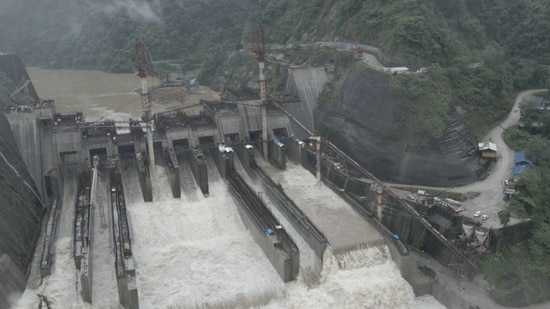
Pumped Storage Hydro (PSH) is not a new idea. It is the world's oldest and most deployed form of grid-scale energy storage, accounting for over 90% of global installed storage capacity. The principle is elegantly simple: Excess electricity, generated during periods of low demand or surplus renewable generation, is used to pump water from a lower reservoir to a higher one. When the grid needs power, that water is released downhill through turbines, generating electricity on demand. The upper reservoir is, in effect, a giant gravitational battery.
{{/usCountry}}Pumped Storage Hydro (PSH) is not a new idea. It is the world's oldest and most deployed form of grid-scale energy storage, accounting for over 90% of global installed storage capacity. The principle is elegantly simple: Excess electricity, generated during periods of low demand or surplus renewable generation, is used to pump water from a lower reservoir to a higher one. When the grid needs power, that water is released downhill through turbines, generating electricity on demand. The upper reservoir is, in effect, a giant gravitational battery.
{{/usCountry}}Globally, the track record is exceptional. The Bath County Pumped Storage Station in Virginia, US, with a capacity of 3,003 MW, has been operating for over four decades and continues to perform as a critical stabiliser of the Eastern Interconnection grid. In China, the Fengning Pumped Storage Power Station, completed in 2023 with 3,600 MW capacity, is now the single largest energy storage facility in the world. Japan is one of the global leaders in pumped storage hydropower, with more than 20 GW of installed PSH capacity. Leveraging its mountainous terrain, the country has operated large-scale pumped storage facilities since the 1970s and continues to use PSH as a key source of grid flexibility and energy storage.
India too happens to have sufficient skin in the game. As per the recent Central Electricity Authority (CEA) report, India has ~7.4 GW of operational PSH capacity. The Pinnapuram Integrated Renewable Energy Project (IREP) in Andhra Pradesh, world's largest gigawatt-scale facility to combine solar, wind, and pumped-storage hydropower under one roof, boasts an impressive capacity of 1,680 MW. A further 11.62 GW is under development. CEA has charted a roadmap to 100 GW by 2035–36, backed by an assessed potential of 267 GW across the country. However, that potential, distributed across Maharashtra, Madhya Pradesh, Chhattisgarh, and Northern Andhra Pradesh, is sitting largely unrealised.
One of the reasons why this potential remains untapped is the massive perception lag between PSH and other energy storage solutions.
It is believed that the upfront capital costs involved in establishing a PSH power plant, approximately ₹6–8 crore per MW, is higher if we compare to other related technologies. But this framing confuses upfront capital cost with lifecycle cost, and the two are not the same thing.
A PSH plant operates for ~40-50 years with relatively low maintenance costs. A lithium-ion BESS installation, by contrast, begins degrading from the day it is commissioned, losing approximately 2% of capacity annually. Its effective operational life is eight to 10 years, after which the entire battery stack must be replaced at substantial cost while also generating large volume of end-of-life e-waste. When evaluated over their full lifecycle, PSH emerges as a highly cost-competitive storage solution.
Comparative studies also suggest that, when assessed over their operational lifecycle, pumped storage hydro can offer a lower levelised cost of storage (LCOS). One such assessment estimates a base-case LCOS of around ₹4.98 per unit for PSH, compared with approximately ₹11.1 per unit for battery-based storage under comparable assumptions.
The economics of PSH are also influenced by the policy framework within which projects operate. While several renewable energy technologies benefit from concessional GST rates, key PSH components and EPC works continue to attract higher rates of ~18%, increasing project costs and affecting investment returns. Addressing such anomalies could improve the competitiveness of a technology that is already well suited for long-duration energy storage.
India’s push to reduce import dependence on fossil fuels risks creating a new strategic vulnerability. Technologies that rely on imported materials and globally concentrated supply chains can create dependencies that take time and significant investment to overcome. These dependencies can lead to catastrophic supply chain constraints, owing to the unpredictability in the geopolitics today.
India relies on China for fulfilling its battery manufacturing requirements, while China, in turn, depends on myriads of countries like Democratic Republic of Congo (DRC), Chile Myanmar and Indonesia for importing key critical minerals such as lithium, cobalt and nickel. Since February 2025, DRC has been introducing export controls, especially to China. This threatens Indian interests, and not just in energy security but also within the Global South.
Reliance on foreign technology is ridden with unpredictability in timelines, pricing and even quality compatibility. As modern energy technologies are increasingly software-driven, they remain susceptible to cyber threats, unauthorised access, and external disruptions. Consequently, the challenge extends beyond energy security to encompass data sovereignty and strategic technological autonomy.
PSH offers a distinctly domestic pathway. The technology is built on capabilities that India already possesses at scale—civil engineering, tunnelling, construction, electro-mechanical equipment, turbines, and generators. Much of the value chain can be sourced and executed within the country, creating local jobs and strengthening domestic industry. In that sense, PSH aligns naturally with the vision of Atmanirbhar Bharat: an energy transition powered not only by clean electricity, but also by Indian infrastructure, Indian expertise, and Indian enterprise.
The geology is there. The engineering capability is there. The policy intent, reflected in the Draft National Electricity Policy 2026, is forming India's clean energy transition will ultimately be judged not by the scale of its renewable energy deployment, but by how reliably that power reaches homes, industries, and businesses. The next step is sustained government support that enables PSH to scale to meet the needs of India's energy transition.
A Viksit Bharat 2047 will run on clean energy that is available when needed, not just when generated. Pumped Storage Hydro, indigenous by design and proven over decades of operation, has the potential to provide the reliability and resilience that such a future demand. The water is already at the top of the hill. It is time to let it flow.
(The views expressed are personal)
This article is authored by Davinder Sandhu, co-founder & chairman and Neetish Kumar, energy vertical lead, Primus Partners.