On 17 September 1950, in the town of Vadnagar in what was then Bombay state, a child was born who would become the 14th Prime Minister (PM) of India. On that same morning, in that same year, the Government of India signed the note extending de jure recognition to the State of Israel, then barely two years old and fighting for survival.
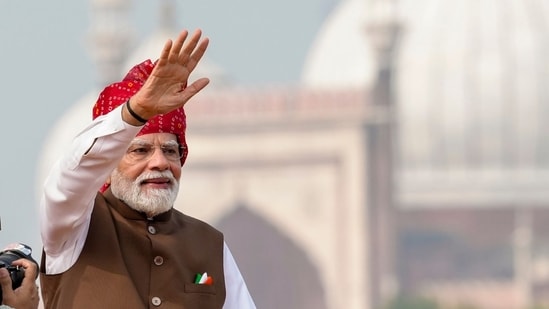
Narendra Modi and India's formal recognition of Israel share not just a year but a date. Seventy-six years later, the PM born on that date has done more to transform the relationship than any predecessor. He did not merely deepen it. He changed its nature. He lifted a condition that had constrained it for decades, and in doing so made possible what we see today: A Special Strategic Partnership in defence, technology, agriculture, and a shared refusal to be broken.
From 1950 to 2014, India's engagement with Israel was presented alongside its engagement with the Palestinian cause. It reflected India's founding commitment to self-determination, its role in the Non-Aligned Movement, and the diplomatic realities of a country with eight million nationals living across Gulf economies. Every step toward Tel Aviv required a visible step toward Ramallah. Israel was never engaged on its own terms.
Modi changed this not by abandoning India's position on Palestine, which remains a negotiated two-State solution, but by removing the operational conditionality. He began to treat India's relationship with Israel as a relationship with a sovereign State and a civilisational ally, valued on its own foundations, not held hostage to the progress of any other negotiation.
{{/usCountry}}Modi changed this not by abandoning India's position on Palestine, which remains a negotiated two-State solution, but by removing the operational conditionality. He began to treat India's relationship with Israel as a relationship with a sovereign State and a civilisational ally, valued on its own foundations, not held hostage to the progress of any other negotiation.
{{/usCountry}}The clearest signal came in July 2017, when Modi became the first Indian PM to visit Israel without a corresponding visit to Ramallah. At Hadera, he walked barefoot on the beach with PM Benjamin Netanyahu, declared that India and Israel were "natural partners," and laid a wreath at Yad Vashem in silence. He met members of the Bene Israel community and spoke of the 2,000 years in which Jewish communities had lived on Indian soil without persecution, without declaration, and without the architecture of exclusion that destroyed Jewish life elsewhere. Both leaders signed agreements on agriculture, water technology, and space. The visit announced, without ambiguity, that the conditionality had been lifted.
Critics of de-hyphenation argued that it would damage India's standing in the Gulf. The opposite proved true. The Abraham Accords of 2020 normalised relations between Israel and the UAE, Bahrain, Sudan, and Morocco. As Gulf States moved toward Israel, India was already there. The I2U2 framework, connecting India, Israel, the UAE, and the US, is the institutional expression of this convergence: a grouping that places India alongside Israel and a major Gulf partner in the same working architecture. The India-Middle East-Europe Economic Corridor, announced at the G20 in New Delhi in September 2023, extends this further, linking India through Saudi Arabia and the UAE to Europe with Israel as a critical node. IMEC would not have been possible in a hyphenated world.
When Hamas attacked civilians across southern Israel on October 7, 2023, killing over 1,200 people, Modi condemned the attacks immediately and without qualification. When gunmen stopped tourists in the meadows of Pahalgam in April 2025 and shot them after checking their religion, Israel condemned the attack without delay. India's response was Operation Sindoor in May 2025, conducted with Israeli-made Harop loitering munitions and Spice-250 glide bomb kits. Modi formally thanked Netanyahu for Israel's support in India's fight against terrorism. The partnership held under operational conditions.
The February 2026 Jerusalem Summit designated the bilateral a Special Strategic Partnership for Peace, Innovation and Prosperity covering defence, trade, space, energy, cybersecurity, agriculture, and scientific research. Modi elevated all of this during an active Israel-Iran conflict, while maintaining India's Gulf commitments and supporting the Gaza Peace efforts. Both leaders also committed to closer cooperation on IMEC and I2U2. That is strategic autonomy in operation.
The de-hyphenation he carried out was not without difficulty. It required holding India's support for Palestinian statehood alongside an unhedged Israel partnership, and demonstrating that the two are not contradictory. They require only the discipline to see Indian national interests clearly and refuse to let one become the hostage of another. He has held both for 12 years.
The partnership he has spent 12 years building will outlast any government, any conflict, and any season of international opinion. The date he shares with Israel's recognition by India is no longer only a coincidence but would be one of his government’s foreign policy legacy.
(The views expressed are personal)
This article is authored by Tarun Vijay, former Member of Parliament and founding editor of Namaste Shalom.