The world is not waiting for a new global order to be announced. It is already living through one. Power is spreading across continents, economic influence is moving towards Asia, supply chains are being redesigned, technology is becoming an instrument of strategic competition, and nations once accustomed to receiving the rules of the international system are increasingly insisting on having a greater role in shaping them. Against this unsettled backdrop, India hosts the 18th BRICS Summit in New Delhi on September 12–13. For India, this should be more than an exercise in diplomatic choreography. It is an opportunity to articulate what a genuinely multipolar world should look like—and what BRICS must become if it is to remain relevant to that world.
India should begin with a clear proposition: BRICS must not become simply another geopolitical bloc defined by opposition to the West. Replacing one rigid alignment with another would reproduce the very divisions that a changing world is trying to overcome. India’s strength lies precisely in refusing such binary choices. Strategic autonomy does not mean standing equidistant from every major power; it means retaining the freedom to engage each according to India’s national interests. New Delhi can deepen its partnership with the US, maintain its longstanding relationship with Russia, manage a complex and competitive relationship with China, and simultaneously champion the aspirations of the Global South. In an increasingly fragmented world, that ability to engage across divides is not ambiguity. It is strategic capital.
The real question, therefore, is not whether BRICS can become larger or more prominent on paper. It is whether it can become more useful in practice. Its expansion has increased its demographic and economic weight, but it has also increased its diversity. Its members have different political systems, economic priorities and strategic calculations. India should not seek to conceal those differences behind grand rhetoric. Its greater contribution would be to identify areas of genuine common interest and build practical cooperation around them. The credibility of BRICS will ultimately depend less on the strength of its language than on the usefulness of its outcomes.
{{/usCountry}}The real question, therefore, is not whether BRICS can become larger or more prominent on paper. It is whether it can become more useful in practice. Its expansion has increased its demographic and economic weight, but it has also increased its diversity. Its members have different political systems, economic priorities and strategic calculations. India should not seek to conceal those differences behind grand rhetoric. Its greater contribution would be to identify areas of genuine common interest and build practical cooperation around them. The credibility of BRICS will ultimately depend less on the strength of its language than on the usefulness of its outcomes.
{{/usCountry}}This makes the economic agenda particularly important. The proposed BRICS Economic Partnership Strategy 2030 can become one of the most consequential elements of India’s presidency if it is translated into measurable action. Trade facilitation, investment, digital commerce, resilient supply chains, financial cooperation and opportunities for small and medium enterprises may sound less dramatic than geopolitical declarations, but they are the foundations of durable influence. A young entrepreneur or exporter does not experience international diplomacy through summit communiqués. It is experienced through the ease of entering a market, making a cross-border payment, securing investment, accessing technology and navigating supply chains. BRICS will acquire greater relevance when cooperation begins to improve those realities.
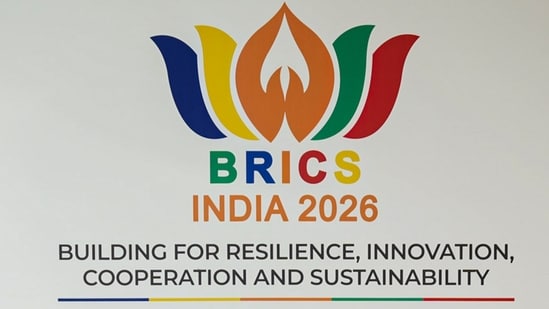
India’s theme for its BRICS chairmanship, ‘Building for Resilience, Innovation, Cooperation and Sustainability’, offers a framework for precisely such an ambition. The emphasis on a people-centric approach and ‘Humanity First’ should not remain diplomatic vocabulary. It can become the foundation of a more credible multilateralism, one that measures success not by the number of declarations adopted but by the problems countries can collectively solve. India has already used its chairmanship to conduct extensive meetings and engagements across the country. The challenge now is to ensure that this diplomatic momentum produces initiatives capable of continuing beyond the summit itself.
India must also use the New Delhi summit to make a firm and constructive case for reform of global institutions. The United Nations, IMF and World Bank were shaped by the realities of a very different era. The distribution of economic power has changed dramatically, and international institutions must evolve accordingly if they are to retain legitimacy. Asia’s rise, Africa’s growing economic significance and the emergence of new centres of production and innovation make a more representative global governance architecture increasingly necessary. India should advocate such reform not as a dissatisfied outsider seeking entry into an exclusive club, but as a responsible power arguing that international institutions become stronger when their representation reflects contemporary realities.
This is also where India can give BRICS a purpose beyond geopolitical rivalry. A grouping cannot credibly speak for the Global South merely by criticising the existing international system. It must demonstrate what constructive cooperation can achieve within a reformed and more representative multilateral order. Development without domination, technological cooperation without exclusion, economic integration without dependency, and sovereignty accompanied by international responsibility would constitute a far more compelling agenda than a permanent politics of opposition.
India is unusually well placed to make this case. Its growing economic weight gives it greater leverage; its relationships with countries across political divides give it diplomatic reach; and its experience of combining national interest with international cooperation gives it credibility. But credibility alone is not leadership. Leadership requires the capacity to set priorities, build consensus and convert principles into outcomes. India’s BRICS presidency provides an opportunity to do precisely that.
The New Delhi summit will inevitably be viewed through the prism of great-power rivalry. That is unavoidable. But India should resist allowing BRICS to become merely another stage on which competing powers display their disagreements. Its ambition should be higher. Strategic autonomy is most meaningful when it is accompanied by strategic purpose. India should therefore enter the summit not merely asking what BRICS can do for India, but what India can help BRICS do for the wider world.
The ultimate test will be straightforward. Can BRICS make trade easier, economies more resilient, technology more accessible and global governance more representative? Can it create practical avenues through which developing economies participate more effectively in global growth? Can it transform the aspirations of the Global South into a constructive force within a reformed multilateral system?
India’s BRICS moment is not about replacing one centre of power with another. It is about helping shape a world in which power is more widely distributed, responsibility is more broadly shared and a larger part of humanity has a meaningful voice in decisions that affect its future.
India should not merely speak for the Global South. It should help the Global South move from the margins of global decision-making towards its rightful place at the centre.
(The views expressed are personal)
This article is authored by Debika Dutta, columnist, Mangaldai, Assam.