In spite of a deluge of information and commentary on the plurilateral grouping named BRICS, composed of 11 member States and 10 partner States, basic questions persist: What does it stand for; what has it achieved so far; and whether the New Delhi summit, held on September 12–13, resulted in any significant gains? In short, is BRICS an effective player on the international stage, or is it essentially a talkshop laced with VVIP protocol and media fanfare?
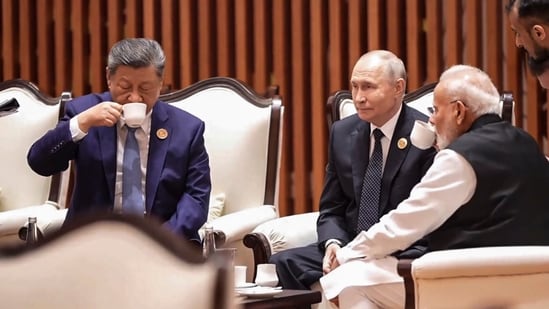
As the 18th summit took place, BRICS turned 20, for its original iteration – BRIC – was launched in September 2006, whereas the first summit was held in 2009 in Yekaterinburg, Russia. Human beings at age 20 are usually full of energy, enthusiasm, excitement and new ideas, and they begin to display a sense of responsibility. That this depiction applied to BRICS at the New Delhi summit was observed by many.
Prime Minister (PM) Narendra Modi, the Chair and host of the summit, observed: “Today, BRICS too stands at a ‘coming of age’ moment”. It is “a stage when dreams are accompanied by responsibilities, and capabilities are channelled in new directions.” Justifiably, the grouping can be proud of its distinct identity as the forum of the Emerging Markets and Developing Countries, (EMDCs), which is committed to promoting the interests of the entire developing world or the Global South.
But, what does the BRICS really stand for? Its defining mission, shaped by the oft-mentioned BRICS spirit, is anchored on four clear-cut goals: Promote peace, a more representative, fair international order, reinvigorated, and reformed multilateral system, and sustainable development and inclusive growth. With the expansion in its membership and growing clarity about its objectives, the grouping displays greater self-confidence. All this came in full view in Delhi last week.
{{/usCountry}}But, what does the BRICS really stand for? Its defining mission, shaped by the oft-mentioned BRICS spirit, is anchored on four clear-cut goals: Promote peace, a more representative, fair international order, reinvigorated, and reformed multilateral system, and sustainable development and inclusive growth. With the expansion in its membership and growing clarity about its objectives, the grouping displays greater self-confidence. All this came in full view in Delhi last week.
{{/usCountry}}Clarity in thinking and commitment to advance on a path chosen increase when an institution, like a human being, is faced with grave challenges. On the road to the latest summit, the grouping confronted three principal challenges. One, two major wars of our time continued in Ukraine and the Gulf, involving four of its members: Russia, Iran, Saudi Arabia, and UAE. Even if BRICS does not have the wherewithal to resolve these conflicts, it needed to insulate itself from their negative consequences. Two, it had to contend with open hostility of the most powerful nation – the US, which publicly decried BRICS on multiple grounds. Three, the expansion of BRICS family of five to 21 lent it great strength, but it also created new vulnerability in decision-making. The year of India’s Chairship – 2026 – marked the grouping’s success in addressing these challenges successfully.
How this multi-dimensional achievement came to be duly reflected in the New Delhi Declaration of the BRICS summit is a fascinating story. At least five key takeaways, should be listed here.
First, Russia-Ukraine war, now in its fifth year, has generated effects and pressures for the developing world as well as others. External affairs minister S Jaishankar’s call on President Vladimir Putin in Moscow and subsequently on President Volodymyr Zelensky in Kiev gave the impression that, as BRICS Chair, India might be in a serious quest for an acceptable basis to end the war. While this is yet to mature into a tangible form, BRICS negotiators chose not to make any mention of this conflict in the Delhi Declaration. But, they worked harder on the Gulf conflict and succeeded in coming up with a formulation that was found acceptable by all concerned parties. Admittedly, even this formulation did not end the war, but it allowed the summit to proceed and focus on the other major goals of the grouping.
Second, the real and substantive agenda was captured and pursued under the overarching theme of the Indian Chairship – Building for Resilience, Innovation, Cooperation and Sustainability. Under each of these four verticals and the three traditional pillars of political and security, financial and economic, and cultural and people-to-people cooperation, member countries deliberated on proposals, old and new, and crafted a comprehensive consensus-based vision. This is reflected in the declaration's 140 paragraphs.
Third, on economic cooperation, the project to gradually build new cross-border payment systems as a way to reduce the grouping’s excessive reliance on the US dollar was accepted, but without resorting to de-dollarisation through a new common BRICS currency. This is the driving motivation – to follow a non-western, but not anti-western, approach. On the New Development Bank (NDB), the summit took the decision to encourage further expansion in its membership, increase steadily its capacity to mobilise resources, expand local currency financing, diversify funding, resources, and support projects that advance sustainable development.
Fourth, leaders were also clear that the BRICS would fully succeed when its impact goes beyond governments and business. Hence, India’s extensive initiative to engage the society at large through a long series of meetings of non-governmental fora seemed to be quite effective. Much stress was laid on deepening links among people through collaboration in education, culture, tourism and activities involving youth, women and the civil society.
Fifth, on institutional matters too, the declaration contributed to clarity. Leaders recognised the valuable contribution of partner countries as conducive to the partnership with EMDCs. They committed themselves to “fostering inclusive, mutually beneficial, and development-oriented partnership with Partner countries.” On expansion itself, they sounded positive, stressing that it reflected BRICS’ “influence credibility and appeal as an important platform for inclusive global governance.” But they also desired “enhanced coordination” among the member states. Will there be further expansion next year? That is one important issue to watch on the road to the next summit, to be held in China.
It needs to be appreciated that BRICS has become one of the most consequential and proactive plurilateral groupings in the world. Today, its geographical, political and economic reach has grown significantly. India’s well-conceived leadership of BRICS has given it additional weight and influence.
Its bright future can stand assured, provided inner cohesion among its members and partners, especially the founding members, increases further. In this respect, the dynamics involving the top trio – Modi, Putin and Xi Jinping – as well as the leaders of Brazil, South Africa and others will shape the next phase of its journey.
(The views expressed are personal)
This article is authored by Rajiv Bhatia, Distinguished Fellow, Gateway House and former Indian High Commissioner to South Africa.