The significance of the recent 18th BRICS Summit under India’s presidency lies not only in how it sought to strengthen the grouping’s voice in global affairs, but in where it chose to build cooperation.
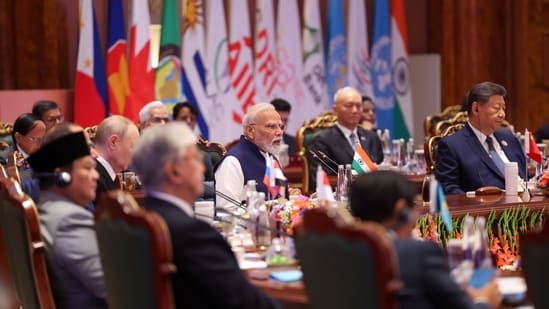
As BRICS has expanded from its original composition to 11 members, bringing together countries with increasingly diverse political, economic and strategic interests – one enduring question has always come to the fore: how can the grouping remain effective as it becomes larger, more diverse and politically more complex? Its ambition to give the Global South a stronger voice in international affairs remains important, but how can it translate that ambition into meaningful common positions when its members often have divergent interests?
India’s presidency appears to have sought to address this challenge by placing greater emphasis on areas where cooperation is more immediately achievable. Rather than focusing primarily on broad, top-down geopolitical positioning, it shifted attention towards more practical and sector-specific engagement in MSMEs, startups, agriculture and food security, logistics, energy, digital technology and innovation – potentially with direct developmental relevance.
Traditionally, BRICS has sought to advance a stronger voice for developing countries, press for reform of global institutions and challenge imbalances in international economic and political governance.
{{/usCountry}}Traditionally, BRICS has sought to advance a stronger voice for developing countries, press for reform of global institutions and challenge imbalances in international economic and political governance.
{{/usCountry}}But an expanded BRICS cannot easily translate that broad political ambition into a common position on every international crisis. Russia’s strategic interests are not India’s; India’s are not China’s; and the priorities of Iran, the UAE, Saudi Arabia and other members can differ substantially. The challenge, therefore, is not simply to expand the areas on which BRICS speaks collectively, but to create enough practical convergence to keep cooperation moving despite political divergence.
This is where India’s sector-specific strategy becomes important. This practical orientation was reflected in the scale and breadth of India’s BRICS engagement. More than 350 meetings and high-level engagements across over 30 cities brought governments, businesses, researchers and institutions into the process. The focus moved beyond broad political declarations towards more practical cooperation, with greater attention to strengthening business linkages, supply chains, knowledge-sharing and institutional engagement.
The distinction matters. Political convergence is often difficult to manufacture; practical cooperation can be built incrementally. Moreover, India has cautioned against a one-size-fits-all development model, arguing instead for the sharing of technology and know-how while allowing individual countries to adapt them to their own requirements.
Consider MSMEs. India pushed the internationalisation of smaller businesses through greater connectivity among BRICS economies. The Jaipur Consensus and related measures focused on issues such as credit assessment and invoice discounting for export-oriented MSMEs. The objective is concrete: Reduce financing and market-access barriers and enable smaller firms to participate in cross-border trade and value chains. The BRICS trade ministers noted that the global trade-finance gap in the MSME sector is about $2.5 trillion, highlighting why such seemingly technical measures have wider significance.
Agriculture illustrates the same approach. Cooperation in digital agriculture, agro-ecology, agricultural information and technology addresses problems shared across developing economies without requiring them to adopt an identical agricultural model. The New Delhi Declaration also backed the establishment of BRICS AGRIN, a network focused on agro-inputs, genetic resources and agricultural information.
Food security takes this logic a step further. BRICS members account for a substantial share of global food production, while many are simultaneously major consumers. The proposed BRICS Grain Exchange seeks to improve agricultural trade and food-supply resilience, although its operating modalities still require further discussion.
The same principle extends to startups, digital services, logistics, energy and innovation. Rather than attempting to create a single BRICS model, the emphasis is increasingly on connecting markets, institutions, technologies and knowledge systems. The economic agenda adopted during India’s chairship, for instance, included a Global Value Chains Action Plan for 2026–30 and measures to facilitate digitally delivered services.
This represents an important evolution in India’s own BRICS approach. While India has continued to press for reforms in international governance and the global financial architecture, with the New Delhi Declaration further reaffirming these objectives, its 2026 presidency added another layer: rather than only seeking greater representation, it also sought to demonstrate what developing countries could contribute through their own institutional and technological solutions. In this sense, the emphasis on practical cooperation reflects a degree of institutional maturity, linking the broader political objectives of the Global South with concrete areas of economic and developmental cooperation.
For India, this shift in approach is also particularly relevant to its foreign-policy interests. New Delhi has consistently sought strategic autonomy rather than alignment with a rigid geopolitical bloc. A BRICS defined primarily by confrontation with the West, particularly the United States, could narrow India’s diplomatic manoeuvrability. By contrast, a BRICS that combines efforts to reform global institutions with practical cooperation among diverse developing economies gives India greater room to engage different partners on different issues. It also allows India and other major developing economies to build greater collective leverage within a more plural international system, without requiring them to align on every strategic question. In that sense, sectoral cooperation can provide the connective tissue for a geopolitically diverse grouping.
There are, however, clear limits. Announcements do not automatically translate into functioning institutions, and multiple initiatives can create duplication, weak implementation and bureaucratic complexity. Differences in regulatory systems, economic structures, technological capabilities and political priorities can constrain delivery. The test of India’s approach will, therefore, not be the number of initiatives announced, but whether some of them generate sustained cross-border participation and measurable outcomes.
That is where the next phase of BRICS becomes important. The grouping needs to move from launching platforms to making them usable: the real measure of this approach, however, will be whether these initiatives develop into functioning institutions, sustained economic linkages and measurable outcomes. If they do, it could help build common ground without requiring common positions on every issue.
For an increasingly diverse BRICS, this may be the more sustainable model of institution-building. India’s BRICS strategy, therefore, can be understood as a shift from seeking common positions on every issue to building common ground where cooperation is possible; from broad declarations to sector-specific solutions; and from representing the Global South to creating platforms through which its members can share, adapt and scale their own capabilities.
For a grouping as diverse as BRICS, that may ultimately be what makes cooperation more durable and allows its broader ambitions to translate into practical outcomes. India’s BRICS engagement was exactly about making that transition – from broad ambitions to practical, sustained cooperation.
(The views expressed are personal)
This article is authored by Mahesh Ganguly, teaching assistant and research fellow, IIT Bomba and Soumi Ganguly, research assistant, IDS, Kolkata.