The BRICS Summit in New Delhi is gaining global attention for attaining outcomes and the consensus-based declaration that may be used as a significant future reference in global affairs both for their intent and content amidst unprecedented escalation in regional conflicts. The intent has been about signalling the urgency to build peace and stability through dialogue and diplomacy – which member countries have endorsed by accepting the declaration as an outcome despite strong and well-stated national positions on such issues. It also signals a turning point towards regaining the momentum of BRICS cooperation on issues of vital interests to the member countries, now 11, for development and sustainability.
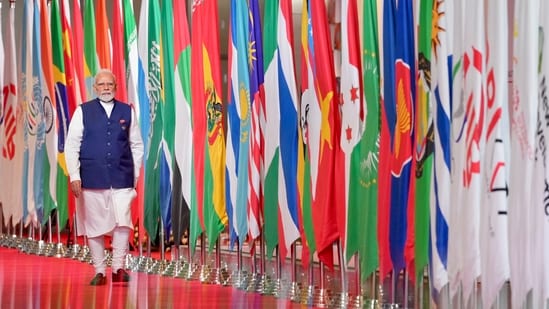
Nudged by India, other member countries seem to have appreciated the need for practical outcomes, collaborations on reforms and also the need for deliberating on mechanisms of continuity and implementation. India’s proposal of a BRICS troika mechanism, similar to the G20, given that BRICS has new members is timely and could be a significant improvement in the institution-building process which the BRICS has traditionally accorded high priority to in the past. The guidance and leadership of India have been particularly significant given the fact that perhaps not many countries at this juncture can claim to have the social and political capital required to build trust in that direction. India’s own track record and experience of playing a convening role for dialogue and collaboration at platforms like the G20 and BRICS in recent years, and the self-confidence with regard to achieving economic growth with development have made India’s role a credible leader as reflected in the success of the BRICS Summit.
Multilateralism in recent times have been reduced to bureaucratic superstructures created over the years and is limited in its effectiveness, despite international institutions and legal frameworks. The power structures within these institutions are such that they neither recognise the emergence of the Global South and their increasing role in strengthening the foundations of the world economy despite institutional barriers, nor do they acknowledge that a larger share of the burden of crises and shocks fall on them. The institutions have preserved status quo in terms of the privileges of a few and have denied the entry of 21st century ideas of innovation, scale, collaboration, partnership among others for re-shaping norms and institutions at the highest level. BRICS, a diverse group of countries comprising mostly emerging markets and developing economies, has long voiced the inadequacies of these institutions and seek reform that is meaningful and aligned with the development needs of the Global South which can only be ensured through rightful participation. BRICS has come a long way in terms of its own deliberations on reformed multilateralism, and every conversation and outcome is a progress in that direction. BRICS continues to play a constructive role and recognises the role of collaborations within platforms like the G20 through its full functional membership. India through matured manoeuvring of issues has once again demonstrated its ability to be a champion of reformed multilateralism. The path to tangible outcomes perhaps goes through strenuous efforts of achieving alignments on platforms like the BRICS which undoubtedly remains one of the most powerful expressions of global cooperation emerging from multipolar realities of the 21st century.
{{/usCountry}}Multilateralism in recent times have been reduced to bureaucratic superstructures created over the years and is limited in its effectiveness, despite international institutions and legal frameworks. The power structures within these institutions are such that they neither recognise the emergence of the Global South and their increasing role in strengthening the foundations of the world economy despite institutional barriers, nor do they acknowledge that a larger share of the burden of crises and shocks fall on them. The institutions have preserved status quo in terms of the privileges of a few and have denied the entry of 21st century ideas of innovation, scale, collaboration, partnership among others for re-shaping norms and institutions at the highest level. BRICS, a diverse group of countries comprising mostly emerging markets and developing economies, has long voiced the inadequacies of these institutions and seek reform that is meaningful and aligned with the development needs of the Global South which can only be ensured through rightful participation. BRICS has come a long way in terms of its own deliberations on reformed multilateralism, and every conversation and outcome is a progress in that direction. BRICS continues to play a constructive role and recognises the role of collaborations within platforms like the G20 through its full functional membership. India through matured manoeuvring of issues has once again demonstrated its ability to be a champion of reformed multilateralism. The path to tangible outcomes perhaps goes through strenuous efforts of achieving alignments on platforms like the BRICS which undoubtedly remains one of the most powerful expressions of global cooperation emerging from multipolar realities of the 21st century.
{{/usCountry}}However, India in recent years, has never stopped at trying to forge a grand consensus on institutional reforms alone, but has charted a unique roadmap for global cooperation to be effective. In doing so, India has stepped beyond the exclusivity of bilateral and regional formats towards building bridges with the Global South as well as finding avenues for collaboration with key players for immediate resilience and long-term sustainable development partnerships. This seems to have worked in terms of introducing new pathways shaping emerging development models based on national experiments – from space applications to digital innovations to start-ups that would define future economies in the digital age. However, through people-centred approaches, India has been trying to cater, for example, to the needs of small enterprises that employ very large sections of the population; and try to protect livelihoods keeping in view scenarios of climate impact most notably in agriculture. India’s intention of practical cooperation and messaging in these domains has emerged as core competence in economic diplomacy that was on full display in the BRICS initiatives as well.
This also suggests India’s reaffirmation of multilateralism, with collective efforts being an essential feature given that resilience building demand diversification and not narrowing of choices. While one may argue that effective cooperation needs practical tools often negotiated in smaller rooms, global institutional foundations would nevertheless continue to play most critical roles in addressing planetary issues affecting humanity. Problems of resource shortfall and access; and support systems for solutions and scale may need reducing anomalies of current institutional architecture. BRICS by its own merit and standing represent highly expansive scope of cooperation that in effect contribute to the future of multilateralism and is source of solutions at scale to grand challenges which should not be understood only from the perspective of membership or evolution in the last two decades. It is expected that BRICS involvement in shaping sustainable development pathways and strengthening multilateral processes would be even more consequential in the years ahead where India would not only play a balancing role, but a defining one as demonstrated in New Delhi in 2026.
(The views expressed are personal)
This article is authored by Sabyasachi Saha, associate professor, Research and Information System for Developing Countries (RIS), New Delhi.