
 E-Paper



Controlled chaos or scalable discipline?
This article is authored by Hriday Sarma, senior fellow, South Asia Democratic Forum, Brussels.

 Prefer HTon Google


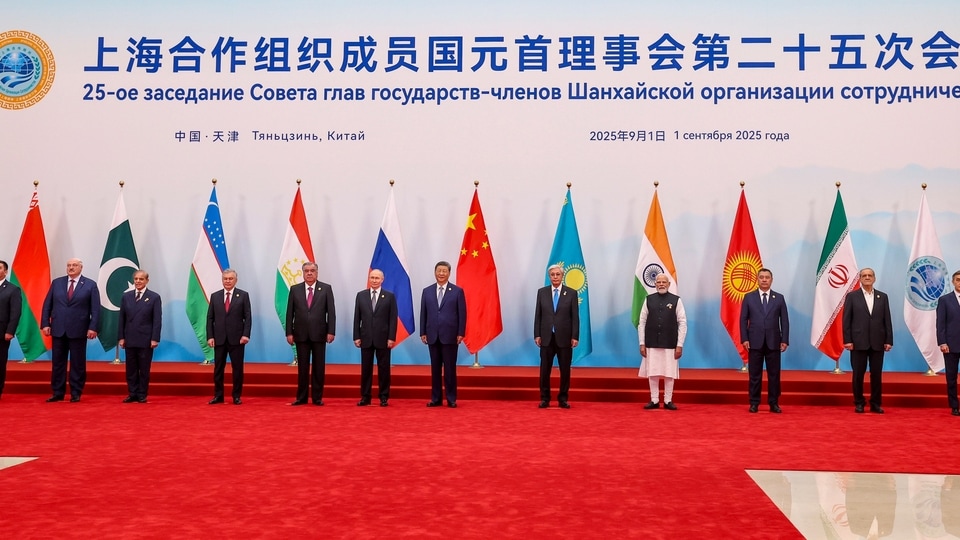
“The enduring friendship between the people of the United States and India propels the two countries forward as they realise the tremendous potential of their economic relationship,” declared US secretary of state Marco Rubio. His carefully chosen words sought to highlight the depth of the Indo-US partnership, even as global headlines focused on the growing camaraderie between Prime Minister (PM) Narendra Modi, Russian President Vladimir Putin, and Chinese President Xi Jinping at the 2025 Shanghai Cooperation Organisation (SCO) summit in Tianjin.
Yet Rubio’s optimism fell flat against President Donald Trump’s latest tariff offensive on India. The administration’s decision to impose a steep 50% tariff on Indian exports—effective from August 27, and worth $87 billion annually—marks one of the harshest economic measures against a US partner in recent history. The justification: New Delhi’s continued purchase of discounted Russian oil. Trump has argued that such trade indirectly funds Moscow’s war in Ukraine. Yet this reasoning falters when Europe continues importing far greater volumes of Russian gas. Despite the EU’s 14th sanctions package restricting LNG transshipment and new investments, pipeline flows like TurkStream remain unaffected, and a full phase-out is not expected until 2027—imports that still escape Washington’s punitive zeal.
Washington’s tariff strategy has been anything but even-handed—30% on China, 50% on India and Brazil, and just 10% on Russia—revealing its selective approach. Trump invoked the International Emergency Economic Powers Act for his ‘Liberation Day’ tariffs. On April 2, he announced reciprocal duties on nearly all of the US’s trading partners, briefly suspended them, then used the threat of punitive taxes to secure concessions—before ultimately imposing the steepest tariffs in nearly a century on 66 nations, including the EU.
For India, the selective targeting exposes glaring double standards. External affairs minister S Jaishankar called Washington’s stance “unjustified” and “hypocritical,” underscoring the irony of punishing India while western allies maintain extensive energy ties with Moscow. The Federation of Indian Export Organisations has reported mounting distress, as small and medium exporters—from Gujarat’s textile hubs to Tamil Nadu’s seafood industry—struggle to absorb costs and compete against untariffed rivals in Vietnam, Cambodia, and China. Goldman Sachs’s chief India economist, Santanu Sengupta, has warned that the fallout could reduce India’s projected GDP growth from 6.5% in FY2024–25 to below 6% in FY2025–26, putting tens of thousands of jobs at risk in politically sensitive manufacturing belts.
The tariffs have also forced New Delhi to confront the risks of overdependence on the US market. Sectors like textiles, gems, and jewellery—once flourishing thanks to American demand—are suddenly exposed. PM Modi’s renewed call for Atmanirbhar Bharat (self-reliance) reflects a political and economic pivot: to build resilience against external shocks and reduce vulnerabilities in global supply chains.
But the economic impact is only one part of the story. Geopolitically, Washington’s decision risks undermining decades of carefully nurtured trust. India has long been regarded as a critical pillar of US strategy in the Indo-Pacific, a counterweight to China, and a partner in keeping regional waters free and open. Now, however, the optics are shifting. The SCO summit in Tianjin showcased India’s willingness to deepen ties with Russia, its “all-weather” friend, while maintaining cautious engagement with Beijing. Far from isolating Moscow and Beijing, Washington’s punitive stance risks nudging New Delhi closer to them—and toward alternatives like BRICS and the wider Global South.
What is particularly troubling is the absence of strategic coherence. Trump’s tariff crusade has not been confined to India. Brazil, too, has faced similar penalties for its engagement with Russia. Supporters hail these moves as examples of “scalable discipline”—a bold assertion of America’s economic clout to realign trade terms. Yet the inconsistency raises doubts. China, itself a major importer of Russian oil, has faced no comparable tariffs. This asymmetry weakens US credibility, suggesting that economic coercion is applied selectively, driven more by short-term political optics than long-term principles.
Even within America, dissenting voices are growing. Republican leaders like Nikki Haley and John Bolton have cautioned that alienating India could be a strategic miscalculation. Haley called the tariff blitz “an enormous mistake,” warning that it undermines 25 years of momentum in US-India ties. By weakening trust with one of its most reliable partners in Asia, Washington risks ceding ground to Beijing—ironically strengthening the very rival it seeks to contain.
The paradox of Trump’s approach lies in its blend of control and disruption. On paper, the tariffs are a demonstration of strength—America unilaterally rewriting the terms of trade. In practice, they resemble “controlled chaos”—a sequence of scattershot decisions that destabilise alliances, disrupt supply chains, and embolden rivals. For India, the lesson is clear: Diversify trade partnerships, reinforce domestic manufacturing, and safeguard strategic autonomy.
The long-term costs for the US may be even steeper. As more nations, from India to Brazil, recalibrate their trade and security strategies, Washington risks eroding not only its economic partnerships but also the credibility of its global leadership. In a world defined by interdependence, punitive tariffs may deliver short-term wins, but they risk sowing the seeds of long-term decline.
Trump’s tariffs on India will thus be remembered as more than a trade dispute. They symbolise a pivotal test of whether America’s economic assertiveness represents scalable discipline—or a reckless gamble that unleashes destabilising chaos across the global order.
This article is authored by Hriday Sarma, senior fellow, South Asia Democratic Forum, Brussels.


