At a time when crises are multiplying across the globe, the United Nations, the world’s most important multilateral platform for peace, development, and humanitarian work, is facing one of its gravest challenges: dwindling financial resources. The reduction in funding for the UN’s core programmes is not simply a bureaucratic concern; it is a direct threat to the stability and security of millions of lives worldwide. The impact of such funding cuts will not only affect the most vulnerable populations but also weaken the collective capacity to respond to global challenges, from conflict resolution and post-war reconstruction to climate change mitigation and emergency humanitarian relief. Funding shortfalls for the UN are not distant problems but ones with tangible consequences that will reverberate across borders.
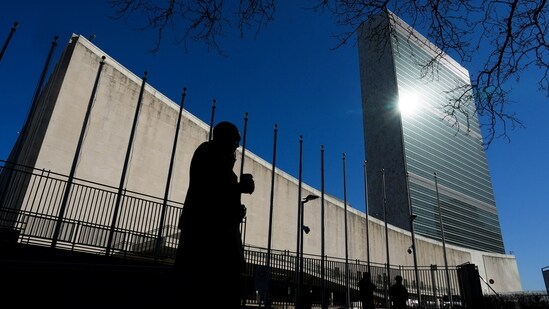
The UN’s mandate is uniquely comprehensive. It feeds the hungry, shelters refugees, vaccinates children, rebuilds war-torn nations, protects cultural heritage, and mobilises global efforts against climate change. This monumental task is possible only because of pooled international contributions, which allow even smaller nations to participate in global problem-solving. When these contributions falter, the impact is immediate. Humanitarian agencies under the UN umbrella, such as the World Food Programme (WFP) and the UN High Commissioner for Refugees (UNHCR), already face painful choices, cutting food rations in conflict zones or reducing shelter support for displaced populations. In 2023, the WFP was forced to halve food rations for refugees in Chad and South Sudan due to a lack of funds, leaving millions on the brink of famine. Similarly, UNHCR has warned that without fresh funding, its operations to support Syrian refugees in Jordan and Lebanon may have to scale back dramatically, jeopardising access to schooling, health care, and protection.
A particularly worrisome area is post-conflict reconstruction. Peacekeeping and rebuilding efforts are among the most expensive yet most critical roles the UN performs. When war-torn regions begin transitioning to peace, it is the UN that often supervises ceasefires, supports elections, and assists in rebuilding governance structures. Budget constraints can lead to abrupt mission drawdowns, leaving fragile societies exposed to relapse into conflict. In Mali, the UN recently began winding down its decade-long peacekeeping mission following member state decisions to reduce financial and logistical support, even as extremist violence has been resurging. The risk is that a fragile security situation may spiral once again into chaos, undoing years of painstaking progress. Such examples remind us that underfunding peace operations is not a cost-saving measure but an invitation for more expensive crises later.
{{/usCountry}}A particularly worrisome area is post-conflict reconstruction. Peacekeeping and rebuilding efforts are among the most expensive yet most critical roles the UN performs. When war-torn regions begin transitioning to peace, it is the UN that often supervises ceasefires, supports elections, and assists in rebuilding governance structures. Budget constraints can lead to abrupt mission drawdowns, leaving fragile societies exposed to relapse into conflict. In Mali, the UN recently began winding down its decade-long peacekeeping mission following member state decisions to reduce financial and logistical support, even as extremist violence has been resurging. The risk is that a fragile security situation may spiral once again into chaos, undoing years of painstaking progress. Such examples remind us that underfunding peace operations is not a cost-saving measure but an invitation for more expensive crises later.
{{/usCountry}}Climate and environmental programmes are another major casualty of shrinking funds. The UN’s environmental initiatives, particularly through the United Nations Environment Programme (UNEP) and its climate-related partnerships, are at the forefront of helping developing countries adapt to the climate crisis. These programmes facilitate early warning systems, disaster preparedness, and transition to cleaner energy. In Pakistan, for instance, UNEP and UNDP played a crucial role in the post-flood recovery process following the 2022 deluge, which displaced over 33 million people. Without sustained funding, such large-scale environmental recovery programmes cannot be replicated elsewhere, leaving climate-vulnerable nations to fend for themselves. The cost of inaction in this domain is incalculable, for environmental degradation does not respect national borders. Air pollution, deforestation, and plastic waste in one part of the globe can eventually have a detrimental impact on ecosystems elsewhere.
Another area where budget cuts have disproportionate effects is emergency assistance. The UN Office for the Coordination of Humanitarian Affairs (OCHA) and other agencies are often first responders when disasters strike, whether it is an earthquake in Turkey, a typhoon in the Philippines, or a cholera outbreak in Malawi. In February 2023, OCHA helped coordinate a rapid response following the devastating earthquakes in Turkey and Syria, mobilising millions of dollars within days. If funding gaps widen, such rapid responses will become harder to execute, leading to preventable deaths and prolonged suffering. The private sector and philanthropies often step in during emergencies, but without coordinated global action through the UN system, such assistance risks being fragmented and less effective.
Some argue that the UN must simply become more efficient and do more with less. While greater efficiency is always desirable, there is a hard limit to what can be accomplished without adequate resources. Cost-cutting in global operations is not like trimming corporate overhead; it means fewer vaccines administered, fewer peacekeepers deployed, and fewer children educated. Moreover, calls for efficiency should not become a pretext for member states to shirk their obligations. The principle of collective burden-sharing lies at the heart of the UN system; abandoning it erodes the very idea of multilateralism.
This is where public awareness becomes critical. Governments respond to the priorities of their citizens and stakeholders. If individuals, civil society groups, and corporate leaders understand the cascading effects of underfunding, they can press their governments to maintain or even increase contributions to the UN. The private sector, too, has a major role to play. Multinational corporations benefit from the stability and predictability that the UN helps create in markets across the world. For them, supporting UN initiatives is not charity but enlightened self-interest. Public–private partnerships could fill funding gaps in areas such as sustainable development, disaster relief, and innovation for climate resilience.
In parallel, philanthropic foundations and high-net-worth individuals can become vital partners. The Bill & Melinda Gates Foundation’s work with the World Health Organization on eradicating polio is a powerful example of how targeted philanthropy can amplify UN goals. More such collaborations could be forged in fields like education, renewable energy, and digital governance, ensuring that funding shortfalls do not halt progress. Citizen-level initiatives such as crowdfunding campaigns and volunteer contributions could also supplement traditional sources of funding, bringing ordinary people closer to the UN’s mission and making its work more transparent.
Ultimately, underfunding the UN is not merely about numbers on a balance sheet—it is about what kind of world we wish to live in. A weakened UN means a more fragmented, more unequal, and more dangerous world. Conversely, a well-funded UN is an investment in global peace, prosperity, and sustainability. As crises multiply from wars in fragile regions to the intensifying climate emergency, the need for strong, coordinated global action has never been greater. Retreating from multilateral commitments at this moment is both short-sighted and perilous.
The call to action is clear: individuals must demand that their governments honour their commitments, corporations must step up as global citizens, and philanthropists must view UN funding not as charity but as a shared responsibility. The price of inaction will be paid not only by distant strangers but by all of us, in the form of insecurity, pandemics, and environmental collapse. The world is at a crossroads where the choice is stark: either we support the global system that holds us together, or we watch as that system falters under the weight of indifference. The time to act is now, before funding shortages turn today’s manageable crises into tomorrow’s uncontrollable catastrophes.
This article is authored by Gunwant Singh, scholar, international relations and security studies, Jawaharlal Nehru University, New Delhi.